
Check the details behind USDT casino payments
 Available in US
USDT support depends on the accepted token network, while a dollar peg does not remove payment, bonus or verification checks.
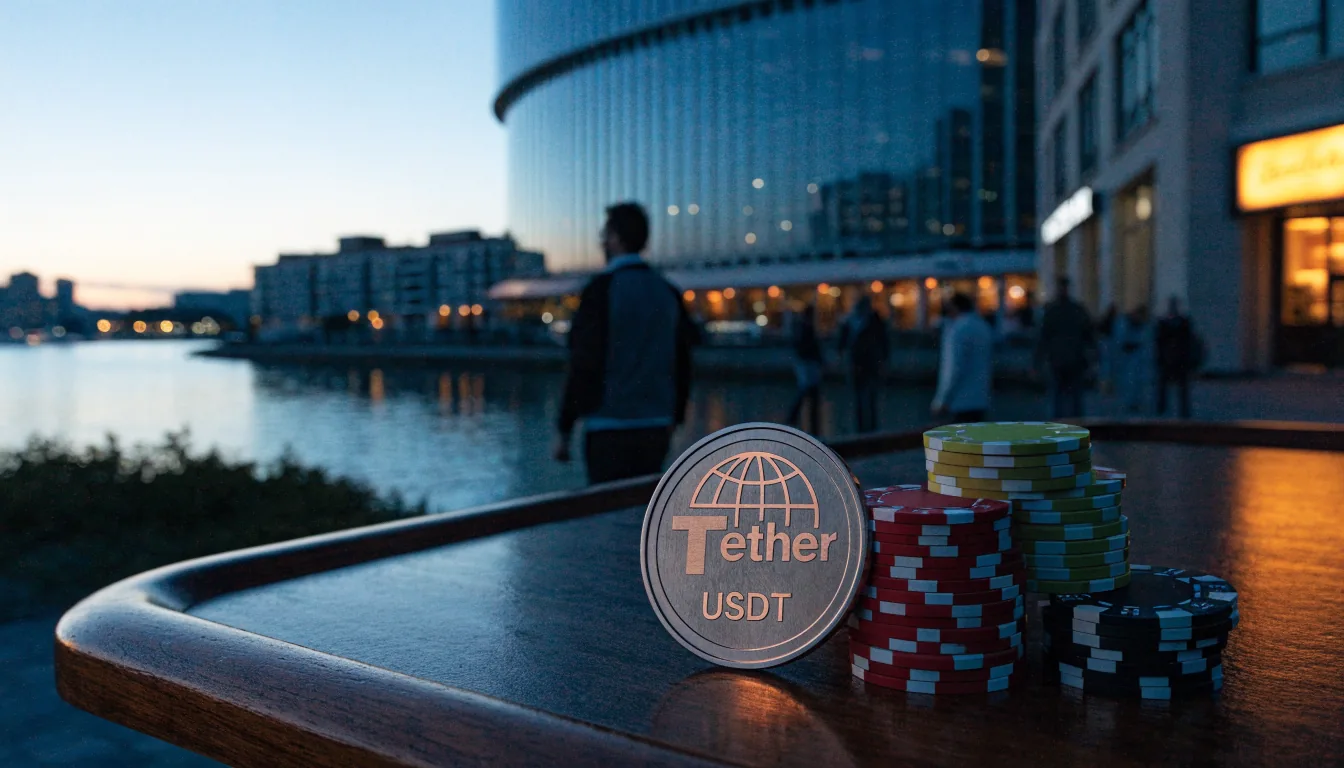
How USDT Fits into Online Casino Payments
USDT is a stablecoin that can serve as a payment option at an online casino. Where an operator supports it, the token sits alongside other payment methods as a way to hold funds for casino use. Its presence does not make every casino a USDT casino: payment options are set by each operator, and a label on a homepage is not enough to establish which version of the token is accepted.
That distinction matters because USDT exists across multiple blockchain networks. A specialist review of online casino payments describes support as varying between operators: some accept certain versions of USDT, while others do not support every network on which the token exists. The payment method therefore has two parts—the stablecoin and the network carrying it. A casino’s general claim to accept Tether does not, by itself, tell a player which versions it can handle.
From the operator’s side, listing a stablecoin is a decision about payment infrastructure, not simply adding another currency name to a menu. The cashier, payment processor and wallet arrangements have to recognise the supported asset and network. That is why the same token can appear in one casino’s cashier but be absent, or available in a different form, at another. Support can also change; the payment information displayed by the operator is more relevant than an old description elsewhere.
Choosing a casino that supports Tether means weighing the available operator information as well as your own priorities. This list offers a concise reference to the details provided for each option.
-
7Bit Casino
- License
- Tobique Gaming Commission, licence no. 0000091
7Bit Casino is listed with a licence from the Tobique Gaming Commission, licence no. 0000091.
-
N1 Casino
- License
- Malta Gaming Authority, licence no. MGA/B2C/394/2017
N1 Casino is listed with a Malta Gaming Authority licence, licence no. MGA/B2C/394/2017.
-
Lamabet
- Payout speed
- 1-3 business days
Lamabet is listed with a payout speed of 1–3 business days.
-
Zotabet
- License
- 07017519840
- Payout speed
- 1-3 business days
Zotabet is listed with licence number 07017519840 and a payout speed of 1–3 business days.
-
Play Grand
- License
- Malta Gaming Authority, licence no. MGA/B2C/370/2017
Play Grand is listed with a Malta Gaming Authority licence, licence no. MGA/B2C/370/2017.
-
Ricky Casino
- License
- Tobique Gaming Commission, licence no. 0000002
Ricky Casino is listed with a licence from the Tobique Gaming Commission, licence no. 0000002.
-
BitStarz
- License
- Curaçao Gaming Authority, licence no. OGL/2024/165/0185
BitStarz is listed with a Curaçao Gaming Authority licence, licence no. OGL/2024/165/0185.
-
Neospin
- License
- Tobique Gaming Commission, licence no. 0000064
Neospin is listed with a licence from the Tobique Gaming Commission, licence no. 0000064.
-
Wintino
- Payout speed
- 1-3 business days
Wintino is listed with a payout speed of 1–3 business days.
A specialist review comparing stablecoin options at online casinos describes USDT as more widely supported and available across more networks than USD Coin (USDC). That is a comparative observation, not a guarantee about an individual casino or a permanent market-wide rule. An operator may support USDC but not USDT, or accept only selected versions of either. The useful question is not whether one stablecoin is universally better, but whether the casino’s stated support matches the payment option being considered.
This also explains why “accepts Tether” can be an imprecise phrase in promotional copy. It may refer to a particular network rather than all USDT versions. When a cashier separates options by network, those entries are not interchangeable labels. They describe distinct routes for the same token, and the operator’s support may differ between them. The detail is operational, not cosmetic.
For a casino, stablecoin payments can be one part of a broader cashier that also lists conventional payment services or other digital assets. For a player, the presence of USDT means only that the operator presents it as a supported payment method; it does not establish that every feature, account status or transaction will be handled identically. Payment policies sit beside the casino’s other rules. They are not a substitute for reading them.

I have seen payment pages make a broad promise and leave the important qualification in a smaller network selector or separate help page. That gap is where assumptions begin. A clear cashier should identify the supported asset and network plainly, while the operator’s terms should explain any relevant payment conditions. If those details conflict, the practical support offered by the operator is uncertain. Marketing language is not system documentation.
A useful comparison of USDT options should therefore focus on the specificity of the payment information, not on how prominently the token appears in a banner. It should also distinguish stablecoin support from the casino’s wider standing. Any assessment must check licensing, clear promotional terms, the availability of Bitcoin slots and a reputation for fair play. These are separate checks; a polished crypto cashier proves none of them.
New Zealand’s online casino market is in a transition period, and this page does not promote gambling services to people in the country. Where partner material includes links, their affiliate nature must be disclosed clearly. That disclosure matters because payment coverage can influence a commercial decision, and readers should be able to tell when a link may benefit the publisher.
USDT’s role is narrower than the advertising can suggest: it is one possible payment rail, supported on terms set by each casino and for selected networks. The useful distinction is between a general claim of acceptance and precise, current information about what the cashier actually supports. Small detail. Big difference.
USDT’s Dollar Peg—and What It Does Not Guarantee
USDT is a stablecoin designed to track the US dollar at a one-to-one value. That peg gives the token a dollar reference: one USDT is intended to correspond in value to one US dollar. In a casino context, this can make balances easier to understand than balances held in a token whose value is expected to fluctuate more sharply. The reference is useful, but it describes the token’s target value—not every outcome connected with holding or sending it.
The distinction matters because “stable” can sound broader than it is. The peg concerns USDT’s relationship to the dollar. It does not, by itself, promise that every transaction will be handled correctly, that a transfer can be recalled, or that a casino will treat a balance in a particular way. Those are separate matters. A dollar-linked unit is not the same thing as a dollar payment made through a bank, and the label does not turn a blockchain transaction into a reversible card purchase.
What the peg tells us
A one-to-one peg provides a consistent unit for describing value. When a balance is shown in USDT, its intended reference is the US dollar rather than an independently chosen price target. That can make it easier to compare a token balance with prices and amounts expressed in dollars.
It is still a reference, not a magic shield against every kind of uncertainty. The peg does not change the fact that USDT is a stablecoin transferred on a blockchain. Nor does it tell the whole story about the service receiving it. In a casino setting, the token’s dollar reference and the operator’s rules are separate things: one describes the asset’s intended value; the other determines how the site records and handles activity.
 Ethereum Casinos in New Zealand: Payments and TermsLearn how ETH deposits and withdrawals differ from wallet custody, and what to check in casino terms, bonuses and game conditions.
 NZ Casinos with Skrill: How to Verify SupportLearn how to check Skrill in a casino’s cashier and why deposit availability does not establish that Skrill withdrawals are supported.
I have seen “stable” do too much work in payment copy. It reassures people about the value unit, then quietly gets read as a promise about the whole transaction. Those are not equivalent. The peg speaks to price intent. It does not settle every question about custody, account crediting or what happens after a confirmed transfer.
Final means final
The practical point is more direct. Once a Tether transaction has been confirmed on the blockchain, it cannot usually be reversed. The dollar peg does not alter that property. A transaction’s value reference and its ability to be undone are different characteristics.
That difference can be easy to overlook when USDT is discussed as a convenient casino payment option. The word “convenient” may refer to the way a site accepts a stablecoin; it should not be read as a guarantee that errors can be corrected after confirmation. The same dollar-linked value can still move through a system in which a confirmed transaction is final.
This is why the token’s stability should not be confused with transaction safety. Stability is about the intended relationship between USDT and the US dollar. Finality is about what happens to a confirmed blockchain transaction. One does not cancel the other.
A familiar unit. A final transfer.
What “stable” leaves open
The peg also does not make USDT identical to cash. It is a stablecoin with a stated dollar target, not a statement that every USDT balance is a bank balance or that every service will provide the same experience. A casino may display a balance in USDT, but that display does not expand what the peg guarantees. It remains a token balance with its own transaction characteristics.
In discussions of a best USDT casino, the phrase can collapse several separate ideas into one: the token’s value reference, the site’s handling of payments, and the player’s experience using the service. The first has a clear description: USDT is pegged one to one to the US dollar. The rest should not be inferred from that description alone.
The same applies to the broader category of USDT casinos. Calling a site a casino that accepts USDT says something about the payment method it presents, not that the peg makes all related outcomes predictable. A casino USDT balance may be dollar-referenced, yet the token’s transfer remains a blockchain transaction. That is the part promotional language tends to blur.
There is no need to treat the peg as meaningless. A stable reference can be useful for understanding a balance. The mistake is to ask it to guarantee more than value intent. It does not make a confirmed transaction reversible, and it does not turn a payment method into a promise about every service surrounding it.
For anyone assessing a tether slot casino or comparing USDT casino options, that distinction is more useful than the broad label “stable.” USDT’s peg describes its intended relation to the dollar. The finality of a confirmed transaction describes a separate feature of sending it. Keeping those ideas apart makes the payment language easier to read without treating a dollar reference as a blanket assurance.
Matching the USDT Network Before a Transfer
USDT is not a single route on a blockchain. The same stablecoin can exist on multiple networks, and a casino’s payment page may support some versions but not others. A specialist review of USDT casino payments describes the practical rule: the stablecoin and network selected at the casino need to match the version held in the wallet. The currency label alone is not enough.
 Litecoin Casinos in New Zealand: Payments and RulesCompare how Litecoin affects casino deposits, withdrawals, bonuses and verification, and understand why offshore access does not equal local oversight.
 Best NZ Casinos with MuchBetter: What to CheckLearn why a homepage logo does not verify MuchBetter access, and how cashier availability, bonus terms and currency conversion can affect NZD…
That distinction can be easy to miss. A wallet may display a USDT balance without making the network equally prominent, while a casino’s cashier may present a network choice beside the token name. If those selections refer to different networks, the destination may not recognise the transfer as a deposit it can credit. The problem is not that the balance stopped being USDT; it is that the casino and wallet are not handling the same network version.
I have seen payment disputes begin with a small assumption: “USDT is USDT.” In the cashier, that assumption can turn into a mismatch between the address route offered by the casino and the route selected in the wallet. The names need to align at both ends. A payment page that accepts USDT does not, by itself, establish that it accepts every form of USDT.
This matters for withdrawals as well as deposits. The wallet receiving a casino withdrawal must support the stablecoin on the network the casino uses. Otherwise, the displayed asset and the route used to deliver it may not line up. A specialist review notes that the matching requirement applies in both directions; it is not just a deposit-screen detail.
The practical comparison is therefore three-sided: what the casino supports, what the wallet can receive or send, and which network is selected for the particular balance. Each can be individually valid while the combination is wrong. A casino might list several networks, for instance, but only one may correspond to the USDT held in a particular wallet. Conversely, a wallet’s ability to hold USDT does not confirm compatibility with every casino cashier.
Do
- Match the stablecoin and network in the wallet with the casino's requirements
- Verify the receiving address characters before submitting a withdrawal
Don't
- Assume "USDT is USDT" across all different blockchain networks
- Rely on a general currency label without checking the network route
The cost is also tied to the route, not simply to the USDT label. Network fees for stablecoin transfers vary with the blockchain and its current conditions, according to a specialist review of casino payments. An operator may add a separate fee. Those are different charges: one relates to use of the blockchain, while the other is set by the casino. A low-fee assumption based on another network or another moment may not apply to the selected transfer.
That is why the fee shown at one point should not be treated as a permanent property of USDT. Network conditions can change, and an operator’s own charges sit outside the blockchain fee. The total cost depends on both layers. “Low-cost” is a sales phrase until the applicable network and any casino charge are clear.
Timing has the same two-part character. A specialist review describes stablecoin casino transaction times as depending on the network, the casino’s processing, and any internal security or KYC checks. Blockchain confirmation is only one part of the experience. The casino may need to review a payment or a withdrawal separately, so a transfer’s network status does not necessarily tell the whole story about when the balance will be available.
In practice, separating those stages helps explain apparent delays. A network may be handling a transaction while the casino is still processing it, or the casino may be waiting on an internal check. These are different points in the path, not evidence that the USDT itself has changed value or disappeared. The payment record needs to be read in context.

A wrong-network transfer deserves particular care because confirmed Tether transactions are final and cannot usually be reversed. That makes compatibility a decision to settle before a payment is made, rather than a detail to sort out afterward. The casino’s supported network and the wallet’s selected network have to agree.
The safest comparison is exact, not approximate: same stablecoin, same network, compatible wallet and casino. Network fees can move; operator fees and internal checks may differ. A familiar token name is not a compatibility check.
Tether Casinos in New Zealand: The Local Payment Context
A declined card payment and a frozen transaction can look like an account problem, but the cause may sit with the bank. Some New Zealand banks block payments to offshore betting sites. That can interrupt a deposit before the casino receives it, leaving the player to deal with a pending or rejected payment rather than a completed transfer.
Tether changes the payment route. Because USDT can be used without sending a payment through a New Zealand bank’s card or transfer system, it can bypass those blocks on offshore betting-site payments. That is a difference in payment access, not a blanket solution: it does not make every site accept USDT, ensure a transaction will succeed, or settle questions about the site’s status.
That distinction matters. A payment method can avoid a bank’s restrictions while the underlying gambling service remains subject to a separate legal framework. Tether itself does not determine whether an online casino may operate for people in New Zealand. The rules depend on the location and its regulation of online gambling and cryptocurrencies, not on the coin alone.
The practical consequence is that a bank block and a legal restriction are not interchangeable. A bank may stop a payment under its own controls; using a different payment route does not, by itself, establish that the service is licensed or that the player has local government recourse. I would keep those questions separate when reviewing any claim that USDT makes a site “accessible.” Accessible by payment route is not the same as approved under local law.
New Zealand’s position on online casino gambling is also changing. The Online Casino Gambling Act 2026 came into force on 1 May 2026 and created a transitional period for providers already operating in the country. That transition runs until 1 December 2026; the full licensing regime is not expected to be operational until 2027. These dates describe the regulatory setting, not a payment feature. A transfer made in USDT does not alter which rules apply to an operator.
This is why payment comparisons should avoid presenting Tether as a shortcut around every obstacle. It may bypass a bank block on offshore betting payments, but it cannot resolve uncertainty about an operator, its permissions or its terms.
The distinction is plain, even if marketing blurs it: payment access is one question; regulatory standing is another. A bank decision tells little on its own about the latter, and a crypto option does not answer it. Tether can change how a payment reaches an offshore site. It cannot change the legal framework around that site.

Assessing a Tether Casino in New Zealand’s Changing Market
A USDT casino’s legal position in New Zealand depends on the provider and the current licensing framework, not on the token it accepts. The Online Casino Gambling Act 2026 created the country’s first domestic licensing system for online casino gambling. It took effect on 1 May 2026, with a transition period ending on 1 December 2026. During that period, providers already serving New Zealand customers before the Act began may continue under its transitional provisions. The full licensing regime is expected to be operational in 2027.
The Department of Internal Affairs is New Zealand’s primary gambling regulator and oversees the online casino licensing framework. The Gambling Commission has a distinct decision-making role: it hears and determines licence applications, issues online casino licences and approves changes to licence conditions. The distinction matters. The Department’s oversight does not mean every offshore operator has a New Zealand licence, and a provider’s claims about its status should be checked against the applicable framework.
The transition is not a blanket endorsement of offshore sites. Before the new law, overseas online casino gambling was not licensed or supervised by a New Zealand regulator, leaving customers without domestic government recourse. Providers that have not applied for a licence must stop operating in New Zealand by 1 December 2026; a declined application also requires the provider to exit. Unlicensed operation is expected to become an offence around mid-2027. The rules are moving. Claims need dates.
Any assessment of a Tether casino should therefore check whether its licensing position is clear, whether promotional terms are set out plainly, whether Bitcoin slots are offered, and whether it has a credible reputation for fair play. These are separate tests: a polished payment page does not establish licensing, and a licence claim does not establish fair treatment. Promotional language deserves particular scrutiny; “transparent” is useful only when the conditions are actually readable and specific.
Editorial presentation matters too. Affiliate links must be identified as commercial links, rather than presented as neutral recommendations. During the transition period, gambling services must not be advertised to people in New Zealand. A comparison can explain the regulatory framework and the criteria used to assess providers without promoting registration or play. That boundary is especially important where the licensing system is still being established.
A careful review does not treat “best” as a legal category. It separates the provider’s status under the changing regime from payment features and promotional claims, then states what can be substantiated without turning an evaluation into an advertisement.
USDT Casino Bonuses: Wagering Conditions Before Withdrawal
A bonus described as “no deposit” removes one particular condition: an upfront payment is not required to receive the promotion. It does not mean the resulting balance is automatically cashable. In the terms, the important distinction is between funds displayed in an account and funds that have been cleared for withdrawal.
A specialist review of USDT casino promotions describes wagering requirements attached to bonus funds: the bonus must be wagered a specified number of times before it can be released. The exact requirement belongs to the promotion’s own terms, not to the fact that the bonus is denominated in USDT. The token affects how funds are held or paid; it does not, by itself, cancel conditions attached to an offer.
That distinction is easy to miss in a headline. “Free” describes how the promotion is presented, not necessarily what can be withdrawn immediately. Until the stated conditions are satisfied, a bonus balance may remain restricted. The rules should also make clear which funds and activity count toward completion, and what happens if the promotion is not completed. A vague summary is not a substitute for the terms that govern the offer.

Withdrawal approval can involve another check. A specialist review reports that casinos may verify whether active promotion conditions have been met before authorising a withdrawal. In practice, this means a request can be assessed against the bonus rules rather than treated as a simple balance transfer. If the wagering condition remains incomplete, the promotion may still affect what the account can withdraw.
This is a separate question from the value of USDT. A stablecoin balance does not turn promotional credit into cleared funds, and a wallet payment method does not override the operator’s bonus conditions. The account statement and the promotion rules need to be read together: one shows the displayed balance; the other defines which part, if any, is eligible to leave.
I have seen promotional copy make the headline do the selling while the terms do the limiting. That is not necessarily hidden; it is often a matter of where the condition appears and how plainly it is stated. The useful test is whether the offer explains the wagering obligation and the effect of unfinished conditions on withdrawal approval in language that can be understood before the promotion is accepted.
Small print matters. A lot.
What USDT Means for Casino Games
USDT changes the denomination used for casino betting; it does not change the underlying game or determine what a site makes available. Where an operator accepts Tether for play, the token can be used as the value staked and can form part of the account’s betting balance. A specialist review describes some New Zealand-facing operators as allowing USDT deposits, betting and withdrawals, but that is a report about particular services, not evidence that every casino supports the same arrangement.
That distinction matters. The payment option and the game catalogue are separate operator decisions. A site may present USDT as a way to fund play, but the token itself does not establish which games can be played, whether any particular title is offered, or what rules apply to a bet. Availability and terms need to be checked with the operator rather than inferred from a Tether logo or a general claim about crypto play.
From the counter side, the key operational point is that a stake is still a stake. Using a stablecoin does not make betting risk-free, alter a game’s rules, or ensure that a balance will be returned as expected. Marketing can make the payment method sound like a feature of the games; in practice, it is a way of expressing and moving value around betting activity. Nothing more.
Any assessment of a casino should also examine whether it is licensed, whether promotional terms are clear, whether it offers Bitcoin slots, and whether it has a reputation for fair play. Those checks should not be mistaken for an endorsement of gambling services: online casino gambling must not be advertised to people in New Zealand during the transition period. Where partner links appear, their affiliate nature must be disclosed clearly.
The sensible distinction is simple: USDT may be the means of placing bets at an operator that accepts it, while the operator controls the games and their terms. The token does not supply a catalogue, guarantee fairness, or make a particular title available.

Verification and Fairness Checks at Tether Casino Sites
At USDT casino sites, a withdrawal request can trigger a review of identity as well as account activity. Some sites that accept USDT require full KYC before a player’s first withdrawal. The point is operational: the operator needs to establish who controls the account before releasing funds. A crypto payment method does not, by itself, remove that check.
The requirement depends on the operator. A specialist review of licensed casinos in New Zealand notes that government-issued identification and proof of address may be requested before a first withdrawal is approved. That is a possibility, not a uniform checklist. The site’s stated verification policy matters, including what documents it accepts and how it handles a mismatch between account details and submitted records.
I have seen avoidable hold-ups start with basic document quality: a cropped image, glare over a date, or an address document that no longer reflects the account information. A specialist review reports that submitting clear copies of required documents ahead of time can help prevent such delays. It cannot promise approval, but it removes an easily avoidable reason for follow-up. Small detail. Real friction.
Identity checks are only one part of a site assessment. The operator’s licensing position should be checked alongside clear promotional terms, the availability of Bitcoin slots, and a reputation for fair play. These checks address different risks: verification governs account access, while transparent terms and a record of fair treatment indicate how the operator handles its obligations. Promotional wording deserves particular attention; “simple” can still conceal conditions that affect withdrawals.
A polished verification page is not proof of fair treatment. The terms should explain what information may be requested and when, while public-facing claims should be consistent with the operator’s actual procedures. Where content includes affiliate links, that commercial relationship must be disclosed clearly. Without disclosure, an apparent independent recommendation is harder to assess.
Comparing Withdrawal Timelines Without Ranking Casinos
A withdrawal estimate can refer to different stages: the casino’s review of a request, its release of funds, and confirmation on the blockchain. A fast wallet arrival is possible, but it does not mean every request will move at that pace. The clock may not start until the operator has approved the withdrawal.
A specialist review describes some casinos as offering instant withdrawals, with winnings reaching a player’s wallet within 15 minutes. That is a reported option, not a dependable expectation across USDT casinos. The same kind of review puts processing at many crypto casinos at around 24 hours. These figures describe different operators and processes; they are not a promise for a particular withdrawal.
Administration can also depend on the day. A specialist review notes that weekends may extend processing because many casino administration teams do not work on Saturday or Sunday. A request submitted late in the week may therefore wait for staff review even if the blockchain itself is functioning normally. “Instant” is a label, not a service-level guarantee.
For a fair comparison, the stated timeframe needs context: whether it begins at submission or approval, whether it covers the casino’s handling or the full trip to a wallet, and whether non-working days are counted. A displayed estimate is only useful when its boundaries are clear. The actual time can still vary.
A quick payout claim should not substitute for a broader assessment. Any casino evaluation should consider licensing, clear promotional terms, Bitcoin slots and a reputation for fair play. Partner links must disclose their affiliate nature. During New Zealand’s transition period, online casino gambling services must not be advertised to people in the country.
The useful comparison is therefore not a ranking based on the shortest advertised time. It is whether the operator explains what its estimate covers and handles requests consistently. Processing time, blockchain confirmation and the calendar all matter. The gap is real.

Sending USDT: Deposit and Withdrawal Steps
A specialist review of crypto-casino payments describes a deposit as a short sequence: select USDT in the cashier, copy the casino’s displayed wallet address, then send funds from the wallet. The address is the crucial detail. A typo or a copied address from an old payment screen can send funds somewhere other than the intended destination, so I treat it as a payment instruction, not a formality.
Before confirming, compare the address shown in the casino cashier with the destination entered in the wallet. Check the amount as well; the wallet’s confirmation screen is the last point at which the transfer can be stopped. Once a Tether transaction is confirmed on the blockchain, it cannot usually be reversed. The casino balance may not update at the instant the wallet reports a successful send, because the operator must register the incoming payment.
A withdrawal starts on the casino side. Enter the receiving wallet address and the amount requested, then confirm the withdrawal request. The operator must approve it before funds are sent; after that, the blockchain must confirm the transfer before it appears in the wallet. A request marked as submitted is not the same as money already received.

I keep the withdrawal address consistent with the wallet intended to hold the funds and review each character before submitting. A pasted address can still be wrong if the wrong wallet or account was selected. No drama; just careful checking.
A specialist review of casino-payment charges notes that a USDT withdrawal may involve both a blockchain gas fee and a separate casino fee. The amount and whether either charge applies depend on the payment details presented for that transaction, so the final review screen matters. A fee deducted before dispatch affects what reaches the wallet; it is not the same as an amount lost during blockchain processing.
The practical distinction is between the casino’s approval and the blockchain transfer. The cashier records the request; the wallet records receipt. Keeping those stages separate makes it easier to identify where a delay or discrepancy arose.
How do I deposit and withdraw with USDT?
Choose a USDT network supported by both the casino and your wallet, then send funds to the casino’s deposit address. For a withdrawal, enter your wallet address and amount; funds are sent after the casino approves the request and the blockchain confirms it.
Are no-KYC USDT casinos safe?
No-KYC status alone does not establish that a casino is safe. Check its licensing, promotional terms and reputation for fair play, and note that some casinos require identity verification before a first withdrawal.
Which stablecoin network has the lowest fees?
There is no single network that always has the lowest fees: transfer costs depend on the blockchain and current network conditions. Check the fee for the specific network before sending, and account for any additional casino fee.
How do I gamble with Tether?
Use a casino that explicitly supports USDT on a network also supported by your wallet. Deposit USDT to the casino’s address, then use the funds to bet; remember that confirmed blockchain transfers usually cannot be reversed.
Can I play at a crypto casino without KYC?
Some crypto casinos may allow play without KYC, but others require full verification before approving a first withdrawal. Check the casino’s verification and withdrawal conditions before depositing.
What are Tether tokens and how do they work?
Tether (USDT) is a stablecoin designed to maintain a value of one US dollar. It is transferred on a blockchain, and casinos may support it on selected networks rather than every network where USDT exists.
How do I withdraw winnings from casinos that accept crypto?
Enter your wallet address and withdrawal amount, then wait for the casino’s approval and blockchain confirmation. Processing may involve checks of identity, security or bonus terms, and the casino or network may charge fees.
Do crypto casinos charge transaction fees?
They may charge a casino fee in addition to the blockchain network fee. Network costs vary with the blockchain and current conditions, so check the casino’s cashier and fee information before transferring.
Banking & Crypto Options at New Zealand Casinos
Content created by the «casinobonusinfonz.com» team