
Know what changes when roulette moves from practice to cash
 Available in US
Wheel probabilities and bet rules remain central, while free play, offers, apps and changing casino rules shape the experience.
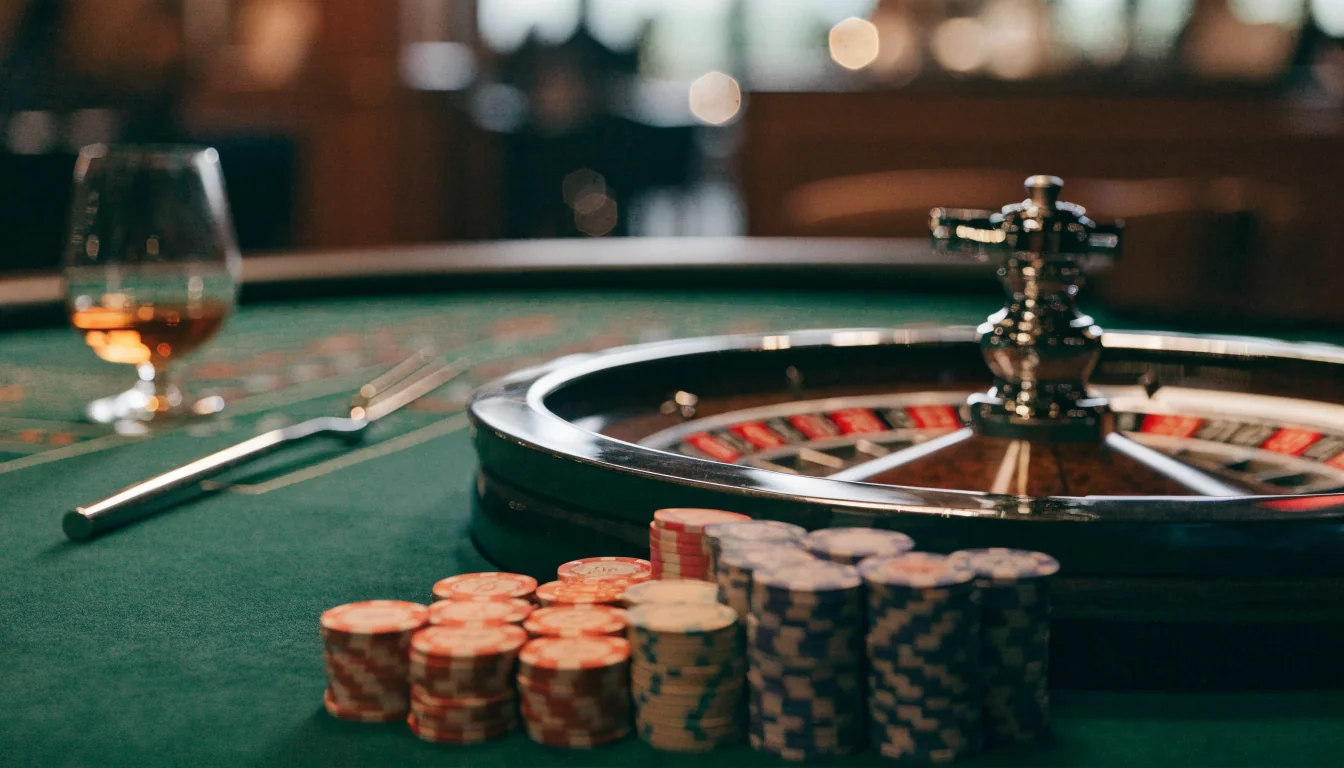
Roulette Online: Free Play, Real Stakes, and the Wheel Behind Them
Online roulette keeps the basic sequence of the physical game: a stake is placed on a possible result, the wheel spins, and the ball settles into a pocket. The interface may present that sequence on screen, but the important mechanics are still the wheel’s layout and the rules attached to the bets. Roulette can be played for free or for real money. The difference is whether a stake has cash value; the wheel’s underlying probabilities do not change just because the game is in a different mode.
A roulette table displays the available outcomes and lets a player select where to place a bet before a spin. The result is determined by the pocket where the ball lands. That pocket may correspond to a number, a colour, or another grouping shown on the table. The layout is not decoration: it tells the player which outcomes a selected bet covers and what the game will treat as a winning result.
The wheel variant matters more than the visual style. European and French roulette use a wheel with 37 numbered pockets, running from 0 to 36. American roulette adds a second zero, so its wheel has a different pocket layout and a less favourable house edge. A themed table or a polished interface cannot alter this arithmetic. The pocket count does.
Choosing a real-money roulette site in New Zealand calls for checking the details that matter to you before you play. This list provides a starting point for reviewing the available operator information.
-
7Bit Casino
- License
- Tobique Gaming Commission, licence no. 0000091
7Bit Casino is listed with a Tobique Gaming Commission licence, number 0000091.
-
N1 Casino
- License
- Malta Gaming Authority, licence no. MGA/B2C/394/2017
N1 Casino is listed with a Malta Gaming Authority licence, number MGA/B2C/394/2017.
-
Lamabet
- Payout speed
- 1-3 business days
Lamabet has a stated payout speed of 1–3 business days.
-
Zotabet
- License
- 07017519840
- Payout speed
- 1-3 business days
Zotabet has a stated payout speed of 1–3 business days and lists licence number 07017519840.
-
Play Grand
- License
- Malta Gaming Authority, licence no. MGA/B2C/370/2017
Play Grand is listed with a Malta Gaming Authority licence, number MGA/B2C/370/2017.
-
Ricky Casino
- License
- Tobique Gaming Commission, licence no. 0000002
Ricky Casino is listed with a Tobique Gaming Commission licence, number 0000002.
-
BitStarz
- License
- Curaçao Gaming Authority, licence no. OGL/2024/165/0185
BitStarz is listed with a Curaçao Gaming Authority licence, number OGL/2024/165/0185.
-
Neospin
- License
- Tobique Gaming Commission, licence no. 0000064
Neospin is listed with a Tobique Gaming Commission licence, number 0000064.
-
Wintino
- Payout speed
- 1-3 business days
Wintino has a stated payout speed of 1–3 business days.
European and French wheels
European roulette has a standard house edge of 2.70%. That figure reflects the zero’s effect across the game: many bets are framed as covering broad groups of outcomes, but the zero does not belong to the red or black group, nor to the even or odd group. It therefore gives the house an advantage even when a bet appears to cover a large share of the table.
French roulette uses the same 37-pocket wheel and has the same stated base house edge of 2.70%. Its distinctive feature is not a different pocket count, but special rules called *en prison* and *la partage*. On eligible bets, these rules reduce the house edge further. The precise effect depends on how the rule is applied to the wager, so the label “French” is useful only when the relevant table rules are actually in force.
That is a detail worth checking in the game rules, not guessing from the title. In my experience, a table name can tell less than the small-print rule panel.
The wheel’s result remains uncertain on each spin. The house edge is not a prediction of what the next result will be; it describes the mathematical advantage built into the game over repeated play. A single outcome can go either way. The mechanics are separate from any impression created by a run of colours or numbers.

American roulette
American roulette has a house edge of 5.26%, higher than the standard edge for European roulette. The added zero changes the distribution of outcomes without giving most bets an additional winning route. That extra pocket is the central mechanical difference, and it is why the American version is less favourable on the stated house-edge measure.
This comparison is more useful than judging a table by its graphics, pace, or presentation. A wheel can look familiar while carrying different odds. Before a spin, the pocket layout and the table rules reveal more about the game than its branding does.
What the online format changes
Playing online changes how the table is presented and how selections are made, but it does not remove the wheel’s mathematical structure. The betting layout shows the outcomes, the chosen stake is assigned to a selection, and the result settles against the rules of that particular variant. In real-money play, the stake has financial value; in free play, it does not. Neither mode changes the number of pockets or the house edge.
The phrase “best online roulette” has no single mechanical answer. If the comparison is about the stated house edge, French roulette with *en prison* or *la partage* on eligible bets can reduce the disadvantage further, while European roulette has a lower stated edge than American roulette. Those distinctions describe rules, not a promise about an individual result. A real-money table still follows the same underlying chance as its free-play counterpart.
European Roulette
Uses a 37-pocket wheel (0-36) with a standard house edge of 2.70%.
French Roulette
Uses a 37-pocket wheel with special rules like en prison and la partage that can further reduce the house edge.
American Roulette
Features a second zero for a total of 38 pockets, resulting in a higher house edge of 5.26%.
The practical reading is straightforward: identify the wheel, then identify the rules. European and French roulette share the 37-pocket layout; American roulette includes the additional zero and carries the higher stated edge. French rules may further reduce the edge on qualifying bets. The screen may make the game feel different, but the pocket map is doing the serious work.
New Zealand’s 2026 Casino Rules: What Changes, and When
The Online Casino Gambling Act 2026 took effect on 1 May 2026, bringing online casino table games within a new domestic regulatory framework. Roulette is expressly part of that picture: it is covered alongside other online casino games, rather than sitting outside the law because it uses a wheel instead of cards or slots.
For Kiwi punters considering roulette for real money in New Zealand in 2026, the important change is institutional. The framework assigns oversight, application assessment and licensing decisions to public bodies with different responsibilities. It does not make the game itself a special regulatory category. The same licensing structure applies to online casino operations that include roulette.
Two bodies, separate responsibilities
The Department of Internal Affairs (DIA) is New Zealand’s primary gambling regulator and oversees the online casino licensing framework. In that role, it assesses applicants. This places the DIA at the centre of the regulatory system, but it is not the only body involved in decisions about licences.
The Gambling Commission hears and determines casino licensing applications. It is also responsible for issuing online casino licences and approving changes to licence conditions. Put plainly, the DIA has an oversight and assessment role; the Commission handles the formal licensing decisions and related approvals.

That distinction matters because “the regulator” can sound like a single office doing every part of the job. It is not. The framework separates the DIA’s regulatory oversight from the Commission’s application determinations and licence functions. A licensing decision is not simply an administrative label attached by the department that assesses an applicant.
The Commission’s role also extends beyond the initial decision. Changes to licence conditions require its approval. That makes licence conditions part of the ongoing regulatory structure, rather than a detail that operators can treat as self-defined after receiving permission to operate. The framework gives the Commission a formal place in both licensing and subsequent condition changes.
Roulette sits within the casino framework
The Act’s coverage of online casino table games includes roulette. That is the point relevant to online roulette for real money: the game falls within the regulated online casino system, rather than being treated as an unrelated form of gambling.
This is a different question from how a roulette wheel works or what a particular bet pays. Those are features of the game. The Act addresses the legal framework for providing online casino gambling, including table games. From a regulatory perspective, the category of activity matters more than whether a session involves roulette, another table game, or a different casino format.
I find it useful to keep those layers apart. Game rules explain what happens when a bet is placed; licensing rules determine how online casino gambling is regulated. One does not answer the other. A familiar game mechanic does not itself establish that an online operation is licensed under New Zealand’s framework.
Do
- Distinguish between game rules and licensing rules
- Verify if an operator is authorised under the NZ framework
- Understand the separate roles of the DIA and the Gambling Commission
Don't
- Assume a familiar game mechanic implies a licensed operation
- Confuse regulatory oversight with formal licensing decisions
- Treat license conditions as self-defined by the operator
Nor does the Act create a separate regulatory lane just for people searching for real-money roulette online. The relevant structure is the online casino licensing framework, with roulette included in its scope. Free online roulette and real-money play may feel like different experiences to a player, but this section of the law concerns the regulation of online casino gambling, not a guide to choosing a play mode.
Timing: law in force, full system still ahead
The Act has been in force since 1 May 2026. That date marks the commencement of the legislation; it should not be confused with the date on which every part of the regulated system is fully operational.
A report by web3bet.com says the DIA anticipates the fully regulated online casino system being in place during 2027. That is a reported expectation about implementation, not a statement that the complete system was already operating when the Act came into force. The distinction is important: commencement establishes the law, while putting a licensing framework fully into operation is a further step.
For anyone trying to understand the position in 2026, the accurate summary is therefore not simply “the new system is live” or “nothing has changed.” The Act has commenced and covers roulette, while the complete regulated system is expected later. The DIA and Gambling Commission have defined roles within that framework, but the expectation reported for full operation points to 2027.
A date can do a lot of work in a headline. In practice, it needs context. The commencement date and the reported timing for full operation describe separate stages of the change. Keeping them distinct gives a clearer picture of what the law covers and when the licensing framework is expected to be fully in place.

Can Online Roulette Actually Make Money?
A roulette session can finish ahead. That is a real possibility, not evidence that roulette can be turned into dependable income. The distinction matters: a result from one session says what happened then; it does not change the terms built into the game.
In European and French roulette, the wheel has 37 numbered pockets, from 0 to 36, and the house edge is 2.70%. That edge describes the game’s mathematical advantage over repeated play. It does not mean that every session loses the same proportion, or that a particular spin is predictable. Short runs can go either way.
That is why the phrase “make money” needs care. If it means ending a session with more than was staked, it can happen. If it means having a reliable method to earn from roulette, the house edge points the other way. The game’s outcomes do not become more favourable simply because a player wants a regular return.
I have seen the difference get blurred in the way roulette is presented. “Easy money” is an advertising phrase; underneath it is a game with uncertain results and a fixed mathematical disadvantage for the player. A winning spell can feel like evidence that a method is working. It is still only a spell.
The edge is not a schedule. It does not tell anyone which spin will win, how long a losing run will last, or when a session will turn around. Nor does a series of wins remove the edge from the next spin. Each result is a separate outcome, while the house edge describes the structure of the game across play.
This is also why systems that alter stake size do not create an advantage. Changing the amount placed after a win or loss changes the pattern of exposure, not the wheel’s pockets. A system may produce a different-looking sequence of stakes, but it cannot make the underlying odds favourable. The mechanics stay put.
For someone considering whether to play roulette online and make money, the honest answer has two parts. A short-term profit is possible; roulette is not a dependable earning plan. Those statements are not contradictory. They describe the gap between an individual result and the mathematical expectation that applies across repeated play.
A winning result can be withdrawn or spent, but that does not turn the next session into a continuation of the same profit. Treating money won as though it were separate from money originally staked can make a temporary upswing look like a repeatable income stream. It is not. The wheel has no memory of a previous result.
There is no easy route hidden in the European or French wheel simply because the house edge is lower than on some other roulette versions. At 2.70%, the edge remains with the house. The number is a property of the game, not a forecast of what one person will lose in a particular sitting, and not a promise that every session ends down.
So, can roulette produce a win? Yes. Can that possibility support a dependable way of earning? No. The first is about what may happen in a session; the second asks whether the game offers a lasting advantage. In these versions, the mathematics does not provide one.

How Roulette Wins Work—and Why They Don’t Add Up to Income
A roulette result can look decisive: a bet lands, the payout is credited, and the balance rises. That is a real win, but it describes one result, not a dependable pattern. The distinction matters because a large payout is easy to remember, while the losing bets and the uncertainty around the next result are less visible.
I have found it useful to separate three things that promotional language often folds together: a winning bet, a winning session, and income. A winning bet is a single outcome in the player’s favour. A winning session means the balance is higher when play stops than when it began. Income implies something repeatable enough to rely on. Roulette can produce the first two; neither establishes the third.
The size of a payout can obscure that difference. A bet that wins may return more than the stake, depending on what was selected. But the return is attached to that result alone. It does not compensate automatically for earlier losses, nor does it make a later result more likely to favour the same player. A striking win is memorable. The sequence around it is the part that tends to get edited out.
That is where the idea of a roulette money maker breaks down. Roulette has a house edge: over repeated play, the game’s rules favour the house rather than the player. American Roulette has a house edge of 5.26%. That figure is not a forecast of what one person will lose in a particular sitting. A player can finish ahead, sometimes substantially. It describes the structural disadvantage built into the game, not a schedule of individual results.
The distinction between expectation and outcome is easy to miss when a session ends in profit. The balance shows what happened during that session; it does not show what would happen if the same decisions were repeated. Nor does a win prove that a staking approach has found an advantage. It may simply be the favourable side of an uncertain sequence.
This is why “win big” is a description of a possible result, not a method. A larger payout can make a session look more significant, but it does not change the underlying edge. Increasing the amount at risk can enlarge both the possible gain and the possible loss. It cannot turn an unfavourable game structure into a reliable source of earnings.
The arithmetic is blunt. The edge remains. A roulette table does not know that a player has lost earlier, needs a particular outcome, or has just won. Each result is not a settlement of the player’s personal history; it is another game result under the same rules. Treating a previous loss as a reason that a win is due can make a losing run more costly. Treating a previous win as proof of a system can do the same.
So, is roulette a good way to make money? It can deliver a profit in a particular session, but a profitable session is not evidence of sustainable income. That is the point I keep separate when reading a balance: the number at the end records an outcome, not a dependable earning rate. A lucky result can be large. The edge does not disappear.
Free Practice and Real-Money Roulette Are Different Experiences
Online roulette can be played without staking money or with real money. The wheel may look familiar in either mode, but the experience changes once a stake has actual financial value. I keep that distinction clear: free play is entertainment without a cash stake; real-money play puts funds at risk.
A free game can be a way to spend time with roulette without treating each round as a financial decision. It may help someone become familiar with the pace and basic flow of a game, but that familiarity is not a route to cash. A result in free play does not become a balance that can be withdrawn. No money was staked.
That boundary matters because practice can feel more consequential than it is. A run of favourable results in a no-money session may create confidence, but it does not establish what will happen when real funds are involved. The circumstances are different: with money at stake, a loss has a cost outside the game. The same sequence of choices can therefore feel very different.
Real-money roulette is not simply free play with a cash-out button added. Each stake represents funds that can be lost, and a win does not erase the possibility of later losses. I have seen how easily the word “practice” can be read as preparation for success. It is not a promise. Familiarity with a game does not guarantee a particular result.
The practical choice is between two different purposes. Playing for fun with no money involved keeps the activity separate from a personal gambling budget. Playing for real money makes the financial consequence part of every decision. It is useful to decide which experience is intended before starting, rather than treating free play as a test that proves real-money play will go well.
Why free play is not preparation for success
While a no-money session helps with familiarity, it does not establish real-money outcomes because losses in real-money play have a cost outside the game, changing the experience and decision-making.
Free and real-money versions are both available online, but their shared format should not blur their separate meanings. Free play has no cash stake and produces no cash winnings. Real-money play involves actual funds, with the possibility of losing them. That is the dividing line. No shortcut between them.
Even-Money Bets: Familiar Choices, Not Safer Outcomes
Red or black and odd or even are among roulette’s outside bets: choices made on broad groups of numbers rather than on a single pocket. High or low and columns or dozens are also outside bets, but they are not all even-money bets. The label describes a category of wager, not a promise that a result is more dependable.
The appeal is easy to see. A red/black choice is visually simple, and odds/evens asks for no special knowledge of the layout. In live roulette for real money, those choices still depend on the wheel’s result. The felt makes the options look balanced; the zero is the part that breaks the apparent symmetry.
On a European or French wheel, there are 37 pockets, numbered from 0 to 36. Zero is neither red nor black, and it is neither odd nor even. So even though the bet names divide the numbered outcomes into two broad groups, the wheel has an additional result outside those groups. That is why an even-money roulette bet should not be read as an even chance of winning.
I have seen the terminology do quiet persuasive work: “even money” sounds like a description of the risk, when it refers to the bet type. Familiarity is not protection. Red/black and odds/evens remain exposed to the same wheel, including its zero pocket.
The house edge for French and European roulette is 2.70%. Choosing a different outside bet does not, by itself, remove that edge. The useful distinction is between the shape of a wager and the underlying game: a broad bet can be easier to understand than a single-number choice, while the wheel’s structure still determines the long-run balance.
That matters when comparing roulette even-money bets with other outside options. High/low and columns/dozens are also placed outside the central number grid, but their labels describe different groupings. A bet’s position on the layout does not establish that it is safer, and a familiar colour choice should not be mistaken for a way to neutralise the zero.
In practice, these bets are straightforward to identify, not a shortcut around roulette’s mechanics. The wording is plain. The outcome is still governed by the wheel.
Free Roulette Offers: Read “No Wager” Literally
Online roulette can be played for free or for real money, but those are different ways to access the game. Free play means the spin is not funded by a real-money stake. A real-money offer described as “no wager” is a different proposition: the phrase refers to a condition attached to an offer, not to a no-cost game.
That distinction is easy to blur in promotional language. “Free” can describe access to a game without a cash stake; “no wager” can describe the terms under which an offer is presented. Neither phrase, on its own, explains what happens to a balance, whether a promotion has other conditions, or whether winnings can be withdrawn. The wording is not the whole deal.
- No Wager
-
A condition attached to a real-money promotion stating that there is no wagering requirement, distinct from free play which involves no cash stake.
I learned to separate the game from the offer. A free roulette game is about how the wheel is played: no real-money stake is placed. A no-wager offer, if one is presented, concerns the terms of a real-money promotion. It should not be read as another name for free roulette, and it should not be taken as proof that every other condition has disappeared.
The practical test is to read the terms attached to the specific offer rather than relying on its headline. “No wager” should be understood narrowly: no wagering requirement is being claimed. It does not automatically answer questions about eligibility, expiry, withdrawal conditions or other restrictions. Those details need their own wording.
For free play, the useful expectation is simpler. It provides a way to play roulette without staking real money; it is not a cash offer. For an offer linked to real-money play, the label does not turn the stake into free play. Different mechanism. Different terms.
I have seen short labels do too much work in casino promotions. They attract attention, then leave the important distinctions to the conditions below. The safest reading is the literal one: free play describes the mode of play, while “no wager” describes a claimed feature of an offer. One is not a substitute for the other.
Roulette Apps and the Checks Behind Real-Money Play
A roulette app is still a real-money gambling service when bets are placed with cash. The screen can make the experience feel like a self-contained game, but the account checks sit behind it. On a licensed New Zealand site, a player must prove both age and identity before playing. The minimum age is 18.
That process is commonly called KYC: know your customer. In practice, it means the operator verifies who is opening the account and whether they meet the age requirement. It is not a roulette feature, and it does not change how the wheel settles a bet. It is a condition of access to licensed play.
I have seen “quick sign-up” used as a selling point. The phrase can describe a short form, but it does not remove the verification step. A real-money account is not the same thing as a guest session. Checks first.
The more useful test of an app is not a glossy interface or a claim of convenience. Licensed operators must make harm-minimisation tools available as standard. These include deposit limits, time-outs and self-exclusion. Each serves a different purpose: a limit restricts deposits, a time-out interrupts access for a period, and self-exclusion blocks the account from continued play under that arrangement.
Those controls matter because a roulette session can move from one spin to the next without much friction. An app can keep the game close at hand; the tools provide ways to put boundaries around that access. Their presence does not make gambling risk-free, and setting a limit does not alter the odds of a spin. The distinction is plain.
“Best” is a slippery label in app comparisons. A familiar design says little about identity checks or the controls attached to an account. For real-money roulette, the practical questions are whether licensed play requires age and identity proof, and whether the operator provides the standard harm-minimisation options. The app itself is only the visible layer.
- Provide proof of age (minimum 18)
- Complete identity verification (KYC)
- Set deposit limits
- Review time-out options
- Check self-exclusion tools
Can a Roulette Bet Double the Money at Stake?
The phrase “double money” can make a roulette bet sound like a fixed exchange: stake goes in, twice that amount comes back. That is not what an outside-bet label promises. Red or black, odds or evens, high or low, and columns or dozens describe where a wager is placed. They do not guarantee a result or a return.
A winning bet may increase the amount held at the table, but the category alone cannot ensure that outcome. The wheel still decides. On French and European roulette, it has 37 numbered pockets, from 0 to 36. A bet on a group of outcomes can lose when the ball lands outside that group. The label describes the selection, not a protection against the wheel.
That distinction matters when a betting plan is built around doubling. Raising a later stake after a loss changes how much is exposed; it does not change which pocket the ball will reach. A sequence can feel orderly because each decision follows a rule. The outcome remains uncertain. A progression is not a mechanism for making a bet certain.
There is also a difference between a return and a profit. Casino language often compresses the two into a single figure, while the player’s original stake is part of what comes back after a win. Without checking how a particular game displays returns, “double” can be ambiguous. The bet name does not settle that question.
The underlying maths reinforces the point. French and European roulette each carry a house edge of 2.70%. That edge is not a forecast of what happens on one spin, nor does it prevent a short winning run. It describes the game’s built-in advantage over repeated play. A single win can happen; no outside-bet wording turns it into a dependable doubling method.
I have seen neat progressions mistaken for control. They organise the stake, not the result. On roulette, a bet can win, but “double” is not a promise attached to red, black, odds, evens, or any other outside choice.

Real-Money Roulette and the Offshore-to-Licensed Transition
The old restriction was aimed at operators, not Kiwi punters. Under the Gambling Act 2003, businesses based in New Zealand could not run online casinos. That did not make a Kiwi breaking the rules by placing bets with an offshore site. The distinction matters: the law addressed where an online casino could be based, rather than treating the customer’s participation as an offence.
For years, that left a practical gap. Offshore roulette could be played for real money, but it was not licensed or supervised by a New Zealand regulator. If a dispute arose over a frozen withdrawal or a limit that was ignored, there was no domestic government recourse. Access and protection were not the same thing.
The Online Casino Gambling Act 2026 changes the framework by creating a domestic licensing route for online casino gambling, including roulette. That does not turn the earlier situation into player misconduct. It changes the conditions under which operators can serve the market and, as licensed play becomes available, the checks attached to it.
For real-money roulette on a licensed site, age and identity have to be established through the operator’s KYC process. The minimum age is 18. In practice, this means that a person may be asked to verify who they are and confirm their age before using the licensed service; the process is a condition of access, not a roulette rule or a feature of any particular bet.
I have seen the distinction get blurred in marketing language. “Legal” can sound like a blanket endorsement of a site, when the relevant question is whether the operator is authorised under the New Zealand framework. Equally, the historic fact that Kiwi punters were not breaking rules by using offshore sites did not mean those sites had local oversight. Different questions. Different answers.
The transition is therefore about the operator’s status and the safeguards attached to licensed play, not a retrospective change to the position of customers who used offshore casinos. Real-money roulette sits inside that shift: the wheel is familiar, but the regulatory relationship around it is changing.
Roulette and Other Casino Games in New Zealand
Content created by the «casinobonusinfonz.com» team