
Know What the Wheel Changes Before You Bet
 Available in US
Understand how wheel layouts, zero rules and bet types affect outcomes, odds and payouts at roulette tables.
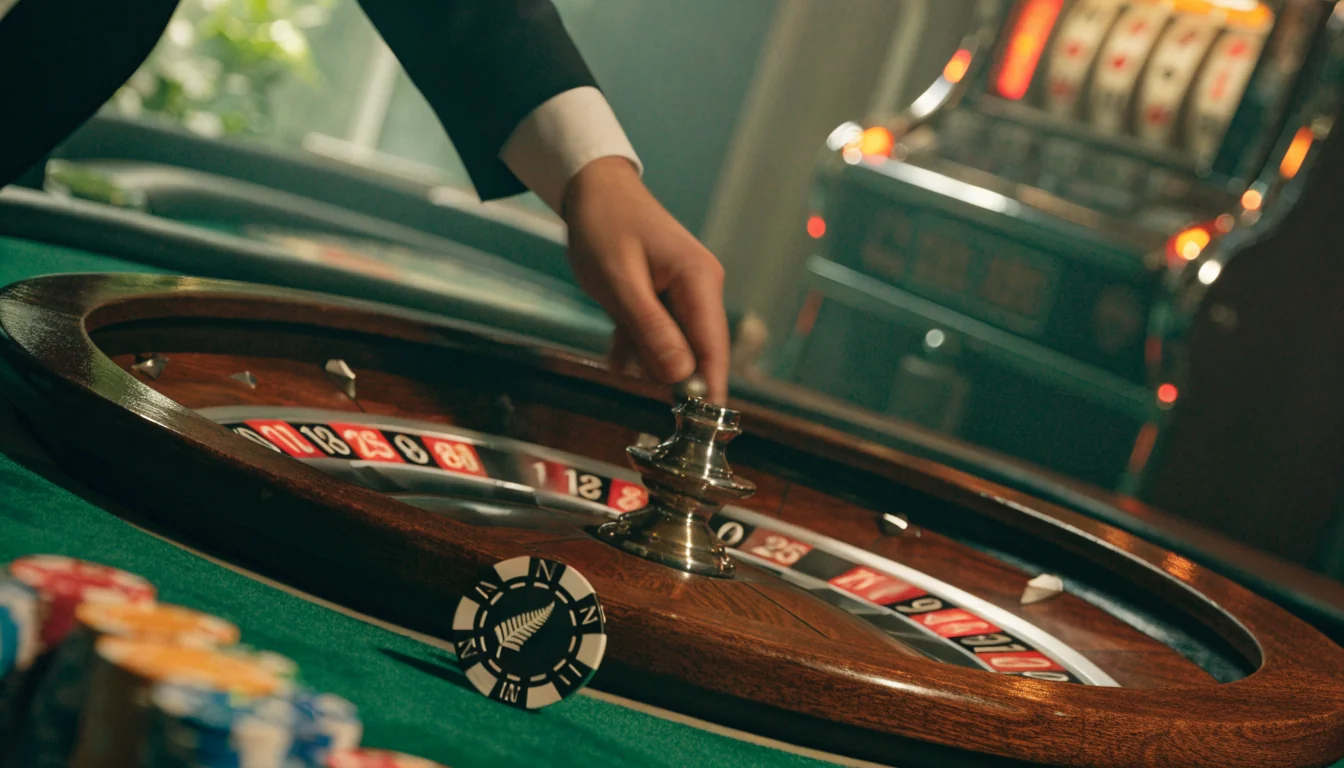
The Wheel Sets the Basic Rules
Roulette begins with a wheel, a ball and bets placed before the spin. The croupier sets the wheel and ball moving in opposite directions. When the ball slows, it drops into one of the wheel’s pockets. The pocket where it comes to rest determines the result. That is the central rule: the spin produces one winning outcome, and the bets are settled against it.
The wheel is not just a decorative part of the game. Its pockets define the possible results, and the number of pockets affects the mathematical balance between the player and the house. The two familiar layouts are European Roulette and American Roulette. Their difference is visible on the wheel itself: European Roulette has a single zero, while American Roulette has both a single zero and a double zero.
A European wheel has 37 pockets: the numbered pockets and one zero. Its house edge is 2.70%. An American wheel has 38 pockets, because the double zero adds another possible result, and its house edge is 5.26%. The figures describe the game’s built-in advantage over a large number of bets, not a prediction of what will happen on a particular spin. A single result can go either way.
Roulette rules and table options can vary by casino, so it helps to check the operator details before choosing where to play. Use this list as a reference while reviewing the rules that apply to your game.
-
7Bit Casino
- License
- Tobique Gaming Commission, licence no. 0000091
7Bit Casino is listed with a licence from the Tobique Gaming Commission, licence no. 0000091.
-
N1 Casino
- License
- Malta Gaming Authority, licence no. MGA/B2C/394/2017
N1 Casino is listed with a Malta Gaming Authority licence, no. MGA/B2C/394/2017.
-
Lamabet
- Payout speed
- 1-3 business days
Lamabet lists a payout speed of 1–3 business days.
-
Zotabet
- License
- 07017519840
- Payout speed
- 1-3 business days
Zotabet lists licence identifier 07017519840 and a payout speed of 1–3 business days.
-
Play Grand
- License
- Malta Gaming Authority, licence no. MGA/B2C/370/2017
Play Grand is listed with a Malta Gaming Authority licence, no. MGA/B2C/370/2017.
-
Ricky Casino
- License
- Tobique Gaming Commission, licence no. 0000002
Ricky Casino is listed with a licence from the Tobique Gaming Commission, licence no. 0000002.
-
BitStarz
- License
- Curaçao Gaming Authority, licence no. OGL/2024/165/0185
BitStarz is listed with a Curaçao Gaming Authority licence, no. OGL/2024/165/0185.
-
Neospin
- License
- Tobique Gaming Commission, licence no. 0000064
Neospin is listed with a licence from the Tobique Gaming Commission, licence no. 0000064.
-
Wintino
- Payout speed
- 1-3 business days
Wintino lists a payout speed of 1–3 business days.
That extra pocket matters. A bet that wins on a particular number or group of numbers faces a slightly larger set of possible outcomes on the American wheel. The double zero is not an extra winning number for most bets; it is another pocket that can settle the spin against them. The distinction is easy to overlook when both versions use a similar-looking betting area, but the wheel determines the underlying probabilities.
In practical terms, play follows a repeated sequence. Bets are accepted while the round is open. The croupier then closes betting, spins the wheel and releases the ball. Once the ball settles, the winning pocket is identified and the round is resolved. The next round begins with a fresh opportunity to place bets. The exact signals and pace can differ between live and automated games, but the logic of the spin remains the same.
The phrase “roulette rules” can make the game sound like a long list of procedures. At its core, the basic rules are spare: choose a wager, allow the round to close, then see whether the ball lands in an outcome covered by that wager. The range of available wagers gives the game its complexity; the wheel’s job is simply to produce the result. The details of how the betting area is arranged are separate from the order of pockets on the wheel.
I have seen new players treat the wheel and betting area as if they were two versions of the same map. They are not. The betting area is where wagers are entered; the wheel is where the outcome is generated. A number’s position on the cloth does not tell where it sits beside other numbers on the wheel. This matters especially when a bet is described by reference to wheel positions, rather than by a block or line on the table.

The zero is also not an ordinary numbered result. It is a distinct pocket, and its presence is part of the reason the game has a house edge. On European Roulette, that single zero sits alongside the numbered pockets. On American Roulette, the additional double zero changes the wheel’s composition and raises the house edge. The labels may look familiar across versions, but the layouts do not produce identical odds.
A careful first check is therefore the wheel type, not the animation, colour scheme or game title. European Roulette means a single-zero wheel and a 2.70% house edge; American Roulette means a wheel with both zero and double zero and a 5.26% edge. Those are the basic structural differences. Other rules can alter how certain bets are settled, but they do not change what a standard spin is: a ball comes to rest in one pocket, and that pocket decides the round. Short version: check the wheel first.
Roulette in New Zealand: The Rules Around the Game
For New Zealanders, the rules around roulette in 2026 include more than the conditions printed at a casino table. The legal position for online casinos is changing: a new domestic licensing framework has been established, but the transition to a fully operational system takes time. That distinction matters. A law creating a licensing regime does not mean every online casino is already licensed under it.
The Department of Internal Affairs is New Zealand’s primary gambling regulator and oversees the online casino licensing framework. The Gambling Commission has a separate licensing role: it hears and determines casino licence applications, issues online casino licences and approves changes to licence conditions. In practical terms, the Department oversees the framework, while the Commission makes decisions about applications and licence terms.
A new framework, with a transition period
The Online Casino Gambling Act 2026 took effect on 1 May 2026, establishing New Zealand’s first domestic licensing regime for online casino gaming. The transition runs from that date until 1 December 2026. Online casinos that were already serving people in New Zealand before the Act began may continue operating during this period, subject to its transitional provisions. This is a temporary arrangement, not evidence that every provider has already received a New Zealand licence.
The full licensing regime is not expected to be operating completely until 2027. The law also sets a future point at which unlicensed operation is expected to become an offence, around the middle of that year. Providers that have not applied for a licence must cease conducting online casino gambling in New Zealand by 1 December 2026. The dates matter because the legal status of the market is moving through stages rather than changing all at once.
During the transition, online casino gambling must not be advertised to people in New Zealand. The Act also requires stricter age and identity verification from licensed operators. These are regulatory obligations, not features of the roulette game itself.

Before the 2026 Act, the Gambling Act 2003 did not permit online casinos to be based in New Zealand. Gambling offered online from outside the country was not licensed or supervised by a New Zealand regulator in that period. A customer who wagered with an offshore website then had no domestic government recourse. The new framework changes the regulatory structure; it does not make the earlier position equivalent to the licensing system now being introduced.
New Zealand residents could access offshore casino websites, and a player did not face a fine or criminal prosecution simply for playing with an offshore casino that lacked a local licence. That does not mean the site was covered by New Zealand supervision or that a local regulator could resolve a customer’s dispute. Access and regulatory protection are separate questions.
What the rules mean around an offer
Promotional language also sits within terms. An online casino may advertise a bonus subject to eligibility requirements, wagering conditions, expiry, game contribution rules and restrictions on withdrawals. Those conditions affect whether an offer can be used and what happens to any resulting balance; the headline wording alone does not explain the full arrangement.
Where the stated offer conditions apply, bonus funds must be wagered 50X within 30 days, and winnings from free spins must be wagered 50X within 7 days. A withdrawal request voids active or pending bonuses. These are material conditions, not small print that can be treated as separate from the offer.
I have seen how a short promotional line can make an offer sound simpler than its terms. The operative detail is what qualifies, what must be wagered, when the condition expires and what a withdrawal does to the bonus. None of that changes the roulette rules at the table. It changes the conditions attached to the promotion.
The regulatory framework is therefore best understood as a work in progress in 2026: the Department of Internal Affairs oversees it, the Gambling Commission decides licensing matters, and transitional provisions govern which existing providers may continue while the full system is completed. Different questions. Different rules.
Reading the Table Without Confusing It with the Wheel
A roulette table is a betting map, not a picture of the wheel. Its printed numbers are arranged to make certain wagers easy to place and identify. The wheel, by contrast, has its own circular sequence of pockets. Those two arrangements serve different purposes, and treating them as interchangeable is an easy way to misunderstand a called bet.
On the table, numbered spaces sit in a compact grid. Other marked areas sit around that grid for bets covering broader groups of outcomes. The layout lets a dealer see where a chip has been placed and what kind of selection it represents. It does not reproduce the order in which the numbered pockets sit around the wheel. The wheel’s numbering follows a circular path; the table’s numbering follows rows and columns.
I learned to keep those maps separate. A chip placed on a printed number identifies a selection through the table. A called bet, however, may name a group by referring to numbers that sit near one another around the wheel. The group is defined by wheel positions, not by neighbouring spaces on the printed grid. A number can look close to another on the table while being far from it on the wheel, or the reverse.

That distinction matters when a dealer accepts a sector call. The dealer is not simply sweeping across a table row or collecting the numbers visible beside one another. The call refers to a section of the wheel’s sequence. The table helps record the wager, but it does not determine which numbers belong to that wheel-based group.
Two maps, two jobs
The wheel answers a positional question: where does a pocket sit in relation to the others around the rim? The table answers a betting question: where should a chip be placed so the selection is clear? A table marking can represent a single outcome or a broader selection, but its physical location should not be read as a clue to the pocket’s neighbours on the wheel.
This is why a player who knows the printed grid can still be unfamiliar with called bets. Reading the grid is a matter of recognising the marked spaces and how chips are positioned. Understanding a wheel-based call requires knowing that the named group follows the wheel’s sequence. One skill does not automatically provide the other.
The distinction is especially useful in live play, where the dealer may hear a verbal call and place chips on the table for the player. The dealer is translating a spoken selection into a table position. That translation can look like the call was based on the table, when the group itself was defined by wheel positions. The placement is the recording method; the wheel sequence supplies the membership.
What the layout can and cannot tell you
The table is useful for checking what a chip covers. It shows whether a wager has been placed on a marked number or in an area representing a wider selection. It also gives the dealer a shared visual reference, reducing ambiguity about which wager is being recorded.
Do
- Use the table to check what a chip covers
- Use the table as a shared visual reference
Don't
- Use the table as a substitute for a wheel map
- Assume grid proximity reflects wheel proximity
But the table cannot be used as a substitute for a wheel map when a call depends on neighbouring pockets. Reading horizontally or vertically across the grid will not reveal the wheel’s order. Nor does a chip’s location imply that the selected numbers are physically close together on the wheel. The printed layout is organised for betting, not to mirror the rim.
I have seen this confusion arise because both arrangements display the same numbered outcomes. Familiarity with one can create a false sense of familiarity with the other. The correction is simple, though easy to overlook: a table position tells where the wager is recorded; a wheel position tells how a called group is formed. Keep those functions distinct. That is the practical rule.
Roulette Odds and Payout Percentages, in Plain Numbers
A payout percentage is a long-run theoretical measure: it describes the share of stakes expected to be returned across repeated play under the rules being assessed. It does not forecast the next spin, or promise that a session will return that share. A single result can be far from the figure.
A specialist review gives European Roulette a payout percentage of 97.30% and American Roulette 94.70%. These are figures to read as reported estimates, not as a guarantee attached to every table carrying those names. The wheel layout and rules matter, and the displayed game information is the place to check the version in use.
The relationship with the house edge is straightforward in principle. The payout percentage describes the theoretical return; the house edge describes the casino’s corresponding theoretical advantage. For single-zero European Roulette, the stated house edge is 2.70%, which complements a 97.30% payout percentage. That is a mathematical relationship over the long run, not a deduction that each player will lose a fixed share of a stake.

I have seen these figures treated as if they were a forecast for a particular evening. They are not. A payout percentage cannot say whether the next result will be a win, how long a losing run will last, or what a particular session will return. Random variation remains visible in real play. The average is a model across many outcomes; an individual spin is one outcome.
The American figure also needs careful handling. It is reported as 94.70% by the specialist review, while roulette references may present house-edge figures separately. The two measures should not be blended casually or treated as interchangeable figures from one verified calculation. The useful point for comparison is that the reported payout percentage for American Roulette is lower than the reported European figure. A lower theoretical return means less of the total stake is expected to come back over repeated play, under the assumptions behind that estimate. It says nothing certain about a short run.
For 100/1 roulette, a specialist review reports a payout percentage range from 92.86% to 96.19%. A range is not a single table promise. It signals that the reported figure depends on the version or calculation being discussed; it should not be read as a settled return applying to every game labelled 100/1. The name alone does not establish the exact rules behind the percentage.
That distinction matters when comparing games. A label may make a variant sound like a simple alternative, while its theoretical return rests on the specific rules used to calculate it. The percentage is useful for comparing stated long-run expectations, provided the same kind of figure and the relevant rules are being compared. It is not a tool for predicting a result or judging what will happen in a limited set of spins.
European Roulette
Reports a payout percentage of 97.30% with a house edge of 2.70%.
American Roulette
Reports a payout percentage of 94.70% with a house edge of 5.26%.
100/1 Roulette
Reports a payout percentage range from 92.86% to 96.19%.
Numbers help. They do not call the next result.
What Double-Zero Changes on the Wheel
In American roulette, the extra green pocket is marked 00. It is separate from the pocket marked 0, so the wheel has two zero outcomes alongside its numbered pockets. The distinction matters: each is a possible result, and neither is interchangeable with the other when a bet is settled.
The double-zero layout has 38 pockets and a house edge of 5.26%. The additional pocket changes the odds because it adds another possible result without changing the basic bet categories. A wager on a numbered outcome, for instance, has another pocket that can prevent it from winning. That is the practical cost built into the layout. The felt may look familiar; the extra green slot does the work.
When playing, the table’s stated rules determine which bets are available and how a winning selection is paid. The 00 pocket is not a second label for zero, and a bet covering one does not automatically cover the other. This is worth checking before placing a wager, particularly where the table interface uses compact labels or a live dealer’s call is easy to miss. Small distinction. Real settlement consequence.
A zero result can also affect wagers that are not placed on either green pocket. The handling depends on the table’s rules, rather than on the colour of the layout or the name of the game. Some American tables have a special half-stake return for even-money bets when either zero or double zero lands. That treatment is not a standard rule of American roulette.

A specialist roulette review describes this half-stake treatment at some Atlantic City tables. It should be read as a table-specific feature, not as a promise attached to every American wheel or every table in that location. The relevant wording is the rule displayed for the game being played. If it does not state that the half-stake return applies, the double-zero format alone gives no reason to expect it.
That distinction is important because the special return changes what happens to an eligible bet after a zero result; it does not remove the double-zero pocket or alter the wheel’s underlying layout. Without such a rule, the normal table settlement applies. A title such as “American roulette” identifies the variant, but it does not by itself tell the whole story about how a zero-related bet is handled.
The house edge is a property of the rules and the wheel, not a prediction of what any single spin will do. A run of results cannot make the next outcome due, and every real-money bet can lose. I have seen players treat a second green pocket as a minor visual detail. It is not. The rules are in the pocket count—and in the exact settlement terms.
Any roulette play carries the risk of losing the stake, so no one should risk more than they can afford to lose.
How Table Bets Work When Zero Lands
The important distinction in these roulette rules is not simply whether a bet sits inside or outside the numbered grid. La Partage and En Prison have a narrow trigger: zero must land, and the wager must be an even-money outside bet. A zero result does not automatically give every bet on the layout special treatment.
Eligibility for Zero Rules
Special treatment under La Partage or En Prison requires two conditions: zero must land, and the wager must be an even-money outside bet.
That condition matters because the wheel result and the bet type are read together. The dealer first settles the spin’s winning number, then applies the table’s zero rule to any eligible even-money outside stake. A bet that does not meet both conditions is not covered by these rules. The wording is restrictive by design; it does not extend the relief to every losing wager.
La Partage: part of the stake is returned
Under La Partage, zero causes half of an eligible even-money outside stake to be returned, while the other half is collected. The wager is therefore settled in part at the zero result rather than carried into another spin. The player does not need a later result to determine what happens to the returned portion.
In practical terms, the dealer separates the eligible stake and returns one half. The remainder is lost. That is the defining feature of La Partage: a partial return now, with no continuing wager left to resolve. It changes the settlement of that particular bet, not the result shown by the wheel.
En Prison: the stake waits
En Prison handles the same eligible bet differently. When zero lands, the even-money outside wager is carried forward rather than split immediately. It remains unresolved until the next spin determines its fate.
If that next spin wins for the original bet, the stake is returned, but there are no additional winnings. If the next spin loses, the stake is collected. The key difference is timing: the full original stake remains tied to the outstanding wager while the next result is awaited.
This is not a fresh bet placed after zero. The original stake is still in play under the prison rule, and the next spin settles it. No extra winnings are added when the carried bet succeeds.
What to check on the felt
A table’s printed instructions are more useful than assumptions based on the name of a roulette game. The relevant questions are whether the table applies La Partage or En Prison, whether the wager is an even-money outside bet, and whether zero has landed. Without all those conditions, the special handling described here does not apply.
The distinction is easy to lose in a fast round. La Partage returns a portion and ends the wager; En Prison holds the wager for the next spin and then either returns the original stake or collects it. Neither rule changes what the wheel has produced. They define how a qualifying bet is handled after zero.
From behind a counter, the recurring confusion is treating “zero rule” as one universal settlement. It is not. The bet category determines eligibility, and the named rule determines whether part of the stake comes back immediately or the stake remains pending. Small wording. Different outcome.
French and Mini Roulette: Rules That Change the Edge
French Roulette keeps the single-zero wheel used by European Roulette. The difference that matters is not a new pocket layout but the rules attached to certain bets. La Partage and En Prison can apply to even-money outside bets when zero lands, changing how the stake is settled. They do not alter the wheel or apply to every wager.
With either rule in force, the stated house edge for French Roulette falls to 1.35%. That figure depends on the special rule actually being offered; a French label alone is not enough to establish how a particular table handles zero. I have always treated the written table rules as more useful than the name on the screen. Labels can be broad. Settlement terms cannot.
Mini Roulette changes the wheel itself. It has 13 pockets, and its stated house edge is 7.89%. That is markedly higher than the figure associated with standard single-zero roulette, so the smaller layout should not be mistaken for a simpler or more favourable game. Fewer pockets do not automatically mean better odds.
La Partage changes Mini Roulette’s stated edge to 3.85%. The reduction is tied to the rule and the bets it covers, rather than being a general discount on every outcome. The comparison is therefore between two different features: French Roulette combines a single-zero layout with special settlement rules, while Mini Roulette starts with a much smaller wheel and a higher edge. A zero rule can soften that edge, but it does not make the games equivalent.
In practice, the useful distinction is conditional. French Roulette’s lower edge applies when La Partage or En Prison is available; Mini Roulette’s lower stated figure applies when La Partage is in force. Without those terms, the relevant figures are 2.70% for single-zero European Roulette and 7.89% for Mini Roulette. Rules first. Labels second.
Minimum Bets: What the Rules Can and Cannot Tell You
Roulette rules explain how a bet is settled; they do not establish one minimum stake for every game. The number of pockets, the zero rule and the way a winning bet pays are not enough to calculate the smallest amount a table accepts.

I have seen the word “minimum” treated as if it were a rule of roulette itself. It is not. A game’s rules describe the bets and their outcomes, while the amount accepted at a particular table is a separate condition. Without a stated table limit, there is no sound basis for naming a minimum or assuming the same amount applies across games.
That distinction matters when comparing versions. European, American, French and Mini Roulette have different wheel features, but those features alone do not reveal the entry stake. Nor does the fact that a game is online or shown at a particular table settle the question. The minimum needs to be displayed for that specific game before a stake is placed.
A table limit is not the same as a roulette rule. That is the useful dividing line.
The same caution applies to descriptions that say “low minimum” without showing the amount and the conditions attached to it. The phrase is promotional, not a precise limit. A clear table display is what makes the amount knowable; the variant’s name does not.
The rules also cannot confirm whether a minimum applies to each individual chip, each betting position, or the total stake in a round. Those details need to be read from the table’s own terms rather than inferred from the wheel or from another game.
So, the minimum bet rules provide no universal figure. The only reliable amount is the one specified for the table being considered, and it should not be guessed from another roulette version. In my experience, treating a missing limit as an invitation to assume is where avoidable confusion starts.
A small stake is still real money at risk. Roulette outcomes are random, every real-money bet can lose, and no minimum makes a game safe. The sensible boundary is not to risk more than can be afforded to lose.
Payout Rules Depend on the Bet and the Zero Rule
Roulette payout rules are not determined by the word “even-money” alone. When zero lands, the table’s rule decides whether part of an eligible stake is returned immediately or held for another spin. These treatments apply only to even-money outside bets; they do not automatically cover every wager on the layout.
With La Partage, the zero result splits the stake’s treatment. Half is returned, while the other half is collected. The bet is settled at that point: there is no further spin attached to it. In practical terms, the player gets back part of the original stake but does not receive winnings from the bet.
En Prison handles the same kind of bet differently. After zero, the stake is carried forward rather than divided. The bet remains unresolved until the next spin. If that spin produces a winning result for the original outside bet, the stake is returned, but no additional winnings are paid. If the next spin loses, the stake is collected.
The distinction is easy to miss in a game description that merely says a table has a zero rule. La Partage returns part of the stake at once; En Prison keeps the full stake in play for a further decision. Neither rule turns a zero into a win. They define what happens to an eligible bet after that result.
I treat the settlement wording as part of the bet, not as a minor table detail. A player can place the same even-money outside wager and see a different outcome for the stake solely because the table uses a different rule. Before play, the relevant point is whether zero causes a partial return or carries the wager forward—and what result settles it.
That is the whole distinction. No hidden payout.
These rules do not apply to every bet, and a real-money wager can still lose. Roulette outcomes are random, so no settlement rule removes that risk. Do not risk more than can be afforded to lose.

Strategy Starts with What a Spin Cannot Tell You
A run of red results can feel like evidence that black is overdue. It is not. Roulette spins are independent: the previous result does not alter the probability of any outcome on the next spin. The wheel has no memory, and a sequence does not create a debt that it must repay.
I have seen this mistaken idea shape betting decisions. Someone waits for a colour, number or section of the wheel to appear less often, then raises the stake as if the gap itself were a signal. It is not. A larger wager changes the amount at risk, not the chance that the selected outcome will land.
That is the practical limit of roulette rules and strategy: rules can show how a bet is settled and which version gives a lower house edge, but they cannot make a random result predictable. Betting systems that increase stakes after losses do not remove the edge. They can instead make a losing sequence more costly.
French Roulette has the strongest terms for even-money bets when La Partage or En Prison applies. The advantage comes from how those rules treat an eligible bet after zero, not from a way to forecast the next spin. With La Partage, the effective house edge on eligible even-money bets is reduced when zero lands. En Prison also improves the terms for those bets under its rule. Neither changes the independence of later spins.
That distinction matters. A more favourable rule changes the long-run cost of a bet; it does not promise a win on any particular turn. The special treatment applies only to eligible even-money bets, so it should not be assumed for other selections or at every table.
I treat a stake as money that can be lost, not as a position that the next spin must rescue. No progression, pattern or past result alters the underlying probabilities. The sensible ceiling is personal: do not risk more than can be afforded to lose. Random remains random.
Roulette and Other Casino Games in New Zealand
Content created by the «casinobonusinfonz.com» team