
Understand the wheel before placing a roulette bet
 Available in US
The guide explains the single-zero layout, bet types and odds, and how digital and live-dealer games present the European format.
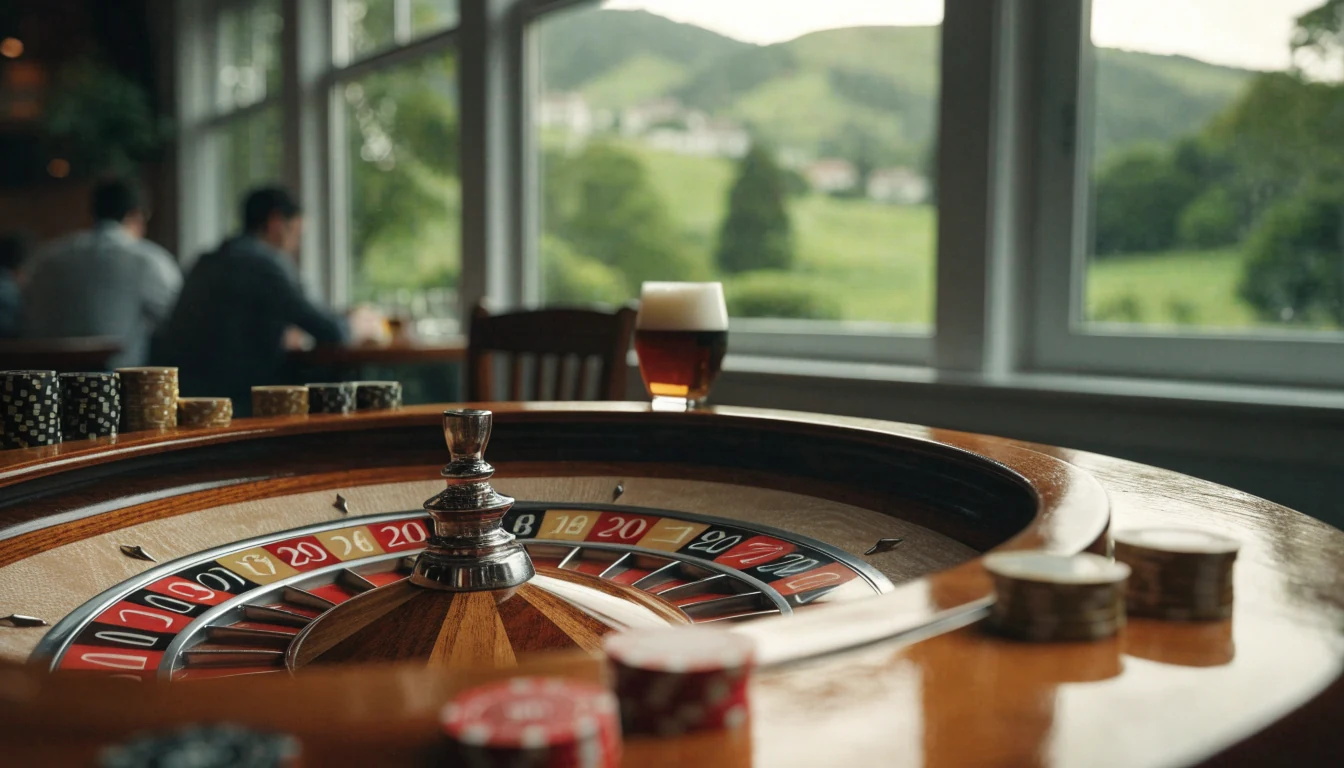
The Single-Zero Wheel Behind European Roulette
European Roulette is defined by its wheel: 37 pockets, numbered from 1 to 36, plus a single zero. That layout is the reference point for the online game. The numbers and zero are arranged around the wheel, while the betting interface gives players a way to select stakes and positions before a spin. The screen may look unlike a physical table, but the central structure remains the same: a ball lands in one pocket, and bets are settled according to that result.
An online European Roulette game can present this structure in different ways. A digital version may show an animated wheel, a live dealer and physical wheel, or a more compact interface focused on the betting area. These are presentation choices, not different definitions of the European variant. The useful check is the wheel specification: a single-zero European game has one zero pocket, rather than a double-zero pocket as well.
The interface is a representation of the game, not a way to influence the ball. In a digital game, the software produces the result; in a live-dealer format, the displayed result comes from the physical spin. Either way, the player sees a result and the game resolves the bets placed against it. The details of animation, camera angles and sound can make one version feel more like a casino floor, but they do not make its outcome more controllable.
European roulette can be a useful game to focus on when choosing an online casino in New Zealand. Use this list as a starting point, and check each operator’s current terms and game availability before deciding.
-
7Bit Casino
- License
- Tobique Gaming Commission, licence no. 0000091
7Bit Casino lists a Tobique Gaming Commission licence, number 0000091.
-
N1 Casino
- License
- Malta Gaming Authority, licence no. MGA/B2C/394/2017
N1 Casino lists a Malta Gaming Authority licence, number MGA/B2C/394/2017.
-
Lamabet
- Payout speed
- 1-3 business days
Lamabet lists a payout speed of 1–3 business days.
-
Zotabet
- License
- 07017519840
- Payout speed
- 1-3 business days
Zotabet lists licence identifier 07017519840 and a payout speed of 1–3 business days.
-
Play Grand
- License
- Malta Gaming Authority, licence no. MGA/B2C/370/2017
Play Grand lists a Malta Gaming Authority licence, number MGA/B2C/370/2017.
-
Ricky Casino
- License
- Tobique Gaming Commission, licence no. 0000002
Ricky Casino lists a Tobique Gaming Commission licence, number 0000002.
-
BitStarz
- License
- Curaçao Gaming Authority, licence no. OGL/2024/165/0185
BitStarz lists a Curaçao Gaming Authority licence, number OGL/2024/165/0185.
-
Neospin
- License
- Tobique Gaming Commission, licence no. 0000064
Neospin lists a Tobique Gaming Commission licence, number 0000064.
-
Wintino
- Payout speed
- 1-3 business days
Wintino lists a payout speed of 1–3 business days.
A familiar label can obscure meaningful differences between games. “European” describes the wheel format, not every feature around it: the speed of play, table limits, visual design and available controls can vary between versions. Some online lobbies also place several roulette variants beside one another, so a title alone is not always enough to identify what is on screen. The single-zero layout is the defining point to verify.
The house edge attached to standard European Roulette is 2.70%. That figure describes the mathematical advantage built into the game over repeated play; it is not a forecast for an individual session or spin. A result can go against the expected pattern in either direction over a short run. The wheel does not owe a particular number a turn.
This is why an online European Roulette simulator and a real-money game can share the same visible layout without being the same kind of experience. In free play, no cash stake is put at risk. In real-money play, a bet uses money and can be lost when the result does not match it. The distinction is consequential even if the wheel graphic, buttons and sequence of play appear identical. Free access is not a sign that real-money results can be predicted from practice, nor does a paid version make the game more skill-based.
I have seen game labels do a lot of quiet work. “Authentic” may refer to a live wheel or simply to the familiar look of the interface; “classic” may describe presentation rather than a separate mathematical format. The actual rules shown for the game matter more than the adjective. A polished table can still be ordinary single-zero roulette.
Searches for an online European Roulette cheat or a way to win every time point to a basic misunderstanding of what the interface does. Neither a simulator nor a real-money game provides a reliable method to force a result. A convincing animation is not evidence of a pattern, and recent outcomes do not turn the next spin into a known quantity. Roulette outcomes are random; every real-money bet can lose. No shortcut.
The term “European” is also sometimes used loosely in conversation about European versus French versus American Roulette. French Roulette shares the single-zero wheel layout, while its special rules can alter how certain bets are settled. American Roulette has a different layout. Those distinctions matter, but the starting point remains simple: identify the pockets and the rules attached to the game, rather than relying on a lobby label or its visual styling.
Online presentation changes how the game is accessed, not what a single-zero wheel means. Once that distinction is clear, it is easier to separate the format itself from practice tools, variant rules and the choices made around a stake. Roulette remains a chance game. Money at risk should never exceed what can be afforded to lose.
Free Play Is Practice, Not a Prediction
A free European Roulette game is most useful as a place to become familiar with the controls. It lets a player explore how a particular table responds to clicks or taps, how a selected chip is placed, and how a bet is cleared or adjusted, without putting money at stake. Those details vary between interfaces. A practice session reveals the mechanics of the version on screen, not a hidden feature of the wheel.
That distinction matters because a roulette interface can make a simple action feel less obvious than it is. A chip may need to be selected before a betting position, or a control may be used to repeat or remove a wager. Free play gives time to test those functions at a comfortable pace. Nothing is lost by making a clumsy placement, and there is no need to hurry through the table while learning where its controls are.

I have found this kind of rehearsal more valuable than treating a demo as a miniature gambling session. The practical questions are modest: does the table show the intended selection, can a bet be changed before the spin, and is it clear when betting has closed? Once the sequence makes sense, the interface stops competing for attention. That is the useful result.
What practice can teach
Free play can help with the visual language of a table. It gives space to distinguish a selected chip from a placed bet, notice how the interface marks a position, and follow what happens after the spin resolves. It can also show whether the game presents its controls in a way that feels clear or confusing. These are interface observations, not lessons about which outcome is likely.
A free online table may be available directly in a browser, while another version may use a different format or set of controls. The label “no download” describes access, not a special roulette rule. A free mode is still only useful for the table actually being tested: familiarity with one layout does not guarantee that another provider’s interface behaves the same way.
The same applies to live tables. A free practice option, where one is offered, may help someone understand the presentation and pace of that particular product. It should not be confused with a promise that every live European Roulette table has a free mode. “Live” describes how the game is presented; it does not make practice outcomes informative about future spins.
Free play also allows a player to test the rhythm of a session without deciding how much money to stake. The central value is control over the learning process: pause, inspect a control, try a placement, and reset mentally without pressure. A demo can make the software easier to operate. It cannot make the wheel easier to predict.
Do
- Use free play to familiarise yourself with the controls
- Test how chips are placed and bets are cleared
- Use demo mode to learn the table's visual language
Don't
- Treat practice sessions as a way to predict results
- Assume a pattern in free play will recur in real money
- Believe that demo outcomes prove a number is "due"
Why a run of results proves nothing
A practice session may produce a sequence that feels meaningful. A number might appear more than once, or a colour may seem absent for a while. That impression is easy to form when watching outcomes arrive in sequence, but each roulette spin is independent. Results already seen do not change the probability of what comes next.
This remains true in free play. The absence of a financial stake changes the consequences of a result, not the logic of the next spin. A long practice session therefore cannot establish that a number is “due,” and repeating a particular pattern in a demo does not show that it will recur later. It is a record of what happened during that session, nothing more.
That is why free European Roulette should be used to learn the interface rather than to build confidence in a prediction. It may help reduce operational mistakes, such as misunderstanding a control or placing a selection in the wrong area. It cannot remove uncertainty from roulette. Every outcome remains random.
When a player moves from practice to any form of real-money roulette, the stakes change the consequences of a mistake. No betting system or sense of familiarity makes a spin safe. Money that cannot comfortably be lost should not be risked. Practice is useful; prediction is not.
European vs American Roulette: One Pocket Changes the Edge
The difference between European and American Roulette is easy to spot on the wheel: European Roulette has a single zero, while American Roulette adds a double zero. That extra pocket changes the balance of the game. It does not alter how a winning number is selected, but it gives the house a larger mathematical advantage.
A European wheel has 37 pockets in total, including zero. An American wheel has 38, with both zero and double zero. The extra pocket is not an additional player option or a special bet. It is another possible result, and the standard payouts do not increase to compensate for it.
That is the core of the American and European Roulette difference. On a single-zero wheel, the house edge is 2.70%; on the American wheel, it is 5.26%. The American version’s edge is higher because the additional pocket creates another outcome on which the house can win while the standard bet payouts remain unchanged. The gap is substantial for a feature that can look like a small change in the interface.
When checking a game, the wheel label matters more than the colour scheme or the table design. A green zero space alone does not establish which version is in use; the wheel itself must be checked for a double zero. Digital tables can present familiar layouts across different variants, so the name of the game and its displayed wheel are more informative than visual styling.
The percentages are long-run measures, not predictions for a session. They describe the mathematical relationship between the rules and payouts over repeated play. They do not mean a particular spin will produce a particular result, nor do they guarantee that a short run will match the theoretical edge. Each spin remains an individual outcome.
European Roulette
Features a single-zero wheel with 37 pockets and a house edge of 2.70%.
American Roulette
Includes both zero and double zero pockets (38 total), resulting in a higher house edge of 5.26%.
French Roulette
Uses the single-zero layout but may include special rules like La Partage and En Prison.
Some specialist reviews also express the distinction as payout percentages, giving European Roulette 97.30% and American Roulette 94.70%. Those figures are another way to describe the same mathematical difference, rather than a separate promise about what any player will receive. In practice, the pocket count and stated house edge are the clearer basis for identifying the variant.
French Roulette can cause confusion because its wheel has the same single-zero layout as European Roulette. Its distinction lies in rules such as La Partage and En Prison, which may apply to eligible even-money outside bets when zero lands. Those rules can reduce the house edge for those bets, but they are not a feature of every single-zero game. A European table should not be assumed to include them simply because it has one zero.
The table can look familiar across variants, but the wheel is doing the important work. European Roulette means one zero; American Roulette means zero and double zero. The extra pocket shifts the edge against the player. A small visual detail. A real mathematical difference.
Reading the Roulette Table and Payouts
A roulette table puts two kinds of information side by side: the betting layout, where chips are placed, and the payout display, which states what each winning bet returns. On a screen, those may sit in separate panels; on a physical table, the layout is printed on the felt and the payout terms may appear in the table rules. The distinction matters. A chip’s position identifies the wager, while the pay table explains how that wager is settled.
The main layout is a grid of numbered squares, with spaces for zero and for broader groups such as colours, odd or even numbers, and low or high ranges. A chip on one numbered square marks a bet on that number. A chip placed across a boundary, at a corner, or along an edge can cover several numbers, depending on the marked position. The table’s markings define the selection; the payout panel defines the return if it wins.
A European roulette payout table typically names the bet types and gives the return associated with each. Straight-up, split, street, corner and line bets refer to different groups of numbered squares. Outside bets cover broader categories. The displayed return is normally expressed as winnings relative to the stake, so it should be read alongside any wording about whether the original stake is returned as part of the total. That small distinction changes how a quoted payout is understood.
Zero has its own square on a single-zero layout. A straight-up bet on zero is treated as a bet on that number, not as a special payment made by the table. If zero lands, a winning wager is settled according to the straight-up terms shown in that game’s pay table; bets on other numbers or categories are settled under their own rules. The practical answer to “what does zero pay?” is therefore found by locating the zero bet and reading the listed return, rather than assuming that zero has a separate universal payout.

The printed grid does not reproduce the order of pockets around the wheel. That difference becomes important with called bets, whose groups follow the positions of numbers on the wheel rather than their positions on the table. A racetrack-style panel may display those wheel-based groupings around a circular track. It is a different map of the same numbers, not another version of the felt layout. I have seen the two maps mistaken for interchangeable arrangements. They are not.
On a mobile screen, the table may be compressed, while a separate information panel lists bet names and returns. In a live game, the interface can also distinguish the felt from wheel-based selections. The visual presentation changes; the underlying labels still need to be read carefully. A European roulette table’s payouts are not inferred from the spacing of its squares, and a called bet is not identified simply by finding a matching cluster on the grid.
The useful habit is to match three things: the chip position, the named bet, and its listed settlement. That makes the display legible without confusing table geography with wheel geography. Clear enough.
European Roulette Odds: What Each Bet Risks
The cleanest way to read European Roulette odds is to separate the chance of a result from the amount returned if it wins. A bet covering a narrow outcome is less likely to land than one covering a broad group, so its advertised payout is larger. That does not make the narrow bet better value. The return is set to account for the chance of winning and the game’s built-in edge.
On a standard single-zero wheel, the house edge is 2.70%. In practical terms, the payout schedule does not fully compensate for the probability of each winning result. The difference is the casino’s mathematical advantage over repeated play, not a fee taken from every individual stake. A spin can still produce a win or a loss of any particular bet; the edge describes the game over time, not a prediction for the next result.
What the bet changes
European Roulette bet odds depend on how many outcomes a bet covers and how those outcomes are arranged. A straight-up selection is exposed to a smaller set of winning outcomes than a bet covering a row, a group, or an outside category. The possible return rises as the chance of a hit falls. Conversely, broad bets land more often but return less relative to the stake.
This is why comparing bets by payout alone is misleading. A large displayed return is attached to a less frequent result. A frequent hit can also be a poor measure of value if the occasional loss is large enough to outweigh several wins. The house edge remains the useful comparison: on the standard European game, changing the type of bet changes the rhythm and variance of results, not the underlying edge.
A standard paytable keeps that relationship consistent across ordinary bet types. If a game uses modified payouts, special features, or a named version such as European Roulette Gold, the label is not enough to establish the odds. The paytable and rules determine what a winning bet returns and whether the standard calculation still applies. Marketing language does not alter the arithmetic.
Call bets and special labels
European Roulette call bets group outcomes by wheel positions rather than by a simple area on the felt. Their odds therefore depend on the set of wheel numbers included in the call and the game’s payout terms. They can look unfamiliar beside ordinary table bets, but they are still wagers on defined outcomes, not a separate way to change the house advantage.
The same caution applies to phrases such as “premium European Roulette bets” or “small bets.” These may describe a game interface, a minimum stake, or a promotional label; they do not by themselves say how likely a result is. A small stake reduces the amount exposed on that wager, but it does not improve its probability or the percentage edge. A premium label does not guarantee a more favourable return.
From the operator side, payout language often draws attention to what a winning selection pays. The less prominent detail is the chance of reaching that result. Reading both together gives a more accurate view of the risk. No bet type escapes the standard single-zero edge when the standard rules and payouts apply. That is the cost built into the game.
Online Roulette for New Zealand Players: Conditions Before Play
New Zealand’s online casino rules are in a transition, so the legal position depends on when a provider began operating and whether it is moving into the new licensing system. The Online Casino Gambling Act 2026 took effect on 1 May 2026. It created the country’s first domestic framework for licensing online casino services, while setting out temporary arrangements for providers already serving New Zealand customers.

During this transition, a provider that was operating in New Zealand before the Act took effect may continue until 1 December 2026, subject to the transitional provisions. Providers that have not applied for a licence must stop conducting online casino gambling in New Zealand by that date. The complete licensed regime is not expected to be operational until 2027, and unlicensed operation is expected to become an offence around mid-year. These are distinct stages, not a single switch from unrestricted access to a fully settled market.
Advertising has its own restriction. Gambling services may not be advertised to people in New Zealand during the transition period. That matters when evaluating claims about the “best” online casino or European Roulette offer: promotional language does not establish that a service is licensed, eligible to operate, or suitable for a particular player.
The responsibilities are divided. The Department of Internal Affairs is New Zealand’s primary gambling regulator and oversees the online casino licensing framework. The Gambling Commission handles the licensing decisions themselves: it considers casino applications, issues online casino licences and decides requests to change licence conditions. The distinction is practical. Oversight of the framework and decisions on individual applications are not the same job.
The earlier position should not be confused with the new system. Under the Gambling Act 2003, online casinos could not be based in New Zealand. Before the 2026 Act, offshore online casino services were not licensed or supervised by a New Zealand regulator. A customer wagering with an offshore site in that period had no domestic government recourse. The new legislation changes the framework; it does not retrospectively turn every offshore service into a locally licensed one.
For someone considering playing European Roulette online, free access and real-money access raise different practical questions, but neither should be mistaken for proof of regulatory status. A free game can be used without a cash stake; a real-money game involves financial risk and may sit within a provider’s regulated service. During the transition, providers must also meet stricter age and identity verification requirements when licensed. Regulators may take enforcement action against operators without a licence, with fines of up to NZ$5 million.
Online roulette remains accessible through offshore websites, and the legal framework places no liability on the player simply for using an offshore casino without a New Zealand licence. That does not create local supervision or a domestic route for resolving a dispute. The market is changing, but access, advertising and regulatory protection are separate issues. Read the conditions carefully. No shortcut.

Roulette Strategies Cannot Change the Mathematics
A roulette tactic can organise how bets are placed; it cannot influence where the wheel stops. I have seen systems presented as if a sequence of wins or losses creates an opportunity. The central mistake is treating independent spins as one continuing story. Each spin has its own outcome, and earlier results do not change the probability of what comes next.
A run of black results does not make red “due”. Nor does a long gap between appearances make a particular number more likely on the next spin. The wheel has no memory. Keeping a record can describe what has happened, but it cannot turn past results into a forecast.
That is the point to keep in view when assessing any European Roulette betting strategy. A system may set a stake pattern, select a type of bet or define when play stops. Those are decisions about the shape and duration of the session. They do not give the player control over the outcome, and they do not remove the game’s house edge.
The Martingale system illustrates the difference. It calls for increasing a stake after a loss, with the aim of recovering earlier losses when a win arrives. That sequence can make the required stake rise quickly, while a win is never guaranteed to arrive at a convenient point. It is a staking method, not a winning method. A different progression changes the pattern of stakes, not the wheel’s probabilities.
“Best strategy” is often an advertising phrase. Behind it may be a simple plan for limiting session length, keeping stakes consistent or choosing bets with a particular risk profile. Those choices can make spending more deliberate. They cannot make a losing result impossible, or convert random outcomes into predictable ones.
In practical terms, a useful tactic is one that serves a clear personal limit: deciding in advance how much can be lost without affecting essential spending, and stopping when that amount is reached. No real-money bet is protected from loss. Do not risk more than can be afforded to lose.
Some players prefer to keep stakes steady; others change them for reasons of preference or discipline. Neither approach alters the chance of a future result. Calling one of them a European Roulette tip is reasonable only if the claim stays modest: it can structure play, not improve the wheel.
The same distinction applies to the phrase “European Roulette slot”. Roulette is a wheel game, not a slot machine, even when an online lobby groups both under casino games. A strategy may shape the player’s choices around the table. It cannot make the random result answer back.
European Roulette Online in 2026: What the Format Tells You
An online European Roulette table is identified by its single-zero wheel: there are 37 pockets, numbered from 1 to 36 plus zero. That layout gives the game a house edge of 2.70%. The label matters because an online lobby may place several roulette variants side by side, and the names do not all describe the same wheel.
In practice, the screen may show a conventional digital table, a live dealer, or a faster presentation built around the same game. In live European Roulette, a physical wheel is shown through a video stream while bets are made through the online interface. The presentation changes; the European format is still defined by its single zero. A polished studio is not a different set of odds.
I have seen “premium” used as if it were a game rule. It is not. The useful checks are the variant name and the wheel or rules information attached to the table. A title that says European should correspond to the single-zero format; another roulette title may use a different layout or additional features. Names such as French Roulette can also indicate special rules, so the wheel alone may not tell the whole story.
A European Roulette casino lobby may group standard tables with named versions and live tables. Those labels help sort the options, but they do not establish that every table has identical rules or presentation. The table’s own information is the better guide. No need for mystique.
The online format does not make outcomes predictable. Spins are random, and a real-money bet can lose. The interface records a selection and presents the result; it does not create control over the wheel. I treat that distinction as basic housekeeping, not fine print. Money at risk should never exceed what can be afforded to lose.
For anyone comparing roulette European online offerings, the central identifier remains simple: one zero and a 2.70% house edge. Live or automated, the label describes a game format, not a promise about results.
How to Play: From the Betting Layout to the Spin
A European Roulette round follows a simple sequence: the betting window opens, chips are placed on the table, betting closes, and the ball determines which wagers are settled. I find it helps to treat the screen as two related maps. The felt shows betting choices; the wheel determines the result.
How to Play
-
1
Place Bets
Select a chip value and place it on the betting layout (inside or outside bets) while the betting window is open.
-
2
Close Betting
Wait for the betting window to close, after which no further wagers can be placed or adjusted.
-
3
Determine Result
Observe the ball as it settles into a pocket on the wheel to identify the winning number.
-
4
Settle Wagers
The game resolves all bets based on the result and the corresponding payout table.
Inside bets sit on individual numbers or groups of neighbouring numbers shown on the layout. Outside bets cover broader categories, such as red or black, odd or even, or a range of numbers. The chip is placed on the relevant position before the game closes betting. In a digital game, selecting a chip value and clicking or tapping a position performs the same basic action. An app may arrange controls differently, but the underlying sequence stays familiar.
A less obvious distinction appears with called bets. These wagers refer to groups based on where numbers sit around the wheel, not where those numbers happen to be printed on the table. A table layout is arranged for placing chips efficiently; it is not a diagram of the wheel’s order. When a game offers called bets, its controls may select a wheel-based group directly. That is why a cluster of neighbouring positions can look scattered across the felt.
Once betting closes, the ball travels around the wheel and settles in a pocket. The game then identifies the winning result and settles each bet according to the position selected. Any remaining chips are cleared or retained according to the game interface, and the next betting window begins. Straightforward mechanics. No mystery.
A roulette simulator or free-play mode can make this sequence easier to follow without staking money. It allows the controls to be explored and the distinction between table positions and wheel-based calls to become familiar. Practice can clarify how the interface behaves, but it cannot reveal what a future spin will produce.
I have seen players mistake a busy betting screen for a complicated game. It is not. The main task is matching the intended wager to the right area or control, then checking that it is accepted before betting closes. Every real-money bet can lose, and roulette outcomes are random. Stakes should never exceed what can be afforded as a loss.
Bonuses, Numbers and Roulette Championships: Read the Fine Print
An “European roulette bonus” can sound like credit attached to a particular game. In practice, the offer terms decide whether roulette qualifies, how much of a stake contributes towards wagering, and what happens when the balance is withdrawn. Operators may attach eligibility rules, expiry dates, game-contribution terms and withdrawal restrictions. The headline is only the entry point.
For this page, bonus money must be wagered 50X within 30 days. Winnings from free spins must be wagered 50 times within 7 days. A withdrawal request voids all active or pending bonuses. That last condition can change the balance available for withdrawal, so the timing of a request matters. The terms, not the promotional label, govern the account.
A “European roulette no deposit bonus” is still subject to its stated conditions; the phrase itself does not establish eligibility, value or withdrawal rights. I have seen promotional copy make the opening condition prominent and place the restrictions elsewhere. Read both before treating bonus funds as cash. No shortcut.
The numbers on a European roulette wheel are part of its fixed arrangement, while the table presents betting positions in a different format. A number may be selected as a bet, but its appearance in a title, promotion or list does not make it more likely to land. Roulette numbers have no predictive significance.
“Roulette championships” may appear in promotional material or event descriptions, but the label alone does not establish a format, prize, entry condition or connection to a particular game. Those details need to be stated in the relevant rules. Without them, the title is just a title.
I treat bonuses as conditional offers, not added value by default. Expiry, game contribution and withdrawal clauses determine whether an offer suits a particular form of play. If any term is unclear, the advertised headline cannot settle it. Every real-money bet can lose, and no bonus changes that.
Roulette and Other Casino Games in New Zealand
Content created by the «casinobonusinfonz.com» team