
Know what to check before choosing a blackjack table
 Available in US
Licensing status is only one consideration; game format, table rules, payout terms and payment claims also shape online blackjack.

Blackjack Sites in New Zealand: The 2026 Licensing Transition
For anyone assessing blackjack sites in New Zealand in 2026, the key question is not simply whether a website is available. It is whether the operator falls within the temporary arrangements created by the Online Casino Gambling Act 2026, and what happens as those arrangements end. The law established New Zealand’s first domestic licensing framework for online casino gambling. That is a major change from the previous position, but it does not mean every site became locally licensed when the legislation began.
The Act took effect on 1 May 2026. From that date, a transition period began for online casinos that had already been providing services to people in New Zealand. Those operators may continue during the transition, which runs until 1 December 2026. It is a temporary permission, not a permanent licence. A familiar brand or an accessible website does not, by itself, establish that an operator holds a New Zealand licence.
The distinction matters because the earlier legal framework was different. The Gambling Act 2003 does not permit online casinos to be based in New Zealand, and domestic online casinos were prohibited. Before the 2026 Act, offshore online casino services were not licensed or supervised by a New Zealand regulator. Players could access offshore websites, but a customer who wagered with one had no domestic government recourse. Access and local oversight are separate things.
Choosing a blackjack site in New Zealand is easier when you can check the details available for each option. Use this list as a starting point and verify that a site suits your needs before playing.
-
7Bit Casino
- License
- Tobique Gaming Commission, licence no. 0000091
7Bit Casino lists a Tobique Gaming Commission licence, number 0000091.
-
N1 Casino
- License
- Malta Gaming Authority, licence no. MGA/B2C/394/2017
N1 Casino lists a Malta Gaming Authority licence, number MGA/B2C/394/2017.
-
Lamabet
- Payout speed
- 1-3 business days
Lamabet lists a payout speed of 1–3 business days.
-
Zotabet
- License
- 07017519840
- Payout speed
- 1-3 business days
Zotabet lists licence number 07017519840 and a payout speed of 1–3 business days.
-
Play Grand
- License
- Malta Gaming Authority, licence no. MGA/B2C/370/2017
Play Grand lists a Malta Gaming Authority licence, number MGA/B2C/370/2017.
-
Ricky Casino
- License
- Tobique Gaming Commission, licence no. 0000002
Ricky Casino lists a Tobique Gaming Commission licence, number 0000002.
-
BitStarz
- License
- Curaçao Gaming Authority, licence no. OGL/2024/165/0185
BitStarz lists a Curaçao Gaming Authority licence, number OGL/2024/165/0185.
-
Neospin
- License
- Tobique Gaming Commission, licence no. 0000064
Neospin lists a Tobique Gaming Commission licence, number 0000064.
-
Wintino
- Payout speed
- 1-3 business days
Wintino lists a payout speed of 1–3 business days.
I have seen how easily those two ideas get blurred in marketing. “Available in New Zealand” can describe whether a site accepts customers from the country; it does not necessarily describe its regulatory status. Nor does the word “licensed” settle the question unless the licence and the relevant authority are clear. During a transition, an operator’s history in the market can matter as much as the label on its homepage.
Who oversees the framework
The Department of Internal Affairs is New Zealand’s primary gambling regulator and oversees regulation of the online casino licensing framework. The Gambling Commission has a different, specific role: it hears and decides casino licensing applications, issues online casino licences, and approves changes to licence conditions. These are related responsibilities, but they should not be collapsed into a single generic claim that “the regulator” handles everything.
That division gives the framework two points to keep distinct when operator status is being assessed. The Department oversees the regulatory system; the Commission makes decisions on licensing applications and licence conditions. A site’s own description of its status is not a substitute for a decision by the body responsible for issuing licences.
The transition also has an end point. Providers that were already serving people in New Zealand before the Act took effect may continue only until 1 December 2026 unless they have applied for a licence. If a provider has not applied by then, it must cease conducting online casino gambling in New Zealand. An application is not the same as an approved licence, either. If an application is declined, the provider must stop all online casino gambling operations in the country and leave the market.

This is why “best blackjack casino sites” is not, on its own, a useful regulatory category. A site might offer blackjack and remain reachable, yet still sit in a different position from an operator that has entered the licensing process or received a licence. A list of blackjack sites online can describe products or availability; it cannot establish the legal status of each operator unless that status has been checked against the relevant process.
What changes after the transition
The fully licensed online casino regime is not expected to be fully operational until 2027. The 2026 transition therefore sits between the former offshore environment and a later licensing system. It is not accurate to treat the market as though the full regime were already running from the first day the Act took effect. Nor is it accurate to treat the transition as though it erased the previous absence of domestic supervision.
Unlicensed operation is expected to become an offence from around mid-2027. Operators without a licence may face enforcement action and fines of up to NZ$5 million. Those consequences concern providers, not customers: New Zealand players do not incur a fine or criminal prosecution simply for playing at an offshore casino without a local licence. The regulatory shift is directed at how providers may operate in the market.
There is also a difference between the freedom to access an offshore website and the protections attached to a domestic regulatory framework. Before the Act, offshore gambling was not supervised by a New Zealand regulator and there was no domestic government recourse for a customer dealing with such a site. The new framework creates a route to local licensing, but its transitional dates and application outcomes determine when that route applies to a particular provider.
So, in 2026, operator status is a moving issue rather than a permanent badge. The transition began on 1 May and ends on 1 December; the full regime is expected later. For blackjack casino sites in New Zealand, those dates explain why availability, an application, and a granted licence are not interchangeable terms. The legal framework is changing. The labels need checking.
What Makes a Blackjack Website Work as a Table
Blackjack is a contest between each player and the dealer, not a competition to outscore the other people at the table. The aim is to finish closer to 21 than the dealer without going over 21. That simple structure is the useful starting point when comparing blackjack websites: the screen needs to make the player’s hand, its value and the dealer’s position understandable. Everything else is presentation.
I have seen table descriptions lean heavily on labels such as “easy” or “intuitive”. Those words do not explain whether the game communicates its basic state clearly. A playable table should make it possible to follow the hand without guessing what the displayed total means. If a card value is not obvious, or the player has to reconstruct the score from memory, the interface is adding friction to a game whose central calculation is straightforward.

Number cards count at their printed face values. Face cards count as 10. An ace can be treated as either 1 or 11, which gives it a flexible role in a hand. That is the key detail behind many totals that might otherwise look inconsistent: the ace’s value depends on which count keeps the hand nearer to 21 without exceeding it.
This flexibility also explains why a hand total is more than a static sum. The same ace can contribute differently depending on the other cards alongside it. A clear display should help the player understand the current count, rather than leave the value of an ace to interpretation. The card itself has not changed; the useful count is the one that fits the hand’s position.
The arithmetic is basic. Reading the table correctly is the real test. On a blackjack website, cards and totals have to remain legible while the hand develops. The player should be able to distinguish the dealer’s side from their own and see how the stated value follows from the cards. When that relationship is clear, attention stays on the decision. When it is not, the interface becomes a second game.
This is why a list of “best” blackjack websites cannot be meaningful on a label alone. The same underlying objective can be wrapped in different screens, but a site’s name or polished artwork does not establish that the table is easy to read. The practical comparison is whether the game presents the dealer-versus-player contest plainly and makes card values understandable. No ranking can replace that basic inspection.
Do
- Check if the player's hand and value are clear
- Verify the dealer's position is understandable
- Ensure card values are obvious and legible
Don't
- Rely on labels like "easy" or "intuitive"
- Guess the displayed total or reconstruct scores from memory
- Prioritize decorative visual effects over table clarity
The phrase “unblocked” can also describe a search for a table that will load in a particular setting, but it says nothing about how well the blackjack itself is presented. Access and table clarity are different questions. A page that opens is not automatically a usable table; the relevant test remains whether its cards, totals and opposing positions can be followed without confusion.
For players in New Zealand, the same basic standard applies across blackjack sites: the game should communicate what is happening at the table, not rely on decorative language to make the experience sound simple. A useful description explains the objective and the values that shape each hand. If those fundamentals are obscured, extra visual effects do not fix the problem. Clear first. Fancy second.
Live Blackjack: Real Cards, Real-Time Trade-Offs
Live blackjack changes the feel of an online table because the cards are real and a dealer handles them in a casino-style setting. The action reaches the player through a video stream. That adds a visible human element, but it also makes the connection part of the game experience. A stream can lag, and live tables may require higher bets than other blackjack options.
I have found that the word “live” can do more work in advertising than it does at the table. It describes how the cards are dealt; it does not promise a particular pace, a close-up view at every moment, or a better set of conditions. The practical question is whether the stream and the table’s terms suit the way someone intends to play. Atmosphere is not a rule.

A streamed table has a trade-off that a static interface does not: the game depends on what is happening on screen and how quickly that reaches the player. If the video pauses or arrives late, the rhythm can feel uneven. That is a technical inconvenience, not a change to the cards already dealt. I would treat a lagging feed as a reason to pause rather than guess at what happened.
The pace is also shaped by the dealer and the stream, so live play may feel less immediate than a player expects. The table can have a minimum bet that is higher than the amount available elsewhere. That matters before a hand begins: a more immersive setting is of little use if the entry terms do not fit the intended budget. “Premium” is often just a label. The minimum is the operative detail.
When comparing live blackjack websites, I would separate the presentation from the terms. A polished broadcast can make a table look appealing, but it does not establish that its betting conditions are suitable. Nor does a live dealer, on its own, tell anything about the reliability of a connection. Those are separate considerations, and promotional language tends to fold them together.
The phrase “best live blackjack site” has no useful universal answer. A table that suits someone comfortable with a slower, streamed experience and a higher minimum may be a poor fit for someone prioritising a lower entry point. I would judge the experience by the actual feed and the table conditions, not by claims that one site is the best. No ranking can replace that distinction.
There is also a basic difference between watching a dealer handle cards and having a seat in a physical casino. The resemblance is in the use of actual cards and the dealer-led setting; the experience still depends on a screen and a connection. That distinction is easy to miss when promotional copy leans heavily on the casino comparison.
In practical terms, live blackjack suits players who value seeing real cards dealt and accept the possibility of streaming delays or higher bets. It is less attractive when uninterrupted speed or a lower starting stake is the priority. I would check the table terms before joining and avoid treating the live format as a guarantee of quality. The feed can look convincing. Conditions still decide.
Online Blackjack and the Pace of RNG Games
RNG blackjack replaces a physical deal with a software shuffle. The game still presents blackjack hands, but the cards are generated digitally rather than dealt by a live dealer. That difference changes the rhythm of a session: an RNG game can move through hands faster than a live-dealer table, where dealing and the shared pace of play take time.
I have seen speed mistaken for quality. A quick interface can feel efficient, but pace is not evidence that a game is fairer, more reliable or more favourable to the player. It describes how quickly play proceeds. The underlying distinction is simple: software handles the shuffle, while a live game uses actual cards.
The shorter pauses in RNG play can make sessions feel less deliberate. A hand ends, the next can begin, and there is less of the visible activity that accompanies a live table. That can suit someone who prefers a self-directed game without a streamed dealer. It can also make it easier to lose track of time. Speed is a trade-off, not a benefit in itself.
When I assess an online blackjack table, I separate presentation from mechanics. A polished screen, animated cards or confident labels such as “best” tell little about the way the game is run. The useful distinction here is whether the cards come from software shuffles or from a live deal. That is what determines whether the experience follows the quicker RNG rhythm or the slower pace of a streamed table.
This matters when comparing online blackjack websites because a site may offer different formats under the same broad blackjack label. The format should be clear before play begins. If a game is described as RNG blackjack, the relevant point is that software shuffles the cards; it should not be confused with a live-dealer game simply because both appear in a casino lobby. The interface is not the dealing method.
Faster rounds can also change how a session feels financially, even though speed does not change the rules by itself. More rapid play can mean decisions arrive with fewer natural breaks. I have found that a planned stopping point matters more in a fast format, not less. Set a budget before starting and do not chase losses. A session that moves quickly can make a small decision feel routine until the total has shifted.
Promotional wording does not alter that distinction. A deposit bonus, if offered, is separate from the shuffle and pace of the game; its conditions belong to the offer, not to RNG mechanics. Those terms should be read before real-money play rather than assumed from a headline. The same applies to a search for a particular payment option: a payment label does not establish what games are available or how they operate.
RNG Blackjack
Software-shuffled cards that allow for a faster pace of play and self-directed sessions.
Live Blackjack
Real cards handled by a dealer in a casino setting, delivered via a video stream.
For a practical comparison, the question is not whether an online blackjack site looks modern. It is whether the format suits the intended pace. RNG play removes the live dealing process and allows faster hands. Some players prefer that direct rhythm; others may find the reduced pauses less comfortable. Neither preference makes the game a better choice for everyone.
The useful conclusion is modest. RNG blackjack is software-shuffled and faster than live-dealer blackjack. That is a difference in format and tempo, not a promise of better outcomes. Speed can be convenient. It can also compress a session. The distinction is worth noticing before play begins.
Real-Money Blackjack: Payouts and the Fine Print
When comparing blackjack for real money, the headline payout is only one part of the terms that determine what a hand returns. A specialist review reports that a natural blackjack may pay 3:2, while some tables pay 6:5. That should be read as a difference between table rules, not as a guarantee about every game or a standard across websites. The payout shown in the table rules is the one that matters.
The ratio changes the return on a natural blackjack. A 3:2 payout returns more than a 6:5 payout against the same stake. It is easy to miss that distinction when a game tile says “blackjack” prominently and leaves the detailed rules behind a separate menu. I have seen how small-print conditions can carry more weight than the promotional label. Check the payout before play begins.
Bonuses add another layer. Their value depends on the conditions attached, not just the amount advertised. Blackjack may contribute differently from other games towards wagering requirements, so a bonus balance can take longer to clear than the headline suggests—or may not count in the way a player expects. The terms should state how blackjack is treated and whether any restrictions apply while wagering is in progress.
Maximum-bet rules deserve the same attention. A stake that exceeds the permitted limit during wagering can affect bonus eligibility or the associated balance, depending on the terms. The rule is not incidental: it shapes how the bonus can be used. “Free” often means a conditional balance, not unrestricted money.
For a site being considered for real-money play, the useful comparison is therefore not a vague claim to be the best. It is whether the table’s payout is clear, whether bonus conditions explain blackjack’s contribution, and whether maximum-bet restrictions are easy to find before a deposit. If any of those terms are difficult to locate, the uncertainty is part of the offer.
I treat the bonus and the cash balance as separate decisions. A bonus should not justify a larger stake or longer session than planned, and a promotion does not improve the underlying table payout. Set a budget before playing and stop when it is reached; chasing losses turns a defined limit into a moving one. No offer changes the odds of a particular hand.
A careful read takes less time than resolving a dispute about what a promotion meant. The cleanest terms are the ones that can be understood before play, without relying on a headline or an assumption.
- Check the natural blackjack payout ratio (e.g., 3:2 vs 6:5)
- Review blackjack's contribution toward wagering requirements
- Identify any maximum-bet restrictions during bonus use
- Set a fixed budget and define a stopping point
Card Counting Online: Where the Method Stops Applying
Card counting is often treated as a shortcut to finding the best blackjack sites, but the phrase can conceal two different questions: whether a player may count, and whether a particular game gives that method anything useful to work with. In New Zealand, mental card counting is not illegal. That settles the legal point; it does not make the method effective against every online table.
Counting is a way of keeping track of cards already dealt, then using that information to judge whether the remaining mix may have changed. It relies on the dealt cards staying out of play long enough for the information to matter. The method is about the composition of the remaining cards, not a prediction that the next card can be named.
That distinction matters online. RNG blackjack uses software shuffles and moves faster than live-dealer play. Where the game reshuffles automatically, previously dealt cards do not provide a dependable running picture of what is left. A mental count may still be possible as arithmetic, but arithmetic alone cannot create an edge when the game’s shuffle process removes the useful sequence.
The mistake I have seen is treating “countable” as a label attached to a website. It is really a question about the specific game and how it handles cards between rounds. A site may offer different blackjack formats, but a fast software game with automatic shuffling is not made suitable for card counting simply because it is online or because the interface displays the cards clearly. The mechanics decide.
Nor does a live table become a reliable counting opportunity just because actual cards are used. The count depends on what remains in the shoe and whether the deal proceeds without a reshuffle that resets the information. A stream can show the action; it cannot change the underlying rules. That is a narrower point than comparing live and software play, but it is the one relevant to counting.
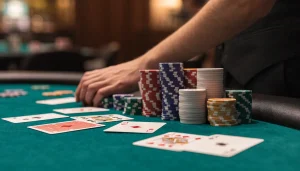
People looking for the best site to play blackjack online often focus on the operator before checking the game itself. For card counting, that order is backwards. The decisive detail is whether the cards are dealt from a continuing shoe or the game resets the card sequence through software shuffling. Without that distinction, a claim that a site is suitable for counting says little.
Counting also does not turn blackjack into a guaranteed result. It is a method of estimating changing conditions, not a promise of profit, and it does not remove ordinary variance. I would not treat it as a betting system or raise stakes on the assumption that a mental count must pay off. Set a budget, and do not chase losses. The arithmetic is not a safety net.
So the useful answer to searches for sites suited to counting is not a brand name. It is a table whose dealing process can sustain the information the count depends on. For automatically shuffled RNG blackjack, that condition is absent. Legal to do. Often irrelevant.
Online Blackjack Play and Payment Claims
At a blackjack table, the player’s decisions are compact: hit, stand, double down or split. The choice is made against the dealer’s hand, with the aim of finishing closer to twenty-one without going over. Those actions describe the basic play; they do not tell the whole story of what a particular table permits or how its terms are presented.
I have seen table controls treated as if they were the product itself. They are only the visible layer. A button may make an action easy to select, but the game’s rules determine when that action is available and what follows from it. The practical comparison between websites therefore starts with the table information, not with a slogan about a “smooth” experience. Smooth interface. Separate matter.
Hitting asks for another card. Standing ends the player’s turn. Doubling down and splitting are also standard blackjack actions, but their availability depends on the table’s rules. Those details matter because the same label can sit above different conditions from one game to another. A clear table display should make the permitted actions and relevant rules understandable before a decision is made, rather than leaving the player to infer them from a control after the hand is under way.

A website’s payment page is a different part of the decision. It may list ways to deposit or withdraw, but a general claim that a particular method is accepted does not establish that it is available for every account, transaction or location. This is especially relevant to searches about blackjack websites that accept PayPal: the phrase expresses a feature someone wants, not proof that any particular operator offers it in New Zealand. Payment options cannot responsibly be attributed to a site without current, site-specific confirmation.
There is a reason to read payment language literally. A page can describe a method as supported while separate terms govern its use, or while the available options differ between deposits and withdrawals. A logo, a promotional line or a third-party mention is not the same thing as a confirmed option in the account’s cashier. The important distinction is between a general claim and the terms that actually apply to the transaction.
The same care applies when a website describes itself as “best” or “top”. Those words are positioning, not measurable table features. A ranked list can look decisive while combining unrelated measures, such as interface design, game selection and payment claims. Without reliable details for each measure, the ranking says more about the presentation than the blackjack experience. A useful assessment separates what can be checked—the available table actions, how the rules are displayed and the wording of the payment terms—from what is merely asserted.
Promotional language deserves the same separation. A bonus is not simply extra playable money; its conditions can affect how blackjack contributes to wagering requirements, and maximum-bet rules may apply while those requirements are being met. The terms should be read before accepting an offer, including how the game is treated and what restrictions apply during wagering. A generous headline can conceal a narrow use case. Fine print decides.
Real-money play also benefits from a fixed budget. Once that amount is reached, stopping is more reliable than trying to recover losses by continuing. I have seen the logic of “one more hand” turn a planned session into a different financial decision. There is no betting system that guarantees a win, and a table action should not be mistaken for a way to control the result.
Payment convenience should not be confused with a safer or more suitable blackjack table. A familiar method does not verify an operator’s claims, and a table with clear controls does not establish which payment methods are available. Each question needs its own evidence: the rules for play, the terms attached to any offer, and the current payment information shown by the operator. Keeping those checks separate avoids treating one appealing feature as proof of everything else.
When comparing online blackjack options, the useful details are often less dramatic than the marketing copy: whether the table explains its actions, whether the conditions are readable before play, and whether payment claims match the operator’s own current terms. No generic list can settle those points for every player or every transaction. Specific terms matter.
Deck Counts and Rule Variations at Blackjack Tables
A blackjack table is defined by more than its layout. The number of decks in play, the dealer’s treatment of soft 17, whether surrender is offered and the payout for a natural blackjack can differ from game to game. A specialist review describes these terms as variable; they should be read as features of the particular table, not assumptions that carry across a whole site.
Deck count is part of the game’s conditions, not a decorative label. A single-deck game, where offered, may attract attention from players comparing tables, but the label alone does not establish that its rules are more favourable. The other conditions still matter, and blackjack variants can change both the decisions available and the house edge. I learned to read the full rules panel before drawing conclusions from a headline.
Soft 17 concerns a dealer hand containing an ace counted as 11 without the hand exceeding 21. The table rules determine whether the dealer takes another card or stands. That difference can alter the decisions a player faces, so it belongs in the comparison alongside deck count rather than buried beneath a game title.
Surrender also needs precise wording. Its availability is not universal, and the table rules determine whether the option exists. A game title or familiar appearance is not enough to establish that. Check the rules shown for that specific table.
Payout wording deserves the same care. A specialist review cited natural-blackjack payouts of 3:2 and 6:5 as examples of differing terms; neither should be assumed without checking the game itself. A small-looking change in the displayed ratio changes the return on a natural, so it is a material rule, not cosmetic detail.
When comparing blackjack tables on casino sites serving New Zealand, I treat the rules as a package: decks, soft-17 procedure, surrender and payout. A table that looks familiar can still play differently when one condition changes. The game label is not the rulebook.
Bitcoin Blackjack Claims and Online Game Mechanics
Bitcoin can appear in descriptions of blackjack sites as a payment label, but it does not explain how a blackjack table works. Nor does the term, by itself, establish that a particular site accepts bitcoin. Payment claims and game mechanics are separate matters, and blending them makes a promotional description sound more informative than it is.
For an online blackjack game using a random-number generator, the cards are shuffled by software rather than dealt from a physical shoe. That format allows faster play than a live-dealer game. The distinction is about how the cards are produced and how quickly hands can proceed; it does not verify a payment option or make a game more trustworthy.
I treat claims about “best” sites with the same separation in mind. A ranking label says nothing on its own about whether bitcoin is accepted, how an RNG game operates, or what rules apply at the table. Those details need to be considered independently. A payment method is not a game feature.
This matters because bitcoin-related wording can make a site sound purpose-built for a certain kind of player, while leaving the practical terms unclear. The blackjack itself may still be a software-shuffled game, and its pace may differ from a streamed table. The currency mentioned in a headline does not change that underlying mechanism.
The useful distinction is simple: an RNG game relies on software shuffles and permits quicker play than live dealing; a bitcoin claim concerns payment, not the shuffle. Neither point should be used to imply the other. Keep the claims separate.
Blackjack & Live Casino in New Zealand
Content created by the «casinobonusinfonz.com» team