
Understand the decisions behind each hand
 Available in US
Card values, soft and hard hands, table rules and practice play all shape the choices made during a blackjack hand.

The Hand, the Dealer and the Decisions That Shape It
Blackjack is a contest between each player’s hand and the dealer’s, not a contest among the players at the table. The aim is to finish closer to 21 than the dealer without going over. A hand that exceeds 21 is bust, and that ends its chance of beating the dealer. The target sounds simple; the decisions are about how much risk to take before the hand is complete.
The card values are straightforward. Number cards count as the number printed on them, while jacks, queens and kings each count as 10. An ace can be counted as either 1 or 11, depending on which value helps the hand without pushing it over 21. That flexibility makes the ace unusually important: its value can change as more cards are dealt.
For instance, an ace with a 6 can be counted as 7 or 17. If another card is added, the ace can be treated as 1 if counting it as 11 would make the total exceed 21. A hand with an ace counted as 11 is often called a soft hand; one where the ace must count as 1 is hard. The distinction describes the hand’s current arithmetic, not a promise that it is safe. Another card can alter the calculation.
The round begins with cards dealt to the player and dealer. The player considers their hand and chooses whether to take another card or stop. Once the player has finished, the dealer completes the dealer’s hand according to the game’s rules. The outcome depends on the comparison: a player can win by finishing closer to 21, lose by going over 21 or by finishing behind the dealer, and tie if both totals are equal. The dealer’s hand matters, but it does not change the player’s total.

The four main decisions
Hit means taking another card. It can improve a low total, but it can also take the hand beyond 21. The arithmetic is immediate: add the new card’s value, adjusting an ace between 1 and 11 where needed. In a free blackjack card game, this is the decision that makes the risk visible from hand to hand. A total that looks comfortable can become a bust with a high-value card.
Stand means taking no more cards and leaving the hand as it is. The player is finished making decisions for that hand, and the dealer’s turn follows. Standing avoids the risk of busting through another card, but it also accepts the current total. If it is lower than the dealer’s final hand, the player loses without needing to exceed 21.
Double down is a choice to increase the wager in exchange for taking a more limited course with the hand. The player commits to the larger stake and receives a further card, then the hand is complete. It is not simply another hit: the added commitment changes what is at risk, while the restricted follow-up means there is less room to respond if the card is unhelpful. Whether this option is available, and on what terms, depends on the table.
Split applies when the first cards form a pair that the table permits to be separated. The pair becomes two hands, each played against the dealer, and an additional wager is required for the new hand. The player then makes decisions on each hand separately. A split can turn one starting hand into two different outcomes; it does not make either hand a winner by itself. The pair’s cards and the table’s rules determine whether splitting is allowed.
These choices are not interchangeable buttons. Hitting changes the total and leaves the player exposed to another card; standing fixes the hand; doubling down increases the stake while narrowing the next step; splitting creates separate hands with separate outcomes. The same starting total can therefore lead to different risks depending on the action selected.
Hit
Take another card to improve a low total, risking a bust if the total exceeds 21.
Stand
Stop taking cards and leave the hand as it is, avoiding the risk of busting.
Double down
Increase the wager for one additional card, narrowing the room to respond.
Split
Separate a permitted pair into two hands, each requiring an additional wager.
I have seen the interface make this look simpler than it is. A row of buttons can suggest that every option is equally available, but the hand and the table determine which choices can be made. The wording on a button does not explain the consequence: the important difference is whether the player is taking another card, ending the hand, increasing the stake or dividing the starting cards.
A natural blackjack is a particular opening combination: an ace and a card valued at 10. It is different from reaching 21 after taking additional cards, even though both totals are 21. The distinction matters because a table may treat the opening combination differently in its settlement. The card arithmetic is the same; the route to the total is not.
Once those mechanics are clear, a hand can be followed without guessing what each decision does. The player compares the current total with the target, accounts for the ace’s flexible value and chooses whether to continue, stop, commit to a doubled wager or divide a pair. No choice removes uncertainty. That is the game.
Free Play Online: What Changes When the Bets Are Only Practice
Free blackjack online removes the money stake from the hand, not the decisions that make blackjack recognisable. The player still faces a dealer, sees cards dealt on screen and chooses how to respond. The difference is that a practice balance is not money being wagered. That makes the format useful for getting comfortable with the choices before any real-money game is considered.
I have found that this distinction matters more than the label on the screen. “Free” describes what is at stake in that session; it does not mean every blackjack table follows the same rules or offers the same options. A practice game can reproduce a particular version of blackjack, and its controls reflect that version. The hand remains simulated, but the table rules still shape the decisions.
A free hand can be treated as a small exercise in reading the situation. The player considers the cards already dealt, the dealer’s visible card and the choices enabled by the table. Depending on those rules, the available actions may include hitting, standing, doubling down, splitting or surrendering. Some tables do not offer every action. The on-screen buttons are therefore not a universal checklist: they show what that game permits at that point in the hand.
This is one reason free play can be more useful than simply memorising action names. It puts the choice in context. Hitting asks for another card; standing ends the player’s turn. Doubling down or splitting changes how the hand is played, where the table allows it. Surrender, if available, provides another possible response under that table’s rules. The player can see how a decision changes the course of the hand without putting money behind it.
The result is not a reliable forecast of what will happen in a paid game. A simulated hand is one hand, and a different deal can produce a different outcome even when the same decision is made. Practice can help make the controls familiar and expose assumptions about what a table permits. It cannot turn uncertainty into certainty. That is the useful boundary.
Do
- Treat free play as a tool to understand table rules
- Focus on whether a decision was understood
- Check if the game clearly identifies as practice
Don't
- Judge a practice session by the virtual balance
- Assume all free blackjack tables follow identical rules
- Treat a simulated result as a reliable forecast
A common mistake is to judge a practice session by whether the virtual balance rises. That turns a learning tool into a scorekeeping exercise. A better measure is whether the decision was understood: what action was available, why it was chosen and how the table rules affected the choice. The hand’s result is visible, but it does not prove that the decision was sound or unsound on its own.
There is also a difference between trying a game and wagering. A no-money practice session lets a player explore the hand without placing a real stake. A promotion described as free may be a different arrangement if it involves real-money play or conditions attached to a bonus. The wording can blur the distinction; the underlying terms do not. Practice means the session itself does not require a wager. Promotional conditions belong to another question.
For someone looking for blackjack games to play for free online, the practical check is whether the game clearly identifies itself as practice and whether the selected table’s rules are visible. A free-play label alone does not explain which actions are allowed or how the game handles them. The rules panel and available controls offer a more useful indication. If a choice is absent, it may be unavailable under that table’s format rather than hidden in the interface.
The same point applies to named variants. A version such as blackjack switch changes the structure of play, so its rules and permitted decisions may differ from a standard table. Trying it without a stake can help establish how its interface works, but familiarity with one version should not be carried over as if every table were identical. The title is not the rulebook.
Free play online is most useful when treated as a low-pressure way to become familiar with decisions, not as a rehearsal that guarantees a future result. It lets a player pause over a choice, notice which actions the table allows and understand how the hand proceeds. The cards still fall unpredictably. Practice changes the setting, not the nature of the game.
A “Free Bet” Is Still a Bonus With Conditions
The word “free” does two different jobs in blackjack advertising. In a practice game, no money is staked: the chips are part of the simulation, and a hand does not create a cash balance. A promotional free bet is different. It is an offer attached to real-money play, and its value depends on the conditions governing the bonus and any winnings.
That distinction is easy to miss in a banner. “Free bet blackjack” can sound like a no-cost version of the table, but the offer may require a qualifying deposit or other action, and it may come with wagering requirements. The key question is not simply whether the promotional stake is described as free. It is what must happen before any resulting winnings can be withdrawn, and what restrictions apply while the bonus is active.
Wagering requirements specify how much qualifying play is needed before bonus-related funds become withdrawable. Blackjack may count differently from other casino games, so a requirement that looks straightforward in a headline can work differently once the game’s contribution is applied. The terms should say whether blackjack play contributes fully, partially or not at all. If that detail is unclear, the advertised value gives an incomplete picture.
Maximum-bet rules matter for the same reason. A promotion may cap the permitted stake while its wagering requirements are being met. Exceeding that cap can put eligibility for the bonus or related winnings at risk, depending on the stated terms. The cap is not a minor footnote: it shapes how the promotion can be used and whether a normal table stake is allowed.
I have seen the mechanics hidden in plain sight: the banner sells the offer, while the rules define the actual deal. That is why the terms should be read on a trustworthy site or casino before any real-money play, with particular attention to qualifying games, contribution rates, withdrawal conditions and maximum bets. “Exclusive” describes how an offer is presented; it does not establish that the conditions are better or that a win is more likely.
A free bet’s payout is therefore not something to infer from the label. The terms determine how the promotional stake and any winnings are treated. Some offers may return winnings without the original stake; others may handle the bonus differently. Without reading the specific rules, it is not safe to assume that a winning hand produces withdrawable cash in the way an ordinary cash wager would.
The same caution applies to searches for a free-bet blackjack return or RTP. A promotion is not a separate blackjack rule, and a headline cannot establish the game’s return or the value of the offer. The table rules govern the hand; the bonus terms govern the promotion. They are related, but they are not interchangeable.
I treat the bonus as a contract attached to the game, not as practice with a cash prize. A practice table carries no wagering requirement; a promotion may. Keeping a set budget and not chasing losses also matters once real money enters the picture. The label is only the opening line. The conditions are the deal.
For Fun, With Other Players or a Live Dealer
Free blackjack can be less solitary when the table includes other people. A multiplayer format puts several players around the same dealer, so the hand has a shared rhythm: decisions happen in turn, and the table moves on when the round is complete. That changes the feel, even when the stakes are only virtual. The appeal is company and atmosphere, not a different way to play the cards.
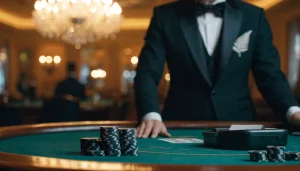
The label “multiplayer” can cover different experiences. Some tables show other players’ seats and decisions; others add a chat feature or simply make the table feel occupied. Those details depend on the game. A free table may also be a simplified version of a real-money table, so the presence of other players does not establish that every rule, option or feature matches elsewhere.
I have found that the social layer can make a practice session feel less like testing buttons in isolation. There is a pace to follow, and the table gives each round a small audience. It can also make play less predictable in a practical sense: other players take time over decisions, and the next hand may not begin as soon as it would in a solo game. A social table is not automatically a faster or more informative one.
Live-dealer blackjack is a different format. A real dealer handles actual cards at a physical table, while a camera stream shows the action to remote players. That gives the game a casino-table quality that software animation does not reproduce. The cards are real; the screen is the connection.
That connection has limits. Streaming can introduce a delay between the dealer’s action and what appears on screen. A player may see the table pause, or the game may take longer to respond than a software-based version. The delay is part of the format, not necessarily a fault with a particular hand. It can matter most when the table is moving and the player expects an immediate response.
Free access to live play is not guaranteed by the word “live”. Where a no-cost version is available, it can provide a way to observe the dealer and table routine without wagering. Some live tables may instead require higher bets than software games. That distinction is worth noticing: a live stream can be engaging, but it does not make a table free, and “for fun” does not remove any real-money conditions attached to a cash game.
For a low-pressure social session, a free multiplayer table and a free live table serve different purposes. The first centres on sharing a game space with other players; the second centres on watching a human dealer handle physical cards. Neither needs to be treated as a route to better results. It is entertainment with a particular pace.
I would check what the table actually offers before settling in: whether other players are visible, whether chat is available, and whether the live table is genuinely free or merely presented beside free games. Labels are not the experience. The format is.
Free Blackjack in New Zealand: The 2026 Licensing Context
Free blackjack options can vary, so use this list as a starting point when checking which operators offer a suitable way to play. Confirm the availability of free play directly with each operator.
-
7Bit Casino
- License
- Tobique Gaming Commission, licence no. 0000091
7Bit Casino is listed with a licence from the Tobique Gaming Commission, licence no. 0000091. The available details do not specify its free blackjack offering.
-
N1 Casino
- License
- Malta Gaming Authority, licence no. MGA/B2C/394/2017
N1 Casino is listed with a Malta Gaming Authority licence, no. MGA/B2C/394/2017. The available details do not specify its free blackjack offering.
-
Lamabet
- Payout speed
- 1-3 business days
Lamabet has a stated payout speed of 1–3 business days. No information is provided about its licence or free blackjack offering.
-
Zotabet
- License
- 07017519840
- Payout speed
- 1-3 business days
Zotabet is listed with licence number 07017519840 and a stated payout speed of 1–3 business days. The available details do not specify its free blackjack offering.
-
Play Grand
- License
- Malta Gaming Authority, licence no. MGA/B2C/370/2017
Play Grand is listed with a Malta Gaming Authority licence, no. MGA/B2C/370/2017. The available details do not specify its free blackjack offering.
-
Ricky Casino
- License
- Tobique Gaming Commission, licence no. 0000002
Ricky Casino is listed with a licence from the Tobique Gaming Commission, licence no. 0000002. The available details do not specify its free blackjack offering.
-
BitStarz
- License
- Curaçao Gaming Authority, licence no. OGL/2024/165/0185
BitStarz is listed with a Curaçao Gaming Authority licence, no. OGL/2024/165/0185. The available details do not specify its free blackjack offering.
-
Neospin
- License
- Tobique Gaming Commission, licence no. 0000064
Neospin is listed with a licence from the Tobique Gaming Commission, licence no. 0000064. The available details do not specify its free blackjack offering.
-
Wintino
- Payout speed
- 1-3 business days
Wintino has a stated payout speed of 1–3 business days. No information is provided about its licence or free blackjack offering.
Free blackjack in New Zealand in 2026 sits within a changing legal framework. The Online Casino Gambling Act 2026 came into force on 1 May 2026, establishing the country’s first domestic licensing regime for online casino gaming. That change does not mean every online casino became licensed on that date, nor does it make a free-play screen evidence of a provider’s regulatory status.
The transition is deliberate. Providers that were already offering online casino services to people in New Zealand before the Act took effect may continue operating under its transitional provisions until 1 December 2026. The full licensing system is not expected to be operational until 2027. The Gambling Act 2003 did not permit online casinos to be based in New Zealand, and before the new Act, offshore online casino gambling was not licensed or supervised by a New Zealand regulator. Customers wagering with offshore sites during that period had no domestic government recourse.
That background matters even when the table is labelled “free”. The label describes the play mode, not whether an operator holds a New Zealand licence. Nor does the existence of a browser game settle which legal arrangements apply to the service behind it. I have seen promotional language make those separate questions look like one. They are not.
The Department of Internal Affairs is New Zealand’s primary gambling regulator and oversees the framework for online casino licensing. The Gambling Commission has a more specific licensing role: it hears and decides applications, issues online casino licences, and approves changes to licence conditions. In practice, the Department is responsible for the regulatory framework, while the Commission makes licensing decisions within it.
This distinction is useful because “regulated” can be used loosely in casino material. A foreign licence, a provider’s claims about compliance, and a New Zealand licence are not interchangeable descriptions. The new Act establishes a domestic route to licensing; it does not turn every offshore service into a locally licensed one by default. Providers that have not applied for a licence must stop providing online casino gambling in New Zealand by 1 December 2026. Unlicensed operation is expected to become an offence from around mid-2027.
For people looking at blackjack online for free, the sensible reading is narrow: a practice table may be useful for play, but it should not be treated as proof of local authorisation. During the transition, licensed operators are also subject to tight advertising rules, and sponsorships are prohibited. That is a regulatory limit, not an endorsement of any particular service.
The change is substantial, but the transition leaves a period in which the market is not yet operating under the completed licensing regime. Free casino blackjack and real-money gambling may appear side by side on a site; the legal status of the service is a separate matter from the cost of a particular hand.
Different questions. Different rules.
No Download, No Registration: What Browser Play Means
A browser-based blackjack game can open without installing an app, and some versions allow play without creating an account. That is the appeal behind “no download”: fewer steps between opening a page and seeing a table. “No registration” is a separate condition, though. A game may run in a browser but still ask for account details, while another may offer a guest mode. The format alone does not settle that point.
The practical distinction is between access and the game running underneath. A browser is simply the way the game is opened; it does not say whether the cards are dealt by software or by a live dealer. Nor does it establish whether play is free. Those details belong to the specific table and its terms.
In the versions driven by a random number generator, software shuffles the virtual cards. There is no physical deck on screen being handled between hands. The game can move faster than a live-dealer table because it does not have to wait for a streamed deal and the dealer’s actions. That pace is useful for a quick session, but speed is not a sign that the rules are simpler or that the outcome is more predictable. It is just a different delivery format.
I have found the “instant” label useful only when read narrowly. It generally describes how quickly the game opens, not what happens after it does. A browser may avoid a download and still rely on a connection, load a full game interface, or present account prompts. A compact screen can also make table rules and controls less visible than they are on a larger display. Convenience has edges.
A free blackjack game with no download required can therefore mean a browser-accessible game that does not require a software installation. It should not be read as a promise that registration is unnecessary, that every feature is available without an account, or that the game uses live cards. Those are separate questions.
The useful check is modest: identify whether the page is offering software-dealt play or a live table, and whether it asks for an installation or account before play begins. The first distinction affects pace; the second affects access. Neither changes the basic fact that browser play describes the doorway, not the whole room.
No magic shortcut.
Using a Free Blackjack Simulator to Learn the Flow
A free blackjack simulator is most useful when treated as a replayable table, not a machine for producing a winning pattern. I use one to watch how a hand develops: the cards appear, a decision is made, the dealer’s turn follows, and the result closes that round. That sequence can feel obvious when described in rules, but seeing it repeat makes the hand’s structure easier to follow.
The important practice is pausing at the decision point. A player can hit, stand, double down or split, where those options are available under the table’s rules. Rather than clicking through automatically, I try to identify what each choice changes in the current hand. Hitting adds another card; standing ends the player’s turn. Doubling down or splitting changes how the hand proceeds, so the simulator can make those choices visible without requiring a real-money stake.
A useful routine is to play a hand, name the decision before selecting it, then watch the round resolve. The point is not to judge a choice only by whether that particular hand wins. A sensible decision can still be followed by an unfavourable result, and a poor decision can happen to work out. Keeping those ideas separate is one of the better habits a simulator can help establish.
I also look for the small transitions: when the player’s turn ends, when the dealer acts, and when the game resets for the next hand. If the interface makes a choice unclear, that is a cue to inspect the table’s instructions rather than assume every blackjack game handles it the same way. Available actions are tied to the rules in force.
There is a limit to what practice can show. Repeating hands can make the order of play familiar, but it cannot promise a particular outcome or turn a run of results into a reliable prediction. I have seen people mistake comfort with the buttons for mastery of the game. They are not the same.
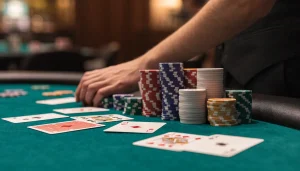
A simulator works best as a way to slow down the sequence and notice the decision in front of the player. It can build fluency with the rhythm of a hand, while leaving the uncertainty where it belongs. Practice, not prophecy.
No-Deposit Play and the Line Between Practice and Wagering
“No deposit” can describe two different arrangements, and the distinction matters more than the label. A free blackjack game may simply let a hand play through without a cash stake or a balance that can be withdrawn. A promotion described as no-deposit play may instead provide bonus funds for wagering. The first is practice; the second can involve real-money conditions.
The wording “free blackjack, no deposit” can make both sound equivalent. They are not. In a practice game, the result stays within the simulation. With promotional funds, the terms decide whether winnings can be withdrawn, what wagering is required, and which games count towards it. Blackjack may contribute differently from other games, and maximum-bet rules can apply while wagering conditions are being met. A displayed balance is not the same as withdrawable money.
I have seen the label do most of the selling while the conditions carry the actual mechanics. The useful check is the full promotion wording, including how blackjack contributes, any maximum bet during wagering, and what happens to bonus funds if a condition is not met. Those details should be checked on a trustworthy site before any real-money play. A headline alone cannot explain them.
Free blackjack money with no deposit, when it means practice rather than a promotion, should not be mistaken for a way to earn cash. A browser game that requires no download can still be either a practice simulation or a promotional product; how it opens does not determine whether wagering conditions apply. The terms and the way the balance works do.
The separation is simple: no stake and no cash-out conditions means practice; bonus funds tied to wagering mean a promotion. “Free” is not a description of every condition. Read the fine print. If real money is involved, set a budget and do not chase losses.
Practice Strategy Starts With the Table Rules
A strategy chart is not a universal set of instructions. It is a set of decisions built around particular table rules. I have seen players treat a familiar chart as fixed, then apply it to a different version of blackjack and assume the advice still fits. It may not.
The number of decks, the dealer’s action on soft 17, whether surrender is allowed and the payout for a natural blackjack can all vary. Those details can change both the preferred decision in a hand and the game’s house edge. The name on the table may still be blackjack; the conditions underneath it matter.
That is why a free blackjack strategy card is useful only when its assumptions match the game being practised. A chart made for one set of rules may give different guidance from one designed for another. Before following it, check what it assumes about the dealer, the deck and the available options. Otherwise, practice can reinforce a decision that does not belong at that table.
No magic chart. Just context.
Players who practise blackjack online for free can use the session to compare decisions under the rules shown on screen. The point is not to turn a run of favourable hands into proof that a strategy works. Short stretches of results do not establish that. Practice is more informative when attention stays on whether a decision follows the chosen strategy and whether that strategy fits the table.
Insurance deserves separate restraint. It is an optional wager, not a general-purpose way to make a hand safer, and most players should avoid using it as a routine bet. A chart or strategy note should not make it look like a default move.
I also keep practice separate from money management. A strategy cannot remove the house edge or make losses predictable. If real-money play follows, a budget and a firm stop matter more than trying to recover a losing session. Chasing losses adds pressure; it does not improve the underlying decision.
Practice has a narrower job: make the rules visible, test whether decisions are consistent with them, and expose where a memorised recommendation stops applying. That is useful preparation, not a promise of profit.
“Unblocked” Play and What Card Counting Does—and Doesn’t—Mean
“Unblocked” is usually a practical label: a free blackjack game loads in a browser or network where another version may not. It describes access, not quality. A page opening successfully says nothing by itself about who operates it, how it handles data, or whether it is suitable in a particular setting. In my experience, that distinction gets blurred when a simple access claim is dressed up as an endorsement.
Free play can still be useful for seeing how a hand proceeds, but the word “free” does not settle every question about the site. A game may be available without a cash wager while the surrounding page contains separate account, advertising or privacy choices. Those details belong to the service, not to blackjack itself. “Unblocked” is not a safety standard. Nothing more.
Card counting is a different subject. It means keeping a mental estimate of which cards have appeared and using that information to judge what may remain. Mental arithmetic of this kind is not illegal under New Zealand law. That narrow point should not be inflated into a promise that counting will improve results, or that it applies to every blackjack format.
In an online game using automatic software shuffles, the sequence is generated and reshuffled by the system rather than dealt from a continuing physical shoe in the ordinary live-table sense. A mental count cannot be treated as a reliable way to predict the next hand in that setup. The legal status of counting and its practical usefulness are separate questions.
The same caution applies to “unblocked” sites: access does not make a game more predictable. Nor does a counting technique turn practice into a dependable method for winning. I have seen promotional language make a basic feature sound like an edge; the mechanics are less dramatic. A label is not evidence.
For free blackjack, the useful test is whether the game is clearly presented as practice and whether its rules are visible enough to understand what is happening. If the experience is opaque, the word “unblocked” does not fill in the gaps. It only says the page can be reached.
Blackjack & Live Casino in New Zealand
Content created by the «casinobonusinfonz.com» team