
Know what happens between the deal and your decision
 Available in US
A practical guide to table rules, streamed play, hand decisions, payouts and the limits of what a live blackjack screen can show.

How Live Dealer Blackjack Works on Screen
Live dealer blackjack puts a human dealer and physical cards at the centre of an online game. The table is filmed and streamed, while players join remotely through an interface that displays their hand, the dealer’s cards and the choices available to them. The game is still blackjack: each player competes against the dealer, aiming to finish nearer to 21 without going over. Other people may be seated at the same digital table, but their hands do not change the basic contest.
That distinction matters. In software blackjack, a random-number generator determines the cards and the game can move directly from one decision to the next. A live table instead shows cards being handled and dealt in real time. The screen is not merely animating a result produced by software; it is carrying a video feed of a card-based game. The interface takes each player’s selected action and passes it into the table’s sequence of play.
The streamed format brings familiar casino-table features with it, but it is not identical to sitting in the room. There can be a pause while the feed catches up or the dealer completes a step. The pace depends partly on the table and the stream, rather than solely on how quickly a player presses a button. Some live games may also set higher betting requirements than software versions. Those are practical differences, not evidence that the cards or the basic objective have changed.
Choosing a live dealer blackjack site involves more than the game itself, so this list offers a concise reference to the information available for each operator. Check the details that matter to you before playing.
-
7Bit Casino
- License
- Tobique Gaming Commission, licence no. 0000091
7Bit Casino lists a licence from the Tobique Gaming Commission, licence no. 0000091. This is the licensing detail provided for the operator.
-
N1 Casino
- License
- Malta Gaming Authority, licence no. MGA/B2C/394/2017
N1 Casino lists a Malta Gaming Authority licence, no. MGA/B2C/394/2017. This gives readers a specific licensing detail to consider.
-
Lamabet
- Payout speed
- 1-3 business days
Lamabet lists a payout speed of 1–3 business days. This is the available practical detail for readers considering the operator.
-
Zotabet
- License
- 07017519840
- Payout speed
- 1-3 business days
Zotabet lists licence number 07017519840 and a payout speed of 1–3 business days. These are the available licensing and payout details.
-
Play Grand
- License
- Malta Gaming Authority, licence no. MGA/B2C/370/2017
Play Grand lists a Malta Gaming Authority licence, no. MGA/B2C/370/2017. Readers can use this licensing information as part of their assessment.
-
Ricky Casino
- License
- Tobique Gaming Commission, licence no. 0000002
Ricky Casino lists a Tobique Gaming Commission licence, no. 0000002. This is the specific operator detail available here.
-
BitStarz
- License
- Curaçao Gaming Authority, licence no. OGL/2024/165/0185
BitStarz lists a Curaçao Gaming Authority licence, no. OGL/2024/165/0185. This provides a concrete licensing detail for readers to review.
-
Neospin
- License
- Tobique Gaming Commission, licence no. 0000064
Neospin lists a Tobique Gaming Commission licence, no. 0000064. This is the available detail to consider when assessing the operator.
-
Wintino
- Payout speed
- 1-3 business days
Wintino lists a payout speed of 1–3 business days. This is the practical detail provided for readers considering the operator.
From the industry side, the interface is the visible layer; behind it are the live studio, the table procedure and the online service that connects players to the game. A well-presented stream can make the action easy to follow, but appearance does not establish what legal regime applies to the service. In New Zealand, that question has changed during 2026, and the date matters.
Before the new legislation, online casino gambling supplied from outside New Zealand was not licensed or supervised by a New Zealand regulator. A customer using an offshore website in that period did not have domestic government recourse for the service. The Gambling Act 2003 did not permit online casinos to be based in New Zealand, and domestic online casinos were prohibited. These points describe the earlier framework; they should not be confused with the new licensing system.
The Online Casino Gambling Act 2026 came into force on 1 May 2026 and created New Zealand’s first domestic licensing framework for online casino gambling. It also set a transition period that runs from that date to 1 December 2026. During this window, providers that were already serving people in New Zealand before the law took effect may continue operating, subject to the Act’s transitional provisions. That temporary permission is not the same thing as a fully operational licensing regime.

The transition has a practical consequence for anyone assessing a live dealer blackjack casino in 2026: a service may be operating under transitional arrangements rather than holding a licence under the completed system. The full licensed regime is not expected to be fully operational until 2027. The Act also sets out the route by which online casino providers move into that system, rather than treating the first day of the transition as the start of ordinary full licensing.
Regulatory responsibilities are divided. The Department of Internal Affairs is New Zealand’s primary gambling regulator and oversees regulation of the online casino licensing framework. The Gambling Commission hears and decides casino licensing applications, issues online casino licences and approves changes to licence conditions. In other words, the Department’s oversight role and the Commission’s licensing decisions are related but not interchangeable.
I have seen how easily a polished live table can make the whole arrangement feel settled. It is still worth separating the game format from the status of the service carrying it. A dealer on screen tells the viewer that actual cards are being dealt; it does not, by itself, tell them whether the provider is operating under transitional permission or a licence issued within the new framework. Those are separate questions.
So live blackjack online is a streamed card game built around a dealer, not simply a faster visual skin placed over software blackjack. In New Zealand, the 2026 legal transition adds another layer: existing services may continue for a limited period under transitional rules, while the full domestic licensing system is still being brought into operation. The table is live. The regulatory setting is changing.
Table Rules Matter More Than a “Best” Label
“Best” is a sales label, not a rule of blackjack. I have seen how easily a polished table tile can make two games look interchangeable: the same green felt, the same dealer camera, the same promise of live play. The difference sits in the rules attached to the table. Those terms shape decisions and can change the house edge, so a ranking or promotional claim tells little unless it is backed by the specific game conditions.
The first comparison is the number of decks. A live table may use a different deck setup from another, and that difference can affect the probabilities behind a hand. It is not a shortcut to a guaranteed advantage, nor is the deck count enough on its own to judge a game. It belongs beside the other rules, not above them.
Next comes the dealer’s treatment of a soft seventeen: a hand containing an ace counted as eleven without busting. Some tables require the dealer to hit; others require the dealer to stand. That distinction changes how the dealer completes a hand and can affect the house edge. A table label may not make it prominent, so the rule text matters more than the artwork.
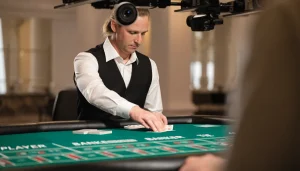
Surrender is another term worth checking. Where it is allowed, a player can give up a hand under the conditions set by the table. Where it is not available, that option is absent. The details matter: a general mention of surrender does not explain when it can be used or how the table applies the rule. The written rules do.
Blackjack payouts also belong in the comparison, although payout terms deserve their own close reading. A specialist review reports that natural blackjack payouts can differ between tables, including 3:2 and 6:5 terms. That is a reported example, not a dependable description of every live game or a market-wide norm. The payout printed for the particular table is the relevant one.
Rules do not work in isolation. A table with one favourable-sounding condition may have another that changes the overall picture. Blackjack variants make this especially clear: a variation can alter the available rules, which in turn can affect both strategy and house edge. “Classic” or “premium” does not settle the question. The labels describe positioning; the rules describe the game.
A practical comparison starts with the table’s own rule panel, not a site-wide claim that its live blackjack is the best. I look for deck count, the soft-seventeen rule, surrender availability and the payout term, then check whether the page describes a variant rather than standard blackjack. If a term is unclear or missing, the promotional summary cannot fill that gap. A broad claim is not a rule.
- Check the number of decks used
- Verify the dealer's action on a soft seventeen
- Confirm if surrender is available
- Check the natural blackjack payout ratio (e.g., 3:2 or 6:5)
- Determine if the game is a variant or standard blackjack
The same discipline applies to comparisons between live dealer tables. A fast-moving presentation or a confident dealer does not make the underlying rules more favourable. Nor does a high minimum or a premium-looking interface establish a better game. Those are features of the session, not proof of a lower house edge. The useful comparison is the one made between the written conditions of the actual tables being considered.
Card counting is sometimes raised as a way to find an edge. In New Zealand, mental calculation alone is not illegal under the law. That legal point should not be turned into a promise about results: counting does not guarantee an advantage, and the rules of a particular game still matter. It is also separate from claims about software or automated shuffling; a live table’s visible cards do not, by themselves, establish that a counting approach will work.
Promotions often compress complicated terms into a neat badge. “Best odds” may sound conclusive, but it is meaningful only if the claim explains which rules it compares and how. A table with a different payout or dealer rule may not be comparable on the same terms. When the explanation stops at the slogan, the slogan has done its job for the seller. Not for the player.
A useful comparison is plain and unglamorous: read the table rules, identify the terms that affect play, and compare like with like. The house edge is influenced by rules, not by the confidence of a headline. The fine print is the game.
What a Live Blackjack Site Can—and Cannot—Show
A live blackjack page can be useful before a session begins, but only if it identifies the specific table rather than describing the game in general. A site may host several tables with different conditions. A broad statement about its blackjack offer does not establish which rules apply to the table currently displayed.
The practical check is whether the table information spells out its own terms. A specialist review notes that deck count, the dealer’s action on soft 17, surrender availability and blackjack payouts can differ from one game to another. Those details belong to the individual table, not to a generic description of blackjack. If a page gives only a game name or a promotional label, it does not answer those questions.
I have found that the distinction between a game description and a rule sheet matters. The description is there to orient; the rule sheet is where a player can confirm what is actually attached to a table. If the details are hard to locate, that is a limit on what the page tells the reader—not evidence that every table follows the same terms.
What is visible before joining
A table lobby can show the available live games and provide a route to their information pages. Depending on how the site presents them, the table view may also show its rules before play begins. The useful information is specific: the name or identifier of the table, its rule details, and any conditions displayed alongside it.
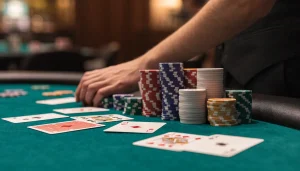
The same care applies when browsing on a phone. A mobile layout can make a page easier to navigate, but the appearance of a mobile version alone does not confirm that every rule is visible there. If key details are tucked behind a separate information panel, the mobile display should be checked for that panel rather than treated as a complete summary. Better layout is not fuller disclosure.
A page may also use labels such as “low stakes” or promote a live-dealer experience. Those words are not substitutes for the table’s stated terms. A label can help distinguish one listing from another, but it does not establish the rules, nor should it be read as a promise that a particular table will be available in every format.
Bonuses and other conditions
A bonus banner is another kind of information, and it answers a different question from the blackjack rules. A no-deposit offer, where one is advertised, should not be read as unconditional play. The terms need to be checked for wagering requirements and any maximum-bet rule that applies while those requirements are being met. Blackjack may also contribute differently to wagering requirements than other games. The headline is not the contract.
I separate the page into two checks: what governs the hand, and what governs an offer. Mixing them makes an attractive promotion look like a table feature. They are not the same thing.
A site page can present rules and conditions, but it cannot make a vague claim precise by repetition. The most useful disclosure is attached to the table or offer in question, written clearly enough to compare with another page. If a condition cannot be found or its scope is unclear, the page has not established it. A polished lobby can still leave important details unsaid.
Real-Money Play: The Rules Behind Each Hand
In a live blackjack game, each decision is attached to a wager already in play. The dealer deals the cards, and the table interface shows which actions are available for that hand. A button is not just a prompt: selecting it can keep the current wager as it is, add to it, or divide the play into separate hands. That distinction matters more when real money is involved than it does in a no-stakes demonstration.
A hit asks for another card; standing ends the player’s action on that hand. These choices do not change the original wager by themselves. They change what happens next, and the hand is then resolved under the table’s rules. The practical point is simple: the decision concerns the hand in front of the player, not a promise about what the next card will be.
Doubling down is different because it adds to the stake. In return, the player commits to a restricted continuation of the hand, as defined by the game. The precise conditions for doubling are not identical at every table, so an option may be absent or available only in particular circumstances. In a real-money session, that restriction is easy to overlook if attention is fixed on the chance of improving the total.
Splitting changes the shape of the play. When the table permits it, a pair can become two hands, with a separate wager attached to each. The player is no longer managing one outcome. The interface may show the hands in turn, but the financial exposure has already changed as soon as the split is confirmed. More decisions follow; more stake is involved.
Some tables also permit surrender, which ends a hand under the conditions set by that game. It is not a universal action, and its availability can depend on the table’s rules and the point in the hand at which the choice is made. A live table’s action panel therefore reflects more than the basic game. It reflects the terms attached to that specific game.
That is why “real-money” does not describe one fixed set of choices. The familiar actions—hit, stand, double down and split—are central to blackjack, while surrender may also be offered. Which ones appear, and when, depends on the table. I have seen players treat a familiar layout as proof that every table works the same way. It is not.
Before a hand begins, the posted rules are worth reading closely; during play, the available controls are the immediate guide to what can be done. A choice should be made with its stake effect in view, rather than as a reaction to a previous result. Setting a budget and not chasing losses keep one hand from turning into an excuse for another. No button changes that basic arithmetic.
Playing a Hand from the First Card to the Decision
A blackjack hand is a running total, not a hunt for exactly twenty-one. Number cards count at face value; picture cards count as ten. An ace can be counted as either one or eleven, whichever keeps the hand useful without pushing it over the limit. That flexibility is why a hand containing an ace can change character when another card arrives.
The aim is to finish closer to twenty-one than the dealer, while staying at or below twenty-one. Going over is a bust, and a strong-looking total can still lose if the dealer finishes higher. I learned to treat each decision as a comparison between the hand as it stands and the risk of changing it. There is no decision that guarantees the result.
Start with the total
Once the cards are dealt, add their values. With an ace, consider both possible totals: counting it as eleven may make the hand stronger, but counting it as one may keep the total from busting. The useful total is the one that describes the hand without exceeding twenty-one.
The first choice is whether to hit or stand. Hitting asks for another card and changes the total; standing keeps the current total and ends the player’s decisions for that hand. A hit can improve a weak total, but it can also take the hand past twenty-one. Standing avoids that immediate risk, while leaving the result to be compared with the dealer’s hand.
Resolving a Hand
-
1
Calculate Total
Add the values of the dealt cards, counting an ace as either one or eleven to avoid busting.
-
2
Initial Decision
Choose to hit for another card to improve a weak total or stand to keep the current total.
-
3
Evaluate Special Options
Depending on table rules, decide whether to double down to increase the stake or split a pair into two separate hands.
That is the central trade-off. More cards are not automatically better, and a cautious stand is not automatically safe.
When the hand offers another route
Depending on the table’s rules, doubling down or splitting may also be available. Doubling down is a way to increase the stake while taking a further card; it is a committed choice, not simply another hit. The amount at risk therefore matters as much as the total on the screen. I regard it as a decision about exposure, not a shortcut to a win.
Splitting applies when the opening cards form a pair: the hand is separated into two hands, each played on its own. That creates more decisions and changes the amount in play. The exact conditions for doubling or splitting belong to the table’s rules, so the option shown during a hand should not be assumed to exist in every game.
Some tables also allow surrender, which ends the hand under the terms set for that table. It is not the same as standing: standing keeps the hand active, while surrender gives it up. Whether it is offered, and when it can be used, depends on the rules.
Insurance may appear as a separate choice when offered. I avoid treating it as a routine part of the hand; for most players, it is not a bet to rely on.
A live interface puts these choices in front of the player, but it does not make them easier mathematically. I keep the stake within a set budget and do not chase a lost hand by raising the next one. The next decision is still a fresh risk.
What the Dealer Changes About the Game
A live dealer changes the source of the cards. In this format, a person handles actual cards at a table, and a camera feed carries the game to remote players. The result resembles a casino table more than a software game: the cards are physically dealt, while the screen provides the view. The dealer is not simply an animation attached to a digital shuffle.
That difference affects the pace of a session. A software game can move from one hand to the next without waiting for a person or a video stream. With a live table, dealing and viewing happen in sequence. A stream can lag, and even a short pause is noticeable when the action is being transmitted rather than generated on the device. The pace is human, then digital. Not instant.
The dealer’s presence also changes what the screen shows. Cards appear as objects being handled, rather than images produced by a software game. That can make the game feel more like a physical table, but it does not change the basic nature of online play: the player is still viewing a remote feed and making decisions through an interface. There is no need to treat the camera as proof of a personal conversation with the dealer.

That distinction matters for the question of whether a live blackjack dealer can hear a player. A video feed by itself does not show that the player’s microphone is connected or that the dealer can hear anything from the player’s room. The interface is the relevant indication of any available communication; a camera showing the dealer is not evidence of a two-way conversation. In practical terms, the dealer’s visible presence should not be confused with being physically seated at the table.
There is a commercial side to the format, too. Live tables may require higher bets than software alternatives. That requirement is part of how the table is offered, not a consequence of a dealer having better cards or a player receiving a different kind of hand. It can shape whether a session fits a player’s intended spend. I have seen the word “premium” used to make a higher entry point sound like a benefit in itself. The actual difference is simpler: the table’s minimum may be less accessible.
Streaming can also interrupt the rhythm. A delayed picture may mean waiting for the next action to appear, rather than seeing it immediately. That can make the session feel slower, especially compared with software blackjack, where the next hand can be dealt quickly. The live format trades that speed for a view of actual dealing. Neither experience is automatically better; they serve different preferences.
The dealer changes the presentation, pace and conditions of play, not the underlying fact that it remains a remote game. Actual cards provide a casino-table feel. The stream adds distance.
Blackjack Payouts and the Cost of a Real-Money Hand
A natural blackjack can carry a different payout from an ordinary winning hand, so the figure printed beside a live table is more than a decorative detail. A specialist review describes 3:2 as a common natural-blackjack payout and notes that some tables instead pay 6:5. That is a reported comparison, not a guarantee about what any particular table offers. The table’s own terms are the relevant ones.
The difference matters whenever a qualifying natural occurs. A 3:2 payout returns more relative to the stake than a 6:5 payout. Nothing about the streamed dealer or physical cards changes that arithmetic: live presentation describes how the game is delivered, while the payout describes how a particular result is settled. The two can be easy to conflate when a table is presented as “live” or “premium”. Those labels do not establish the return.
I have seen payout details treated as a minor line in a game panel, even though they affect the value of a natural result directly. Before a real-money hand begins, the useful check is the payout wording attached to that exact table, not a general description elsewhere on the site. If the displayed terms are unclear or appear inconsistent, the uncertainty is itself relevant. A payout is not something to infer from the table’s name or from a previous game.
The headline ratio also needs to be read as a condition, not as a promise of a better overall outcome. It applies to the result described by the table’s rules; it does not mean that every winning hand receives that payout, or that a session becomes profitable. Real-money blackjack still involves uncertain results, and a higher natural payout does not remove that uncertainty. The hand can end without a natural, in which case this particular payout distinction is beside the point.
This is why two live tables can look similar on screen yet settle a natural differently. The dealer may be streamed in both, and the cards may be physical in both, but the financial term can still vary. A table displaying 6:5 should not be mentally filed as equivalent to one displaying 3:2 simply because both offer live play. Small print, large consequence.
For the cost of a real-money hand, the stake is only part of the calculation. The payout attached to a qualifying result determines what that result returns under the table’s terms. I treat that line as part of the price of the game: not a promotional feature, and not a detail to discover after the hand has been dealt.
Free Play Is Not the Same as a Live Table
Free blackjack is useful for getting familiar with the pace of decisions, but the label does not tell the whole story. A free game may be software blackjack: cards are generated by an RNG and shuffled through software, so hands can follow one another much faster than in a streamed game. That changes the feel of a session, even when the basic aim and decisions look familiar.
A live-dealer table uses physical cards dealt by a person, with the game shown on a video stream. Free play does not automatically mean that this format is available. A site may offer software practice, a live table for real-money play, or both; the distinction needs to be clear before treating a demo as a rehearsal for the streamed version.
The difference matters most in timing and atmosphere. Software play removes the pauses involved in dealing and managing a streamed table. It can therefore expose a player to more hands in the same stretch of time. That is convenient for learning the interface, but it is not a neutral substitute: the session moves at a different speed, and the screen does not reproduce the presence of a dealer handling cards.
I have seen “free” used as if it described a game’s entire character. It describes the cost of that play mode, not necessarily how the cards are produced or how closely the experience matches a live table. Practice can help with recognising controls and following a hand, but it cannot establish what a particular live stream will feel like or tell anything by itself about the integrity of a real-money table.
The question of whether live-dealer blackjack is rigged should not be answered from the word “live” alone. Physical cards and a video feed distinguish the format from software-shuffled RNG play; they are not, by themselves, a complete account of oversight or fairness. A free demo is no proof either way. Different issue.
Do
- Use software blackjack to learn the interface
- Set a strict budget for real-money sessions
- Read the specific terms of any bonus offer
Don't
- Treat a free demo as a guarantee of live results
- Chase losses by increasing stakes
- Assume a "live" label proves the game is not rigged
For practice, software blackjack can make the interface familiar while keeping the pace brisk. It should not be mistaken for a guarantee of results at a live table. When real money is involved, a set budget helps keep the session bounded; losses are not a reason to increase stakes in an attempt to recover them.
Variants, Bonus Bets and the Fine Print
Blackjack variants are not just different names attached to the same game. A change in rules can alter which decisions make sense and shift the house edge. That is why a table advertised as “best” tells little on its own: the label does not explain the conditions behind the game or whether they suit a particular style of play.
A live-dealer free-bet offer needs the same scrutiny. “Free” describes the promotion, not a guaranteed return. The terms determine which blackjack games qualify, how the offer is credited and what restrictions apply while it is being used. I have seen the headline do its job before the conditions do theirs. Read both.
Wagering requirements can treat blackjack differently from other games. A hand may contribute less, or not count in the way a player expects, so the stated requirement alone does not show how much eligible play is needed. Maximum-bet rules may also apply during wagering. Exceeding a limit can affect eligibility for the promotion or its winnings. The detail matters more than the banner.
This is where a “bonus” becomes a contract with moving parts. The rules should be checked on a trustworthy site and in the casino’s own terms before real-money play. If the wording is unclear about qualifying games, bet limits or how blackjack contributes, the practical value is unclear too. No offer removes the underlying house edge.
Variants also make comparisons harder. A difference in rules can change strategy and the house edge, even when the streamed table looks familiar. Promotional language does not neutralise that difference. Insurance is generally not a useful bet for most players, and a bonus does not change that.
I keep the session budget separate from any promotion. Once the planned amount is gone, chasing losses turns a defined entertainment cost into an open-ended one. A bonus is optional. The terms are not.
When a Live Dealer Is the Point
A live-dealer game is defined by what happens behind the screen: a dealer handles actual cards, and a camera carries the table to the player. The appeal is the visible, physical process. It feels closer to sitting at a casino table than watching cards appear from a software shuffle, even though the game is still being played remotely.
That distinction matters more to some players than pace. In a live game, the dealer’s actions and the stream shape the rhythm of a hand. There can be a pause while the table deals or the video catches up. A connection delay can interrupt that rhythm, and some live tables may require higher bets than their software counterparts. The format has trade-offs. It is not simply a more polished version of the same game.
RNG blackjack takes the opposite approach. Software shuffles the cards, and hands can move faster because there is no streamed table or live dealing to wait for. That can suit a session where speed and a direct interface matter more than watching a dealer handle cards. Faster play also means decisions arrive more quickly.
I have found that “live” describes the method, not a promise of better play or a better result. The choice is between a physical table presented through a stream and a software-run game with a quicker cadence. Neither format changes the basic aim of blackjack; it changes how the game is delivered and experienced.
A live dealer is the point when the table itself is part of the experience. If that presence is incidental, software blackjack may be the more practical fit.
Does blackjack always pay 3:2?
No. A natural blackjack often pays 3:2, but some tables pay 6:5, so check the table rules.
What is card counting?
Card counting is using mental calculation to keep track of cards as they are dealt.
Is card counting illegal?
No. Using only mental calculation to count cards is not illegal under New Zealand law.
Blackjack & Live Casino in New Zealand
Content created by the «casinobonusinfonz.com» team