
Check who stands behind the live table
 Available in US
A practical look at offshore operator checks, New Zealand rules, live-table mechanics and the limits of promotional claims.

Choosing a Live Roulette Site Without a “Best” List
A “best” label is a verdict, not a licensing check. In my experience, the useful question is more basic: which legal entity is responsible for the live roulette online casino, and which gambling authority regulates it? A polished site, familiar table layout or confident claim of oversight does not answer either point.
For Kiwi players, the distinction matters because New Zealand does not issue a Kiwi-specific gambling licence. An offshore operator may instead be regulated by a recognised gambling body elsewhere. That does not make every site equivalent, and it does not turn a marketing claim into proof. The regulator’s name and the operator’s licence status need to be checked, rather than inferred from the site’s appearance.
Start with the operator behind the site
Casino websites often use a brand name that differs from the legal company operating the service. The terms and conditions, privacy information and responsible-gambling pages are places where the operator may identify itself. Those details should be consistent: a company named in the site terms should not be casually treated as the same thing as a brand, a game provider or a payment service.
I look for a clear connection between the website and the entity said to hold the licence. A licence number or regulator badge, on its own, is only a claim displayed by the operator. It needs to match the relevant operator and the service being offered. The Department of Internal Affairs is the place to confirm an operator’s licence status in the New Zealand context; checking status is different from assuming that a foreign licence is a New Zealand licence.
That distinction can sound technical. It is not. When an issue arises, the identity of the responsible company and the scope of its oversight are more consequential than the wording of a homepage banner.
Read “regulated” as a claim to verify
“Regulated” can sound like a general quality mark. In practice, it refers to oversight by a particular body under that body’s rules. A site should identify the gambling authority it says regulates it, and the licence should be attributable to the company running the casino. If the only evidence is a vague assurance, a row of logos or a reference to a provider’s credentials, the claim is not yet clear.

This matters for roulette live online as much as for other casino games. The presence of a live dealer does not establish who operates the casino or whether that operator is regulated. Nor does a recognised game provider’s name establish the casino’s own licence status. Those are separate relationships, and treating one as a substitute for another is a common reading error.
The practical check is therefore narrow: identify the operating entity, identify the gambling body named as its regulator, then confirm the operator’s status with the Department of Internal Affairs. The aim is not to turn a site visit into a legal investigation. It is to avoid relying on labels that the operator controls.
Separate presentation from accountability
A live roulette table can be presented as exclusive, premium or especially popular. Those descriptions concern how the service is marketed; they do not tell much about accountability. The same applies to claims about a distinctive format or a supposedly superior live casino roulette experience. They may describe the product, but they do not replace verification of the company behind it.
I have seen how easily a bright badge can do the work of a paragraph in a customer’s mind. The problem is that a badge is quick to add, while a precise statement about the licence holder takes care. The useful detail is not simply that a site says it is licensed, but whether the named operator and the regulator can be connected through a checkable status.
That is a better standard than trying to identify the best live roulette sites from their slogans. “Best” depends on what a player values; licensing is a threshold question about who is accountable. It should not be blended with table presentation, game choice or the promise of a special feature.
Treat “tricks” and special labels cautiously
There are no live roulette tricks that can make a licensing claim more reliable. A betting tip, a branded table or a fast-moving interface does not change the operator’s regulatory position. When a site uses language such as “exclusive,” the word should be read as promotion unless it is accompanied by a concrete description. Even then, that description says nothing by itself about oversight.
Do
- Identify the operating legal entity
- Identify the gambling body named as the regulator
- Confirm status with the Department of Internal Affairs
Don't
- Rely on "best" labels or slogans
- Assume a foreign licence is a New Zealand licence
- Infer licensing from the site's appearance or badges
The same discipline applies to claims attached to 500x live roulette or other highly specific table labels. A name may invite assumptions about availability, format or potential outcomes, but it cannot verify the casino’s legal identity. I separate what the operator says about a table from what can be established about the operator.
A reasonable assessment of a live roulette site begins with the company, the stated regulator and a status check. It does not require a “best casino live roulette” verdict before those basics are settled. Marketing comes later. Accountability first.
New Zealand’s Online Casino Rules in 2026
For much of the online casino market’s history, the legal position in New Zealand was unusual: online casinos could not be based domestically, while people in the country were not prohibited from using offshore platforms. There was no New Zealand licensing system for those online services. That distinction matters. A table being accessible to Kiwi players did not mean it was licensed or supervised by a New Zealand regulator.
The Online Casino Gambling Act 2026 changed the framework. It came into force on 1 May 2026 and established the country’s first domestic licensing regime for online casino gambling. The change is not a separate roulette rule or a special licence for live tables. It is a sector-wide system for online casino services, with live dealer games included.
One licence category for different games
The Act permits up to 15 licences for the online casino sector. Live roulette sits within that category, alongside online pokies and digital table games. In regulatory terms, a live dealer table is part of an online casino service; the fact that a dealer and physical wheel appear on camera does not place it in a different licensing class.
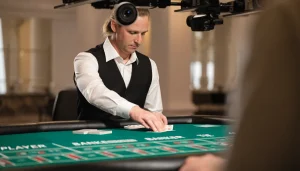
That is an important distinction from how products are often presented. A site may describe its casino live roulette as a distinct experience, but the licensing framework treats it as part of the broader online casino offer. The same category applies whether play involves a live dealer or a digital table game.
There is no Kiwi-specific gambling licence separate from this regime. The framework is not a roulette endorsement, nor does it create a special status for a particular table format. It is the online casino operator that falls within the licensing system.
The transition between the old and new systems
The Act’s start date did not mean that the full licensed market appeared immediately. A transition runs from 1 May to 1 December 2026. Providers that were already serving people in New Zealand before the Act began may continue during this period under the transitional provisions.
The date at the end of that window marks a significant change in who can accept Kiwi players. From 1 December 2026, the legal market is restricted to the 15 operators approved under the new system. The number is a ceiling on licences, not a promise that every possible licence will be issued or that every existing offshore site will remain available.
This is where broad claims about “licensed live roulette” can mislead. Before the new framework, an offshore site could be accessible without holding a New Zealand online casino licence, because no domestic licensing system for online casinos was in place. During the transition, the rules depend on the Act’s transitional provisions. Once the new permission requirement takes effect, accessibility alone does not establish that an operator is approved to accept New Zealand players.
A transition is not the same as an instant switch. Existing services are treated under the rules for the period; the later licensing system sets the boundary for the market that follows. Different dates, different status.
What the change means for live roulette
For someone looking at live roulette in New Zealand in 2026, the central regulatory question is therefore about the operator’s position under the applicable stage of the regime, not whether the roulette wheel is live or computer-generated. The Act includes live dealer tables in the same licensing category as other online casino products.
That does not make every table available through an offshore website a domestically licensed table. Nor does the new framework mean offshore platforms became inaccessible as soon as the Act came into force. The older position allowed access to offshore services, while the new system establishes a route to domestic approval and a defined transition toward it.
I have seen product labels do a lot of work in this industry. “Live” describes the presentation of a game; it does not, by itself, describe the operator’s legal status. Under the 2026 framework, those are separate questions. The table format falls within the online casino licence category, while permission to serve New Zealand players depends on the operator’s status under the rules in force at the time.
The practical result is a staged change rather than a single-day transformation of every live dealer table. The Act began on 1 May, existing providers may continue during the transition, and the approved-operator restriction applies from 1 December 2026. That is the regulatory timeline relevant to live roulette, without confusing a live broadcast with a licence.
Playing Live Roulette Online from New Zealand
Choosing a live roulette site in New Zealand calls for a clear look at what is actually known about each operator. This overview gives you a concise reference point as you consider your options.
-
7Bit Casino
- License
- Tobique Gaming Commission, licence no. 0000091
7Bit Casino lists a licence from the Tobique Gaming Commission, licence no. 0000091. This provides a specific licensing detail to consider when reviewing the operator.
-
N1 Casino
- License
- Malta Gaming Authority, licence no. MGA/B2C/394/2017
N1 Casino lists a Malta Gaming Authority licence, no. MGA/B2C/394/2017. Its licensing information is a concrete point for readers assessing the operator.
-
Lamabet
- Payout speed
- 1-3 business days
Lamabet lists a payout speed of 1–3 business days. That stated timeframe is the available practical detail for readers considering the operator.
-
Zotabet
- License
- 07017519840
- Payout speed
- 1-3 business days
Zotabet lists licence number 07017519840 and a payout speed of 1–3 business days. These are the available details to consider when reviewing the operator.
-
Play Grand
- License
- Malta Gaming Authority, licence no. MGA/B2C/370/2017
Play Grand lists a Malta Gaming Authority licence, no. MGA/B2C/370/2017. This gives readers a specific licensing detail to check as they assess the operator.
-
Ricky Casino
- License
- Tobique Gaming Commission, licence no. 0000002
Ricky Casino lists a licence from the Tobique Gaming Commission, licence no. 0000002. Its licence information is the key verified detail available here.
-
BitStarz
- License
- Curaçao Gaming Authority, licence no. OGL/2024/165/0185
BitStarz lists a Curaçao Gaming Authority licence, no. OGL/2024/165/0185. This provides a specific licensing reference for readers reviewing the operator.
-
Neospin
- License
- Tobique Gaming Commission, licence no. 0000064
Neospin lists a licence from the Tobique Gaming Commission, licence no. 0000064. This is the specific operator detail available for consideration.
-
Wintino
- Payout speed
- 1-3 business days
Wintino lists a payout speed of 1–3 business days. This stated timeframe is the available practical detail for readers considering the operator.
A live roulette table can be reachable from New Zealand without being operated under a New Zealand licence. Those are separate questions: access describes whether a Kiwi player can connect to a site and join a game; licensing describes the legal basis on which the operator provides that service. Treating one as proof of the other is an easy mistake.
International and offshore gambling sites are accessible to Kiwi players, who are free to play live dealer games on them. That includes live roulette offered through a casino’s website or app. The game may be streamed from a studio overseas, but the location of the broadcast does not determine the operator’s licensing position in New Zealand.
“Available here” is a description of reach, not a regulatory endorsement. An offshore operator may hold permission from a gambling authority in another jurisdiction, but that is not the same thing as holding a New Zealand licence. Nor does a site’s New Zealand-facing currency, language or customer service establish that it is locally licensed. The distinction matters because licensing is attached to the provider and the market it is authorised to serve, not simply to the player’s ability to open a page.
The domestic position has changed with the introduction of the Online Casino Gambling Act 2026, which provides a framework for licensing online casino services, including live dealer tables. New Zealand still does not issue a Kiwi-specific licence. Under the transitional arrangements, services already operating in the market before the Act came into force may continue for a limited period, while the full licensed regime is not expected to be fully operational until 2027. So, during this interim period, a site’s continued accessibility should not be read as evidence that its application has been approved or that it holds a final local licence.
The practical distinction is between being able to play and knowing what regulatory protections apply to the operator. Before the new framework, offshore online casino services were not licensed or supervised by a New Zealand regulator, and a customer wagering with such a site had no domestic government recourse. The new regime changes the market’s direction, but it does not turn every international live roulette table into a locally licensed service.
I have seen how easily interface details can blur this line. A table may display NZD, accept local players and deal in real time, all while the company providing it remains based and regulated elsewhere. None of those details, on their own, answers which authority oversees the operator. A welcome offer attached to a live roulette account is no better evidence: it is a commercial condition, not a licence.
For live casino roulette online, then, the relevant distinction is not whether the wheel is live or digital, or whether the site loads from New Zealand. It is whether the operator’s regulatory status matches the claims it makes about the service. Access and authorisation are different facts. Keep them separate.
What a Live Dealer Table Actually Delivers
The difference between live dealer roulette and a fully digital game is not simply that one has better graphics. A live table puts a real wheel and a professional dealer at the centre of the session, with the action shown through a live video feed. The screen is a view of a physical table, not just an animation generated to represent one.
That distinction changes what the interface is doing. In a digital game, the visual presentation is part of the software experience. At a live dealer table, the software connects the player to a dealer and a physical game taking place elsewhere. The feed provides the view; the dealer conducts the table. It is a hybrid format, with a real-world event presented through an online interface.

The dealer is not decorative. The live feed allows interaction with professional dealers, so the session has a human presence that a purely digital roulette game does not. That does not mean a private conversation or a personal service: it means the game is presented by a person at the table, rather than by graphics alone. In my experience, that distinction is what the word “live” is supposed to communicate. It describes the source of the game, not a promise of a particular level of attention.
A real wheel also makes the table feel different from a digital simulation. The player sees a physical object in use, while the online interface presents the live session. Those are related parts of the experience, but they are not the same thing. The screen is not the wheel, and the dealer is not a character generated by the game. The physical table is being shown to remote participants.
That setup can make roulette feel more like watching a table than operating a standalone piece of software. The player is observing a live dealer and a real wheel, with interaction available through the online format. The experience still depends on a digital interface, but its central action comes from the physical table. This is the useful distinction when a product is described as “authentic”: the word points to real equipment and a real dealer, not to a guarantee about the quality of the connection or the surrounding interface.
Search phrases such as “double ball” can suggest a particular live roulette format, but the phrase alone does not establish what a given table offers. The dependable general description is narrower: live dealer roulette uses a real wheel, a professional dealer and video to bring the table to online players. Specific formats need to be identified by the operator’s own table information; the live label by itself does not settle that question.

Nor does the live format tell anything about how an account can be funded. A phrase such as “pay by phone bill” concerns payment, not the dealer, wheel or video experience. It should not be read as a feature of live roulette itself.
The distinction is straightforward, even if the marketing language is not: a real table, shown live, with a dealer. That is the core.
The Video Feed, the Studio and the Live Table
A live roulette session is a broadcast, not a sequence of images generated by the game software. The dealer and wheel are in a studio or a casino in a particular country, while the player follows the action through a live video feed. The software connects that broadcast to the betting interface, so the screen combines a real scene with digital controls.
That distinction shapes what the presentation can show. The camera gives the session a physical setting: a dealer, a wheel and the activity around the table. The interface carries the information needed to follow play. Neither element replaces the other. A clear display can make the controls easy to read, but the sense of a live game depends on the broadcast showing the dealer and wheel as events unfold.
I pay attention to whether the stream and the interface appear to stay in step. The video is one part of the experience; the software is another. A picture that continues while the interface stalls, or a control that seems out of sync with the broadcast, can make the session difficult to follow. That is not a different roulette rule. It is a presentation problem, and it affects how confidently the action can be watched.
A specialist review has reported that live dealer games can encounter technical problems. That report is a reason to treat interruptions as possible, not as a measure of how often they happen or a prediction about a particular table. A broadcast may be disrupted, and the screen may stop presenting a continuous view. The useful distinction is between the physical game taking place at the studio and the feed through which it reaches the player. A problem with the feed does not, by itself, explain what is happening at the wheel.
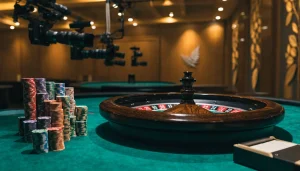
The studio also determines the visual character of the session. Lighting, camera position and the amount of the table shown affect what is visible, while the dealer’s presentation gives the broadcast its human focus. These are production choices, not evidence that one table has different underlying mechanics from another. “Immersive” is an advertising word; in practical terms, it means the broadcast keeps the dealer and relevant action in view.
For live roulette in New Zealand, the same distinction applies: the session is experienced through a stream, even though the game is being conducted elsewhere. The screen is therefore not a window without limits. It is a delivered video service, paired with an interface, and both have to function for the presentation to feel continuous.
When comparing video roulette live, I look beyond the label and consider what the broadcast actually makes legible: the dealer, the wheel and the flow of the session. A polished graphic cannot compensate for a feed that is hard to follow. Nor does a dramatic studio set guarantee a steady connection. Presentation matters. So does continuity.
Roulette Strategy Starts with the House Edge
The first useful step in a live roulette strategy is not choosing a pattern or searching for a system. It is checking the house edge attached to the version of the game. That figure describes the casino’s mathematical advantage over time; it does not predict the result of an individual round.
Live European roulette has a house edge of about 2.7%, while the figure for American roulette is about 5.26%. The difference is substantial. A strategy that ignores the version being played starts from the wrong cost, even if its language sounds precise.

I have seen “strategy” used as a sales label for systems that promise control over outcomes. The arithmetic does not support that promise. A betting approach may change how stakes are arranged, but it does not erase the house edge. Nor does a run of previous results establish what the next result will be.
That distinction matters in live online roulette, where the pace and presentation can make a session feel more immediate than a purely digital game. Instant live roulette may describe the appeal of joining a table quickly, but speed is not a mathematical advantage. The camera, dealer and real wheel do not alter the edge stated for the roulette version.
A sensible comparison therefore begins with the game’s stated format and its edge, not a claim that a particular sequence is “due” or that a progression can recover losses. European roulette carries the lower of the two stated edges. American roulette carries the higher one. Neither figure means a player will lose a fixed share in every short session; outcomes vary, while the edge expresses the game’s theoretical cost over time.
Keep the distinction plain. A lower house edge is a lower mathematical disadvantage, not a guarantee of profit or a forecast of a session’s outcome. Strategy can help keep decisions consistent with that reality, but it cannot turn chance into certainty. The advertised system is often the easy part. The cost remains.
Free Play and Live Roulette Offers: What Can Be Verified
“Free” is a small word with a narrow meaning. In casino advertising, it can describe a bonus attached to a deposit, a wager token, or access to a game without staking cash. Those are not interchangeable, and none automatically means a live roulette table can be played without money at risk.
The operating cost is the practical distinction. A live dealer table requires a studio, equipment and staff, so live dealer games are typically not provided as free-play games. That makes a claim of a free live roulette session something to inspect carefully: the wording may refer to a separate bonus rather than a no-cost version of the live table.
I have seen this distinction get blurred in promotional copy. A “free bet” may be a credit with conditions attached; it does not, by itself, prove that a roulette wager can be placed without depositing or risking funds. The actual terms would need to establish what the credit can be used on, whether live roulette is included, and what conditions apply before any resulting balance can be withdrawn. Without those details, the phrase says little.
The same applies to a supposed free live roulette game online. A page may offer free access to a digital roulette game while its live dealer table remains a cash game. The word “roulette” describes the game, not necessarily the format. The difference is easy to miss when the offer headline does more work than the terms beneath it.
“10 free spins” is another phrase that can sit beside roulette advertising without referring to roulette at all. Spins generally point to a slot-style offer, not a live roulette session. The number in the headline does not establish that a live table is included, or that the offer provides free roulette bets. A bonus label is not a game specification.
The reliable reading is literal: identify the exact game or table covered, the form of the benefit, and any conditions tied to it. If the terms do not say that live roulette is eligible, a general claim about free play should not be treated as confirmation. If they do, the restrictions still define what “free” means in practice.
There is no mystery in the economics. Live tables cost more to run than a purely digital game, which is why free access is not the standard expectation. The label may be generous. The table may not be.

“Auto” Live Roulette: A Label, Not a Verified Feature
“Auto” can sound like a precise product feature, but attached to live roulette it does not, by itself, explain what is automated. It might suggest automatic bet placement, a wheel operating without a dealer, or simply a faster interface. Those are different things. The label alone is not enough to establish that any of them is available.
The reliable distinction is between a live table and the controls around it. Live dealer games are commonly run with a limited betting window. That gives the session a defined pace: bets must be placed while the table is accepting them, rather than whenever a player chooses. A quick rhythm is not proof that the game places bets automatically.
I have seen promotional wording do a lot of work with a small word. “Auto” sounds effortless; the practical question is what action it describes. Does the interface repeat a previous stake, submit a choice, or merely move through the game’s timed stages? Without a clear explanation from the operator, those meanings should not be treated as interchangeable. A feature name is not its operating instructions.
The distinction matters because automatic repetition, if offered, would affect how a player interacts with the table. A limited betting window is different: it is a timing condition shared by many live games, not evidence of a particular roulette function. The pace comes from the table’s deadline. Nothing more can safely be inferred from the word “auto”.
So a description of live roulette as “auto” should be read cautiously. It may be shorthand used by a particular site, but it does not establish a standard feature across live dealer casinos. The useful detail is the actual explanation of the interface: what it does, when it acts, and whether the player must confirm each action. If that explanation is absent, the label remains just a label.
Fast pace. No automatic promise.
How a Live Roulette Round Runs
A live roulette session moves in repeated rounds, each shaped by a short opportunity to place bets. That window is the key difference in pace: the game cannot wait indefinitely while everyone considers a choice. Once betting time ends, the round proceeds and attention shifts from making decisions to following its outcome. A fresh round then gives players another chance to take part.
I think of the betting window as the round’s working boundary. It sets the tempo more than any label on the table. A player joining mid-session has to understand that the current opportunity may already be closing; waiting for the next round is part of the rhythm, not a fault in the game. No need to rush blindly. But the clock matters.
This is why playing live roulette feels more immediate than a game that can be paused between decisions. The table keeps moving whether a particular player is ready or not. In practical terms, the sequence is simple: a chance to place bets, a cutoff, the round’s outcome, then another betting period. The exact presentation can differ between tables, but the limited time available is common to many live games.
I would not treat the countdown as a prompt to add bets at the last second. It is a timing limit, not a recommendation. A considered decision made within the available window is more useful than trying to match the table’s pace by instinct. If the betting period has ended, the next round is the natural point to rejoin.
That rhythm also explains why a session can feel brisk even when each individual round is easy to follow. There is little room to leave a decision open while the game waits. The live format keeps returning to the same small sequence, and the player’s attention follows it.
The mechanics are modest. A limited betting window, a round, and another opportunity. That is the pace.

Live Roulette Games and the Limits of What Can Be Named
The label “live roulette” describes a format, not a single fixed game. A real wheel and a professional studio distinguish the live table from a digital roulette game generated entirely by software. Beyond that shared format, the details depend on the table being offered.
That distinction matters when comparing live roulette games. A title may suggest a particular wheel, layout or table style, but the name alone does not establish how the game works or what features it includes. Those details belong to the specific table’s rules and presentation, not to the words “live roulette” in general.
I have seen product labels do a lot of work. “Live” tells the player that the game uses a real wheel; it does not, by itself, explain every feature of the table. A polished name is not a specification.
A reliable description should separate what is common to the format from what is specific to a particular game. Real wheels and professional studios are part of live dealer play. A particular roulette variant, wheel layout or extra feature should be treated as a separate claim, rather than assumed from the category name. Small distinction. Important one.
The same caution applies when a site groups tables under broad headings. A menu category can help organise games, but it does not prove that every listed table offers the same experience. The individual game information is what defines the table; the category is only a label.
For Kiwi players, the useful way to think about a live roulette game is therefore quite plain: the live format identifies the use of a real wheel, while the table’s own description identifies its specific characteristics. Those are different layers, and mixing them can make a general format sound like a promise about a particular game.
Variety is not established by naming alone. A clear distinction between the live format and the individual table keeps the description accurate without implying features that the label itself does not guarantee.
Can New Zealand players play real-money live dealer games at offshore casino sites?
Yes. New Zealand players are free to use offshore gambling sites, but should check that the operator is regulated by a recognised gambling body and confirm its licence status with the Department of Internal Affairs.
Can I play live casino games on my mobile device?
Yes. Live dealer games are played through a live video feed, so you can take part against real dealers online.
Can players deposit and withdraw using New Zealand dollars at live casinos?
Yes. Many operators allow deposits and withdrawals in New Zealand dollars.
Blackjack & Live Casino in New Zealand
Content created by the «casinobonusinfonz.com» team