
Know What Changes Before You Play a Hand
 Available in US
Dealer rules can change when you double or split, while card values stay consistent and an ace counts as 1 or 11.

The Table Rules That Change the Deal
Blackjack’s aim is simple to state: play against the dealer and finish closer to 21 without going over. The decisions are less simple, because the same hand can face different conditions at different live tables. A rule displayed beside the game is part of the deal, not fine print to skim after the cards are moving.
Card values are consistent across the game. Number cards count at face value, while jacks, queens and kings count as 10. An ace can count as either 1 or 11, whichever value works for the hand without taking it above 21. That flexibility is why a hand containing an ace is often described as “soft”: the ace can change value as the hand develops. Without an ace that can be counted as 11, the total is “hard”.
The basic choices are hit, stand, double down and split. Hitting adds a card; standing ends the player’s turn with the current total. Doubling down increases the stake under the table’s procedure and commits the hand to receiving another card. Splitting separates a pair into two hands, each played on its own. The permitted conditions for these actions can differ, so a familiar button does not guarantee identical options at every table.
Choosing a live blackjack site involves more than the game itself, so this list offers a concise reference to the available operator details. Check the information relevant to you before deciding where to play.
-
7Bit Casino
- License
- Tobique Gaming Commission, licence no. 0000091
7Bit Casino lists a licence from the Tobique Gaming Commission, number 0000091.
-
N1 Casino
- License
- Malta Gaming Authority, licence no. MGA/B2C/394/2017
N1 Casino lists a Malta Gaming Authority licence, number MGA/B2C/394/2017.
-
Lamabet
- Payout speed
- 1-3 business days
Lamabet lists a payout speed of 1–3 business days.
-
Zotabet
- License
- 07017519840
- Payout speed
- 1-3 business days
Zotabet lists licence number 07017519840 and a payout speed of 1–3 business days.
-
Play Grand
- License
- Malta Gaming Authority, licence no. MGA/B2C/370/2017
Play Grand lists a Malta Gaming Authority licence, number MGA/B2C/370/2017.
-
Ricky Casino
- License
- Tobique Gaming Commission, licence no. 0000002
Ricky Casino lists a licence from the Tobique Gaming Commission, number 0000002.
-
BitStarz
- License
- Curaçao Gaming Authority, licence no. OGL/2024/165/0185
BitStarz lists a Curaçao Gaming Authority licence, number OGL/2024/165/0185.
-
Neospin
- License
- Tobique Gaming Commission, licence no. 0000064
Neospin lists a licence from the Tobique Gaming Commission, number 0000064.
-
Wintino
- Payout speed
- 1-3 business days
Wintino lists a payout speed of 1–3 business days.
I have seen players focus on the cards and treat the rules panel as decoration. That is where a small difference becomes consequential. A hand’s value does not change, but the dealer’s obligations and the available choices can change what a sensible decision looks like.
The dealer’s soft 17
One rule to locate before play is what happens when the dealer has a soft 17: a total of 17 that includes an ace counted as 11. At one table, the dealer may stand; at another, the dealer may be required to hit. The difference affects the dealer’s chance to improve the hand, and therefore changes the conditions against which every player hand is measured.
The wording matters. “Dealer stands on soft 17” and “dealer hits soft 17” describe opposite procedures, not minor variations in presentation. A live table may show the rule in its information panel, and the dealing sequence makes it visible once the relevant hand appears. The decision is not something the player makes; it is a fixed part of that game.
Deck count is another table-level condition. Live blackjack may use different numbers of decks, and that changes the composition of the shoe from which cards are dealt. It does not alter the printed value of any card, but it does alter the setting in which decisions are made. The number should be read as a rule detail, not inferred from the table’s look or from the fact that a dealer is handling physical cards.
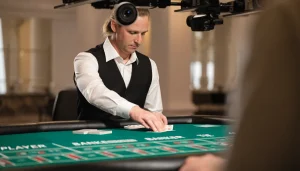
Surrender and the payout line
Surrender is not available under every set of rules. Where the option exists, it lets a player give up a hand according to the table’s procedure rather than continue it. That makes it a distinct decision, not another name for standing: standing keeps the hand in play, while surrender ends it under a separate condition. The exact terms belong to the specific table.
Blackjack payouts also vary. A specialist review of live tables describes natural blackjack payouts of 3:2 at some tables and 6:5 at others. Those figures are not interchangeable: the payout attached to a natural blackjack changes the return for that result. The label “blackjack” alone does not settle the payout; the rule shown for the table does.
A natural blackjack is different from merely reaching 21 with several cards. That distinction is why the payout line deserves attention alongside the action rules. The game may present the same card values and the same target, yet the result can be settled differently according to the payout condition attached to that table.
Side bets, where offered, are separate from the main hand and have their own conditions. Their presence does not change the value of the cards in the blackjack hand. The useful discipline is to keep the main-game rules distinct from any additional wager rather than assuming that a side option follows the same terms.
Dealer's Soft 17
Determines if the dealer must hit or stand on a total of 17 that includes an ace counted as 11.
Deck Count
Changes the composition of the shoe from which cards are dealt, affecting the setting of decisions.
Surrender
Allows a player to give up a hand according to specific table procedures rather than continuing.
Blackjack Payout
Specifies the return for a natural blackjack, commonly varying between 3:2 and 6:5.
Read the table as a complete set
In live blackjack, the dealer’s procedure, available actions and settlement terms work together. Deck count, soft-17 treatment, surrender availability and payout can all vary between games. Looking at only one of them gives an incomplete picture; a table with a familiar interface may still apply a different combination of rules.
I treat the rules panel as part of the game itself. It answers questions that the cards cannot: whether the dealer draws on soft 17, which choices are available, and how a natural blackjack is paid. Once those conditions are clear, the hand can be judged on its actual terms rather than on assumptions carried over from another table.
That is the practical point. The cards provide the values; the table supplies the procedure.
New Zealand’s Online Casino Framework in 2026
New Zealand’s online casino rules changed during 2026, but the change did not create an immediate, fully operating licensing market. The Online Casino Gambling Act 2026 came into force on 1 May 2026 and established the country’s first domestic licensing system for online casino gambling. Its transition period runs from that date until 1 December 2026. The distinction matters: a law can establish a licensing framework before the licensing system is fully in operation.
The background is different from that of a market with long-established local casino websites. Under the Gambling Act 2003, online casinos cannot be based in New Zealand. Before the 2026 Act took effect, online casino services supplied from offshore were not licensed or supervised by a New Zealand regulator. People who used such sites had no domestic government body to turn to for recourse over their wagering. That history explains why the new framework is a structural change, not simply a revised set of conditions for an existing domestic industry.

Two regulators, different responsibilities
The Department of Internal Affairs is New Zealand’s primary gambling regulator and oversees the regulatory framework for online casino licensing. The Gambling Commission has a more specific licensing role: it hears and decides casino licensing applications, issues online casino licences, and approves changes to licence conditions.
Those responsibilities sit alongside one another rather than meaning the same thing. The Department’s role is oversight of the regulatory system; the Commission’s role includes decisions about applications and licence terms. In practical terms, the new framework assigns supervision of the system to one body and formal licensing decisions to another. That separation is important when the market is described loosely as “regulated”: the word does not by itself explain which body performs which task.
I have found that institutional labels can sound interchangeable in public-facing material. They are not. A licence decision and oversight of the framework are distinct functions, even when both concern the same online casino sector.
The transition is a defined period
The Act allows only providers that were already operating in New Zealand before 1 May 2026 to continue during the transition, subject to the Act’s transitional provisions. The permission is temporary, not a general invitation for new offshore services to enter the market. Providers already serving New Zealand customers may continue until 1 December 2026 under those provisions.
The transition also has an application-related cutoff. Providers that have not applied for a licence must stop conducting online casino gambling in New Zealand by 1 December 2026. If an application is declined, the provider must end its online casino operations in the country and leave the market. These are consequences for providers, not a statement that every website available during the transition already holds a New Zealand licence.
That is the point most easily blurred by the phrase “local licensing.” The Act has created the route to domestic licences, while transitional operation and the eventual licensed regime are separate stages. The full licensed system is not expected to be fully operational until 2027. Unlicensed operation is expected to become an offence from around the middle of that year. The timing is therefore staged rather than a switch from unrestricted availability to a complete licensing system overnight.
What this means for live blackjack
A live blackjack table is part of the online casino service in which it appears; the game’s live-dealer format does not create a separate licensing category in the framework described here. The regulatory question concerns the provider’s ability to operate online casino gambling in New Zealand and, once the system is fully active, its status under the domestic licensing regime. A dealer on screen does not alter which public bodies carry those responsibilities.
The Department of Internal Affairs and the Gambling Commission should therefore not be treated as competing labels for the same authority. The Department oversees regulation of the online casino licensing framework, while the Commission handles licensing applications and licence decisions, including changes to licence conditions. That allocation provides the institutional context for live blackjack in New Zealand in 2026, when the legislation is in force but the full regime is still being brought into operation.
The distinction between a transition and a completed licensing system is not fine print. It describes the market’s legal position. During the transition, continued operation is limited to providers that were already active before the Act commenced and is subject to the statutory provisions. Later, the domestic licensing regime is expected to become fully operational. The dates matter because the legal status of provider activity changes across those stages.
The framework also puts the previous position in perspective. New Zealand’s historic restriction on domestically based online casinos did not mean that offshore online casino activity had been supervised under a local licensing scheme. The 2026 Act introduced that first domestic scheme and assigned public responsibilities for administering it. For the live casino sector, the relevant change is institutional: regulation now has a defined domestic licensing structure, with the Department overseeing the framework and the Commission deciding licensing matters. No shortcut around that distinction.
Live Blackjack Versus Software-Generated Play
The difference between live blackjack and software-generated blackjack is not simply visual. One format puts actual cards and a live dealer at the centre of the game; the other uses software to shuffle and deal. That changes the pace and feel of a session, even when both formats present blackjack as the same underlying game.
At a live table, cards are dealt in a physical setting and shown through a stream. The dealer’s actions connect the online game to the familiar casino-table experience: decisions unfold around an actual deal rather than an animation generated from a software shuffle. That can make the sequence easier to follow as a real event. It also means the stream becomes part of the experience. A delay in transmission can interrupt the rhythm, so the action may not feel as immediate as it does at a physical table.
Do
- Value live play for its physical dealer and actual cards
- Accept that transmission delays are a trade-off for live action
Don't
- Expect the same pace as software-generated games
- Dismiss streaming delays or higher bet requirements as decoration
RNG blackjack removes that streamed dealing process. Software handles the shuffle, and play can move faster than at a live-dealer table. There is no streamed dealer sequence to wait through, so hands can follow one another more quickly. The practical distinction is straightforward: live play gives the hand a physical dealer and cards, while RNG play gives greater pace through software.
Pace is part of the format
In reviewing table formats, I treat speed as a condition of play, not automatically as an advantage. Faster rounds mean that decisions arrive in closer succession. The live format inserts the dealer and stream into the sequence, which can create pauses that software play does not have in the same way. Neither pace tells the whole story; it describes how the session is delivered.
The stream can also affect access to a live table. Delays may occur, and live games may require higher bets. Those are operational differences, not details to dismiss as decoration. A format can feel closer to a casino table while also carrying practical friction that a software game avoids. The physical dealing is the point; the transmission is the trade-off.
RNG play makes a different exchange. It gives up the live dealer and actual cards in return for a quicker software-driven cycle. That may suit someone who values uninterrupted pace, but it does not reproduce the same table presence. Calling one format “real” and the other “fake” obscures what is actually changing: the dealing mechanism and the way each hand reaches the screen.
Similar game, different delivery
The visual resemblance between formats can encourage a false assumption that the experience is identical. It is not. Live blackjack depends on actual cards and a stream; RNG blackjack depends on software shuffling and can run faster. Those distinctions matter before any question of preference, because they explain why the pace and continuity differ.
For live blackjack in New Zealand, the label describes a streamed dealer game, not a promise that the table will behave exactly like a visit to a land-based casino. The cards are physical, but the online connection remains part of the experience. A delay can make a live hand feel less immediate, and a higher bet requirement can affect whether the table is practical. The phrase “just like being there” captures the use of real cards, but it leaves out the screen between the table and the player.
RNG blackjack is not simply live blackjack with the dealer removed. Its software shuffle changes the mechanics of delivery and permits faster play. That difference does not, on its own, establish which format is preferable. It identifies the trade: physical dealing and a streamed table on one side; software shuffles and quicker rounds on the other.
I have seen format descriptions do a lot of selling with very few words. “Live” can suggest atmosphere; “fast” can suggest efficiency. In practice, one describes a dealer and actual cards, while the other describes the pace enabled by software. The useful comparison is concrete. Different machinery, different rhythm.
What Free Play Can—and Cannot—Show
Free play can make the sequence of blackjack decisions easier to follow without putting money at stake. Its useful purpose is narrow: to see how a hand develops when a player chooses to hit, stand, double down or split, and to become familiar with the points at which those choices arise. That is a way to observe the game’s decision structure, not a test of what a real-money table will feel like.
The distinction matters because “free” describes the stakes, not necessarily the whole table experience. A free-play version may be presented through software or as a demonstration, while a live-dealer game involves a streamed table. The label alone does not establish that cards are being dealt at a live table, or that the free version follows every condition of a particular real-money game. I treat the mode as a practice aid only when its format and rules are clear. Labels do not settle that.
Useful for decisions, limited as evidence
The most practical thing free play can show is the relationship between a choice and the next stage of a hand. Hitting means taking another card; standing means taking no further card. Doubling down and splitting are also available actions in blackjack, though whether and when they can be used depends on the game’s rules. Rehearsing those choices can help make the basic flow less unfamiliar.
That familiarity should not be confused with proof of performance. A short run of hands in a free mode cannot establish what will happen in later play. Nor does it show that a real-money table will have the same rules, presentation or pace. The mechanics may look alike while the conditions differ. Practice is not a forecast.
The difference is especially easy to miss when a screen uses the same blackjack layout for more than one mode. Familiar controls can create the impression that every relevant detail carries over. They do not necessarily do so. A player might learn where the hit or stand choice appears, for instance, without learning anything about the live table’s specific rules or whether its dealing is live. That has value, but it is a smaller claim.
What free play cannot confirm
Free play cannot, by itself, verify that a particular live blackjack table offers a free mode. Availability has to be established at the table level; the general existence of practice play is not evidence that every live game includes it. Nor can a free session establish the exact conditions attached to a separate real-money version. Those are separate matters.
There is also a difference between becoming comfortable with a decision and knowing whether it was the right one. A player can repeat actions in a no-stakes setting without learning how a particular rule variation changes the decision. Free play may expose the choices, but the table rules still shape their meaning. Without that context, repetition can build confidence faster than understanding.
I use free play, where it is offered, to inspect the decision flow and get used to the available actions. I do not use it as evidence that a live table will match the demonstration, or that practice predicts results. It shows the buttons and the structure. No more than that.
Playing Online Without Confusing Practice and Real-Money Terms
Playing live blackjack online involves two separate sets of conditions. One governs the table: its dealing procedure and rule variations. The other governs a real-money account, including any promotion attached to it. Treating those as one package is an easy way to misread what a bonus actually permits.

A promotion is not simply extra money available for any game. Its terms may specify which games count towards wagering requirements and how much each contributes. Blackjack may count differently from other games, so playing it does not necessarily move a wagering requirement at the same rate. The headline offer does not explain that distinction. The conditions do.
I have seen promotional language make an offer sound broad, while the rules underneath narrow how it can be used. That is not unusual as a matter of contract design: the headline attracts attention; the terms define eligibility, contribution and restrictions. The practical reading is to find the game contribution rules and maximum-bet rule before treating a bonus as part of a blackjack balance. A maximum bet may apply while wagering requirements are active. Exceeding it can affect eligibility under the promotion’s terms.
Those conditions are separate from table rules. A specialist review reports that the number of decks, the dealer’s decision on soft 17, surrender availability and blackjack payouts can differ between games. That means a promotional label cannot establish which rules apply at a particular table. The table information and the promotion’s conditions need to be read independently.
The same separation matters when moving from a no-cost demonstration to real-money play. A practice table can help show how its interface presents decisions, but it does not establish the terms of a cash account or promotion. Nor does a bonus make the table’s rules more favourable. The game and the account offer are different products, even when they appear together on one screen.
Before real-money play, the full terms should be checked on trustworthy sites and casinos, not just the promotional summary. The relevant details include which games qualify, how blackjack contributes to wagering requirements, whether a maximum bet applies, and what happens if a condition is breached. If the wording is unclear, the offer should not be treated as settled income. Fine print matters.
There is also a basic distinction between a promotional balance and a player’s own funds. A bonus can carry restrictions that do not apply in the same way to deposited money. The displayed balance alone may not show which conditions govern a particular stake or withdrawal. Reading the account terms before play avoids relying on assumptions based on a single number on screen.
I keep a separate budget for gambling and do not chase losses by increasing stakes or extending a session. A promotion does not change that arithmetic, and wagering requirements are not a route to guaranteed profit. A live table can feel immediate; the account rules are not. Read both, separately.
What an App Can—and Cannot—Tell About a Live Table
An app is the route to a blackjack game, not proof of how that game is produced. The word “live” matters only when a dealer is handling actual cards and the action is being streamed. A blackjack game delivered through the same app may instead be generated by software. The interface alone does not settle the distinction.

I have seen polished presentation mistaken for evidence. A table can look convincing on a small screen, but appearance does not establish that cards are being dealt in real time. The relevant detail is the game format: live-dealer play uses actual cards, while software-generated play does not. Those are different experiences, even when the same basic game name appears.
The stream also changes the practical feel of a live table. A delay can interrupt the rhythm between a decision and the next deal. Live play may also require higher bets than a player expects from looking at the app. Neither point is a technical defect by itself; they are conditions that affect whether the format fits the player’s budget and patience. A smooth screen is not a guarantee of a smooth hand.
“Best” is a label, not a rule set. I would judge an app’s blackjack offering by what can be established about the individual table: whether it is live-dealer or RNG, and which rules govern play. Blackjack variants can differ in matters such as deck count, dealer decisions and payouts, so the app brand or visual style cannot stand in for those details. A familiar layout is not a substitute for table rules.
Nor does an app label establish that a particular table is suitable for every player. Streaming, bet conditions and game rules all shape the experience. If the details are unclear, the sensible conclusion is limited: the app may provide access, but it has not answered the questions that matter about the table itself. No shortcut there.
I keep the money decision separate from the interface decision. A striking live studio does not make a table affordable, and a fast-loading screen does not change the underlying risk. Set a budget before playing and do not chase losses when a session goes badly. That discipline matters whether the game is opened through an app or another device.

So an app can show the route into a game, but its name, design or “live” wording should not be treated as a recommendation. The table’s format and rules carry the useful information. The rest is packaging.
Bitcoin and Bonus Terms: Read the Conditions Separately
Bitcoin and live blackjack belong to different parts of the offer. A live table describes how the game is dealt; it does not establish which payment methods an operator accepts. I would treat any claim about paying with bitcoin as something to confirm in the operator’s current terms, rather than infer from the presence of live blackjack. Payment options can be listed separately from game features, and a familiar cryptocurrency label does not explain the conditions attached to a deposit or withdrawal.
Bonuses need a separate reading. The headline describes the promotion; the terms determine how it works. In particular, wagering requirements can treat blackjack differently from other games, so a bonus balance may not progress at the same rate across a casino’s catalogue. Maximum bet rules can also apply while wagering requirements are in force. A game being available does not, by itself, show how its play counts toward a promotion.
This is where “live blackjack bonus” can sound more specific than it is. The phrase may connect a promotion with a game, but it does not tell how blackjack contributes to wagering requirements, whether the bonus applies to that table, or which restrictions apply during play. Those details belong in the promotion’s conditions, not in the promotional label. I check the terms themselves and look for the rules that govern game contribution and maximum bets.
The payment method and bonus are not interchangeable benefits. A bitcoin option, if offered, would describe a way to transact; it would not make bonus terms more favourable or change how blackjack counts toward wagering requirements. Likewise, a bonus does not confirm that bitcoin is accepted. Keep the two decisions separate.
I have seen how a short headline can leave the operational detail out of view. The useful comparison is not which offer sounds larger, but whether its conditions are clear and workable. If the terms cannot be understood before play, the promotion is not a reliable basis for a decision. No headline overrides the fine print.
Real-money play also needs a firm spending limit. Set a budget in advance and do not chase losses; a promotion does not change the underlying risk of losing money. Read the bonus conditions on trustworthy sites and casinos before playing, and make sure the stated rules match the intended use. Separate the payment claim from the promotional promise. Then decide whether either is worth relying on.
How a Live Hand Works, from the First Card to the Payout
A live blackjack hand is a contest against the dealer, not against the other players at the table. The aim is to finish closer to 21 than the dealer without going over. That simple target governs each decision, but the order of play matters: a hand can be settled before the dealer’s final total is known if a player exceeds 21.
The first cards establish the starting totals. Number cards count at face value, face cards count as 10, and an ace can count as either 1 or 11. That flexibility makes an ace useful in a hand that might otherwise be close to busting. A natural blackjack is an ace and a 10-value card as the opening hand; it is distinct from reaching 21 after taking another card.
From there, the player chooses how to proceed, subject to the table’s rules. Hitting means taking another card. Standing ends the player’s turn with the current total. Doubling down commits the player to a doubled stake and one further card, where that option is permitted. Splitting separates a pair into two hands, with the conditions set by the table. Surrender, where offered, lets a player give up the hand under the table’s terms.
I have seen the practical point get lost in the rhythm of a streamed game: each action changes what can happen next, but none changes the target. A hit may improve a low total or push a strong one past 21. Standing preserves the total already held. The dealer then completes the hand under the table’s procedure, and the result is determined by the totals and any applicable blackjack payout rule.
That last detail is worth reading before play. A specialist review describes a natural blackjack payout of 3:2, while also noting that some tables use 6:5. The ratio is not decorative wording: it changes what a winning natural returns relative to the stake. A natural and a hand that reaches 21 through additional cards should not be assumed to settle identically; the table’s own rules determine the treatment.
In a live hand, the sequence is visible, but the payout condition still sits in the rules. Check the natural-blackjack wording as well as the available actions. Small print matters.
Judging a Live Table by Its Rules, Not a “Best” Label
A “best” label tells little about the deal a table actually offers. I judge a live blackjack table by its written rules, because small differences can alter both the decisions available and the house edge. A specialist review describes variation in deck count, the dealer’s soft-17 rule, surrender, and blackjack payouts; those details should be treated as a snapshot, not a permanent feature of a game.
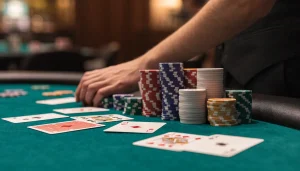
The practical point is not that one rule makes a table automatically good or bad. Rules interact. A decision that suits one version may not suit another, so familiar strategy advice cannot be lifted unchanged and assumed to fit every table. More favourable conditions in one area do not erase the need to inspect the rest.
I start with the rules that change the dealer’s obligations and the player’s options. Whether the dealer hits or stands on soft 17 affects how the hand proceeds; surrender matters only where it is permitted; and the number of decks and natural-blackjack payout are part of the overall calculation. The house edge is shaped by the full package, not by a promotional label or a single appealing condition.
This is also why a table description deserves more weight than a badge calling it “premium” or “high value.” Those phrases are presentation. The rules are the terms of the game. If a summary leaves a point unclear, the table’s rule panel should settle it before play begins; otherwise, the comparison is incomplete.
I have seen players focus on the headline payout and overlook the dealer rule or surrender provision. That is not a useful shortcut. Compare like with like, and treat each variant as its own game rather than assuming that all live blackjack tables share the same edge.
The label is marketing. The rules do the work.
Card Counting at Live and Online Tables
Card counting is a method of keeping a running mental estimate of which cards have appeared and which remain. In New Zealand, using mental calculation alone for card counting is not illegal. That answers the legal question narrowly; it does not make counting a reliable way to earn money or remove the ordinary risks of gambling.
The format matters. At a live-dealer table, actual cards are dealt, so the cards already seen belong to a physical sequence. A count can be maintained as that sequence develops, though it remains an estimate and does not predict the next card. The practical point is continuity: information from earlier deals may still be relevant until the cards are shuffled.
Online RNG blackjack works differently. Its software shuffles the cards, and play moves faster than at a live-dealer table. A mental count based on cards from earlier hands cannot be treated as a dependable picture of what the software will deal next. The shuffle breaks the continuity a count relies on. Faster rounds also leave less time to track each card carefully. That is a format limitation, not a claim about a particular game.
I have seen “counting” presented as if it were a shortcut. The useful distinction is simpler: legal does not mean effective, and a live table does not turn an estimate into certainty. Counting also does not change the table’s stated rules or guarantee a favourable result. No system can promise a win.
For anyone playing, the safer discipline is to set a budget before starting and not chase losses. A count is not a reason to extend a session or increase stakes after an unfavourable run. At an online table with software shuffles, treating the count as an edge is especially misplaced.
Keep the terms separate: mental card counting is not illegal in New Zealand, but its relevance depends on how the cards are dealt and shuffled. A legal method is still only a method.
Blackjack & Live Casino in New Zealand
Content created by the «casinobonusinfonz.com» team